Google
 
Showing posts with label potato. Show all posts

December 25, 2012

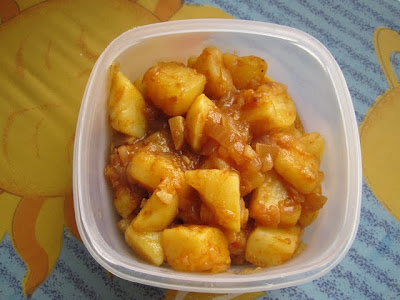
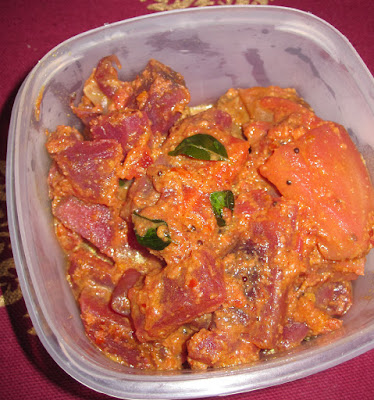
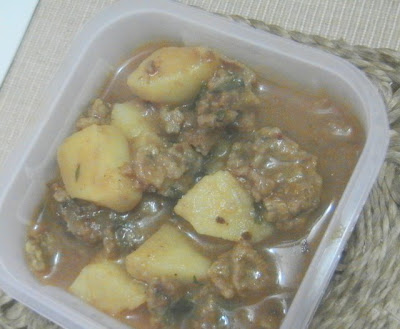
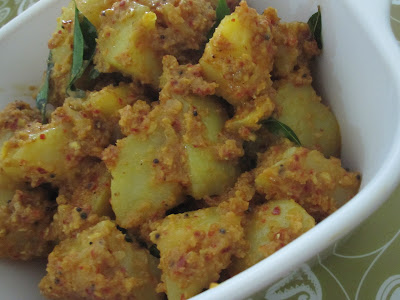
Batata Sukke


Potatoes. A vegetable used as often in my house as many others. Many people tell me that they use a higher proportion of potatoes to other vegetables. In our household, that vegetable would be carrots (or peas). It is not that anyone here dislikes potatoes, everyone loves them.  I just don't always think of  the potato as a vegetable in its own right.

This year, for Ganesh Chaturthi, I made the entire amchi spread. We did our puja with somashe, modak, chakli, patrodo, dali saar, karatye ghasshi, phodiyo, etc. It was a huge spread for just us, but I went ahead anyway. One of the dishes that goes into this traditional feast is Batata Sukke.


1/4 kg Potatoes, cooked, peeled and cubed
1/2 tsp Urad Dal
1/2 tsp Fenugreek Seeds
1/2 tsp Coriander Seeds
1 tsp Oil
1/4 cup Coconut
3-4 Red Chillies
1 tbsp Tamarind Paste
1/4 tsp Turmeric
Salt to taste


For the tempering:
1 tsp Oil
1/4 tsp Mustard Seeds
1/4 tsp Asafoetida
7-8 Curry Leaves


Heat the oil and fry the fenugreek seeds and the coriander seeds for a minute. Grind this along with the turmeric, tamarind, coconut and red chillies to a somewhat fine paste. Add salt to taste. Coat the potatoes with this mixture.
 
In a large pan, heat the teaspoon of oil for the tempering. Add the mustard and the asafoetida. When the mustard splutters, add the curry leaves. Add the potato mixture. Add a little water, if necessary. Cover and cook for 4-5 minutes. Unlid and cook for another 2-3 minutes. Serve hot with rice and dali-saar or chapatis.

May 29, 2012

Vegetable Biryani


I used to go snack heavy at parties and stick to one main dish. Five years ago, if I made more than two items at dinner for a party, I didn't have to cook for the next few days. By the time people reached the dinner table, they would have snacked enough. Nowadays, I try to stick to a snack or two and go for a larger spread for the main meal. This biryani works well in both settings.

For the longest time, I couldn't tell the difference between a pulao and a biryani. Now, I have a vague idea. I have had many bloggers tell me the difference and Amma also makes a mean vegetable biryani, which is cooked very differently from her pulaos. This is a recipe that comes very close in taste to some good biryanis that I have had, but is cooked like a pulao. I make this very often, and in the rice cooker. So I use parboiled vegetables. If you are cooking it in a pressure cooker, feel free to use raw vegetables and decrease the water by 1/2 cup.

1 1/2 cups Basmati Rice
3 cups Mixed Vegtetables (Beans, Carrots, Cauliflower, Peas and Potatoes)
1/2 cup Onions, sliced
1/2 cup Curd
2 tbsp Oil
1 tsp Cumin Seeds
3 pods Cardamom
4 Cloves
2 sticks Cinnamon
1/2 tsp Turmeric Powder
2 tsp Chilli Powder
1 tbsp Shahi Biryani Masala (I use Everest)
Salt to taste

Grind to a paste:
2 Onions, roughly chopped
2 Tomatoes, roughly chopped
3 cloves Garlic
1" piece Ginger
2 Green Chillies, roughly chopped

Place the vegetables in a microwave safe bowl with enough water. Cook for 8 - 10 minutes. Drain.

Wash the rice and drain.

Heat the oil in a kadhai. Add the cumin seeds. When they crackle, add the cardamom, cinnamon and cloves. Add the onions and fry for a couple of minutes. Add the tomato-onion paste and fry for a few minutes. Add the salt, turmeric, chilli powder and biryani masala. Fry until the oil separates from the mixture. Add the curd and mix well. Add the vegetables and mix until the vegetables are coated with the mixture.

Add the rice and cook the mixture for a minute. Transfer to the rice cooker and add 3 cups of water. Cook until done.

I usually serve this with some mixed raita and chips/salad. This dish has been as much a hit at weekend lunches as it has been at parties.

January 6, 2011

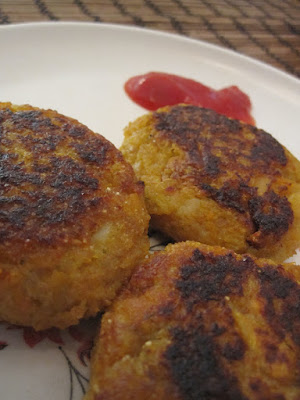
Sweet Potato Pesto Cutlets


The new year is here. And my only wish is that it is a good year for each and everyone of us. We began 2010 with friends at a hill station and hoped that the year would have a lot of travel. I must admit, I felt a little cheated in this regard. Not only did we not travel all that much, the few trips that I did have planned, I had to cancel for different reasons. Yet, even on that front, I did travel to my favourite cities in India: Bangalore, Madras and Hyderabad. And eventually moved to settle down in my second most favourite city in the whole world. So, while I do feel a little cheated, on the whole, the year turned out just fine.

Coming to this post. How do you like to spend your weekends? My ideal weekend would be one where I wake up at leisure and find breakfast ready whenever I do. I like to laze around more during the day and just have different meals magically appear at different times of the day. But we all know that is not how most weekends of mine turn out (or any for that matter).

On days when we wake up closer to lunch time, I try to make a full south Indian meal for the first meal and then like to make something "snacky" for later in the day. The decision about dinner is usually left for later. Here's one such snack idea. It is perfect as a snack and can even double up as a meal.

2 Sweet Potatoes, boiled and peeled
1 Potato, boiled and peeled 
2 slices Bread, crumbled
1/4 cup Soya Granules, prepared according to the instructions on the pack
2 tbsp Parsley Peanut Pesto
1/4 tsp Chilli Powder
Salt to taste

Oil for frying

Mash the sweet potatoes and the potato together. Add the crumbled bread slices and the soya granules and mix well. Add the other ingredients. Make small balls of the mixture and flatten each to form a cutlet.

Heat a frying pan and place the cutlets in the pan. Add a few drops of oil around the cutlets. Cook for 2-3 minutes on one side. Turn over and cook the other side for a couple of minutes, adding a little oil if necessary.

Drain on absorbent paper and serve with some tomato or chilli sauce.

This was the first time I cooked with yellow sweet potatoes. We enjoyed the cutlets and I'm sure I'll be making these babies again.

Happy and Healthy 2011 all of you!

May 29, 2010

Batata Song (Saung)


This has to be one of the most popular konkani dishes to have been invented. Amma made it very often when we were growing up and on weekends, we would have a meal of rice, dali-saar and batata song. I can't say it is my favourite dish, but I do love it.


Amma makes a slightly different version which has coconut in it, but I tried this minus the coconut. Amma added coconut to reduce the spice quotient. I have to save my coconut reserves for dishes that absolutely need the sweet white meat. I tried the version with coconut many years ago and I made this verson recently. I always have tamarind paste at hand and I also have a bottle of red chilli paste. So, I didn't even have to grind my "massol". After having made the mushroom version of this dish, I am glad I made the original.


4 Potatoes, cooked, peeled and diced

4 Onions, sliced

1 tbsp Tamarind Paste

2 tsp Red Chilli Paste

1 tbsp Oil

Salt to taste


Heat the oil in a kadhai. Add the onions and fry for 5-10 minutes, until the onions are evenly browned. Add the tamarind and chilli pastes. After a couple of minutes, add the potatoes and salt. Add a little water. Cover and cook for a few minutes. Remove the lid and cook for another 2-3 minutes.

Serve this with some rice and dali-saar. If you grew up with this, there can be no denying the "all is well with the world" feeling that will come over you with every mouthful.

March 20, 2010

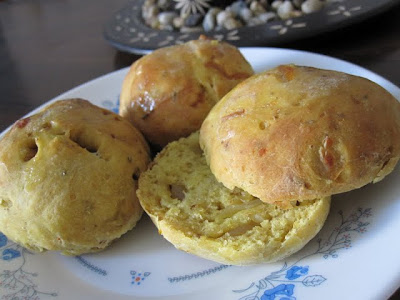
Spiced Potato Onion Buns


I love baking. I just don't bake often enough. I have been putting off baking with yeast and had promised myself that I would start when spring came. It is already hot and I realized that the "blink and you miss it" nice weather in these parts is not going to last very long. If I didn't act soon, it would be too hot to think of cooking and baking. I did have inspiration from the weather. If that wasn't enough, Rachel announced her edition of Bread Baking Day, the theme of which was buns.

I'd also bought a few cookbooks recently and one of them was a book about breads. Most recipes in this book asked for fast action yeast. So, I wrote to my friend, D, and asked her to get me a few packets and her husband brought them for me. Now, I had everything in my (and the buns') favour, and only needed to shake off the shroud of laziness.  I was glad I did because, as I type, we've already polished off about 5-6 of the 10 buns I'd made. I shaped the rest of the batter into my loaf tin and baked it. I think the recipe would yield 16-18 small buns. I modified the recipe and used some of the Southwestern Spice Blend as well.


4 1/3 cups Flour
1 cup Potato, cooked
1 cup Onion, sliced
1 tbsp Oil
2 tbsp Butter
1 1/2 tsp Cumin Powder
1 1/2 tsp Fennel Powder
1/2 tsp Turmeric
1/2 tsp Paprika
1 1/2 tsp Fast-rise Yeast
2 tsp Sugar
2 tsp Salt
1 tbsp Southwestern Spice Blend (optional)
3/4 cup Warm Water


Mash the potato and mix it with the butter. Keep aside.

In a pan, heat the oil and fry the onions for 4-5 minutes. Add the cumin, fennel, paprika and turmeric and fry for another minute or two.

In a mixing bowl, place the flour and add the yeast, spice blend, salt and sugar and mix well. Add the mashed potato mixture and the onion mixture. Add the water, a little at a time, and knead until the dough comes together and forms a ball. Cover and allow to rise for 10-15 minutes.

Divide the dough into 16 balls and form each ball into a bun. Place the buns on a greased plate and allow to rise for an hour.

Preheat an oven to 200C/400F and bake the buns for 20-25 minutes. When done, split the buns in half and spread some butter. This stuff is better than anything you could buy at your local bakery. After all, you'd have made these yourself.

March 19, 2010

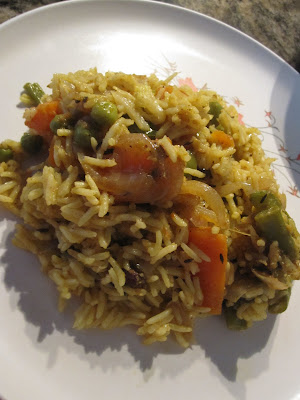
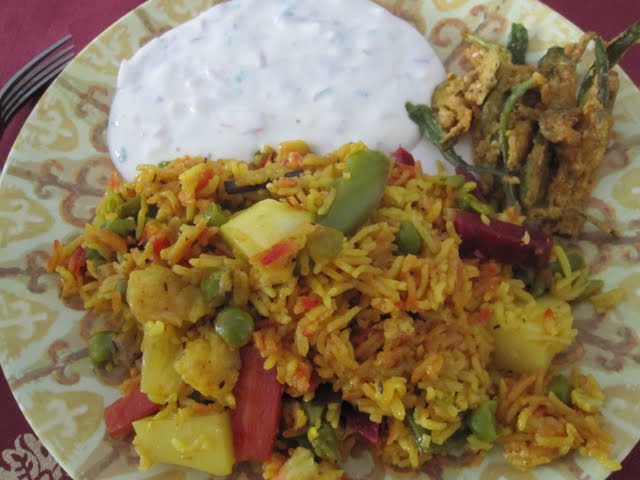
Rainbow Pulao


Pulaos are my go-to dish. It doesn’t matter what day of the week it is or what time of the day it is. I love the fact that a one dish meal (the fill it, shut it, forget it kind) can be so tasty, so colourful and so nutritious. If all I’m serving along with this meal is a raita, I make sure I add soya chunks to for the protein element. I usually add all vegetables that I can find and there are times when the outcome is a complete hash. There are of course others when the resultant dish is a beautiful medley of colours. This pulao is one such.


I tend to use any spice that catches my fancy and do not have a fixed rule about which spices to add in which dish. As a result of this, it is rare that a pulao I make on one day will taste like the pulao made on another day. But when it turns out great, I always make a note of what went in. This time around, I used a tablespoonful of Tortilla soup seasoning (Southwest Spice Blend) that my friend, D, sent me from the US. When she sent it, I had no idea what tortilla soup was or how the seasoning is to be used. (It is a different thing that such knowledge is as far from you as you are from the nearest internet PC.) The spice mix has cumin and paprika among other things, so it works very well in Indian dishes.


1 cup Basmati Rice, washed and drained

1 Onion, sliced

2 Carrots, peeled and cut into 2” pieces

1 Capsicum, sliced lengthwise and cut into 2” pieces

2 Potatoes, peeled and cut into 2” pieces

15-20 Beans, strung and cut into 2” pieces

1 Beetroot, peeled and cut into 2” pieces

A small head of Cauliflower, broken into florets

½ cup Peas, shelled

½ cup Soya Chunks, prepared according to instructions on the pack

2 tbsp Oil

1 tsp Cumin Seeds

3 1” sticks of Cinnamon

3-4 Cloves

1 tbsp Tortilla Soup Seasoning (Southwest Spice Blend)

½ tsp Turmeric Powder

½ tsp Chilli Powder

Salt to taste


Heat the oil in a pressure pan and add the cumin seeds. When they crackle, add the cinnamon and cloves along with the sliced onion. Fry this mixture for 2-3 minutes. Add the other vegetables, salt, turmeric and chilli powders along with the tortilla soup seasoning (southwest spice blend). Add the soya chunks and fry the entire mixture for another 5 minutes. Add the rice and 2 cups water and mix well. Cover the pressure pan and cook for 2 whistles. When the pressure is released, open the pan and fluff the rice with a fork. Serve with a raita or plan curd.


We had this with some onion raita and lady’s finger chips from Ananda Bhavan.


I’m also very happy to be a part of the Great Vega’n Vegetarian Project that Cynthia has started. My first post came up yesterday and I hope to be a regular contributor on the blog. Tried & Tasted event event is also currently on and The Singing Chef is the chosen blog for March 2010.

March 5, 2010

Winter Vegetable Sukke


I make a lot of mixed vegetable dishes, especially in winter. I’ve gone on endlessly about how I like a colourful plate. I found a whole bunch of vegetables that needed to be used up, and quickly. It was time for my weekly vegetable purchasing spree and I had just 1-2 pieces of each vegetable left in the crisper. I made this dish for lunch and used one vegetable of every variety I had on hand. I ended up using seven vegetables. Feel free to use any combination of vegetables for this dish. I’ve found that winter vegetables lend themselves very well to this preparation.


1 Radish, peeled
1 Beetroot, peeled

1 Red Carrot, peeled

1 Purple Carrot, peeled

1 Turnip, peeled
1Potato, peeled and quartered
1Onion, quartered
1/2 tsp Fenugreek Seeds
1/2 tsp Coriander Seeds

1/2 tsp Urad Dal
1 tsp Oil
1/4 cup Coconut
3-4 Red Chillies
1 tbsp Tamarind Paste
1/4 tsp Turmeric
Salt to taste

For the tempering:
1 tsp Oil
1/4 tsp Mustard Seeds
1/4 tsp Asafoetida
7-8 Curry Leaves

Cut the radish, carrots, turnip and beetroot into 2" long pieces. Pressure cook all the vegetables with a little salt for 1-2 whistles.

Heat the oil and fry the fenugreek seeds, urad dal and the coriander seeds for a minute. Grind this along with the turmeric, tamarind, coconut and red chillies to a somewhat fine paste. Add this paste to the cooked vegetables and add salt to taste. Cook for 4-5 minutes.

Heat the teaspoon of oil for the tempering in a frying ladle. Add the mustard and the asafoetida. When the mustard splutters, add the curry leaves. Add this tempering to the vegetable mixture. Serve hot with rice and
dali-saar or with chapatis.

December 27, 2009

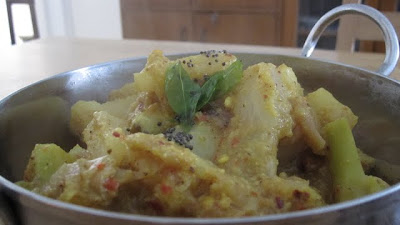
Radish-Broccoli-Onion-Potato Sukke


Elaborate lunches. They get pushed to weekends. When the weekend comes, they get pushed back into the next week. This kept happening for quite a while before I realized that we were eating one pot meals all the time. One weekend, I decided to fix this issue and made a konkani meal. Sukke, dali-saar and rice. Not elaborate by any standards, but when all your other meals are pulaos or mixed rice dishes or roti and sabzi at best, this meal, simple as it might be, comes as a much needed whiff of fresh air.


Sukke is a dish that was a staple at Amma's place, more as a side for chapatis than with rice and dali-saar. I added whatever vegetables I wanted to use up and I was rather happy with the result. I tend to use broccoli florets a lot and the stalks always seemed to only get used in soup. Now, I am bursting with ideas to use broccoli stalks in many ways.


1 Radish, peeled

1/2 cup Broccoli stalks, peeled

2 Potatoes, peeled and quartered

2 Onions, quartered

1/2 tsp Fenugreek Seeds

1/2 tsp Coriander Seeds

1 tsp Oil

1/4 cup Coconut

3-4 Red Chillies

1 tbsp Tamarind Paste

1/4 tsp Turmeric

2 tsp Jaggery (optional)

Salt to taste


For the tempering:

1 tsp Oil

1/4 tsp Mustard Seeds

1/4 tsp Asafoetida

7-8 Curry Leaves


Cut the radish and the broccoli stalks into 2" long pieces. Pressure cook the radish, broccoli stalks, onions and potatoes with a little salt for 1-2 whistles.


Heat the oil and fry the fenugreek seeds and the coriander seeds for a minute. Grind this along with the turmeric, tamarind, coconut and red chillies to a somewhat fine paste. Add this paste to the cooked vegetables and add salt to taste. Add the jaggery, if using. Cook for 4-5 minutes.


Heat the teaspoon of oil for the tempering in a frying ladle. Add the mustard and the asafoetida. When the mustard splutters, add the curry leaves. Add this tempering to the vegetable mixture. Serve hot with rice and dali-saar.

November 30, 2009

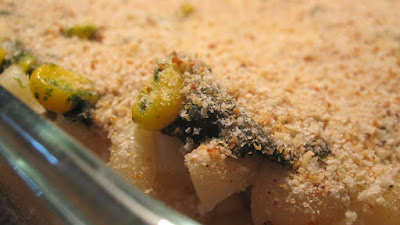
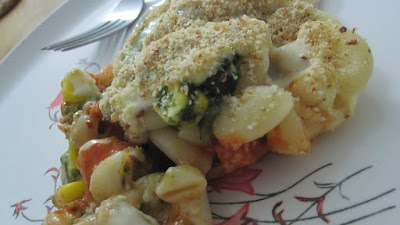
Macaroni Casserole


These days I seem to need all the inspiration I can find to cook. I've tried different meal plans, tried to cook as much as possible in advance, etc. But there are days when even the best laid plans turn their noses, lift up their thumbs and say Na-na-na-na-na. Last Thursday was one such day. I remembered my namesake's moussaka and Nupur's green bean casserole and ended up making a casserole with just about everything I could lay my hands on.


2 Potatoes, boiled, peeled and sliced

1 cup Macaroni, prepared according to instructions on the pack

1 cup Pasta Sauce

1 Onion, finely chopped

1/2 cup Spinach puree

1/4 cup Sweet Corn

1 tsp Olive Oil

1 tsp Mixed Herbs

1 tsp Chilli Flakes

1 cup White Sauce

1 slice Cheese

1/4 cup Bread Crumbs

Salt and Pepper to taste

Butter to grease the tin


Grease the tin with the butter. Preheat the oven to 200C (400F).


Heat the olive oil in a pan and saute the onions. Add the mixed herbs and the chilli flakes. Add the corn along with a little water. Cook until the corn is soft and the water has evaporated. Add the spinach puree and a little salt. Keep aside.


Blend the white sauce with the cheese and keep aside.


Arrange the potato slices to cover the base of the tin. Spread the pasta sauce over the potatoes. Spread the macaroni over this. Cover with the spinach and corn mixture. Pour the white sauce over this spinach layer. Season with salt and pepper and cover with bread crumbs.
Bake in the oven for 20 minutes. Serve hot.


There were two things that I really liked about this casserole: The different flavours that came together beautifully and the wonderful colour combination that made it a visual treat.

November 14, 2009

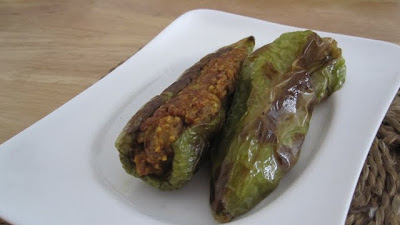
Baked Stuffed Chillies


I have always avoided buying chillies. But I usually end up with a bag of the "bajji" variety chillies in the hope of making mirchi bajji. I have made that once (but sadly, the post languishes in my drafts) and the other times that I bought the chillies, I saved the bag from going into the trash by making this once and this the other time.


Today was a little different. I was quite determined to use up the chillies in a different manner before they turned into something unrecognizable. I had some aloo paratha stuffing left over and I modified it to stuff these chillies.


6 large Chillies, slit and deseeded

2 Potatoes, cooked and mashed

1 Onion, chopped finely

2 tbsp Coriander Leaves, chopped

1/2 tsp Garam Masala

1 tsp Chilli Paste

Salt to taste

To be ground:

1/4 cup Roasted Peanuts

1/2 tsp Amchur

1/2 tsp Coriander Powder

1 tsp Cumin Seeds

1 tsp Chilli Powder

1 tbsp Oil


Mix the potato, onion, coriander, garam masala, salt and chilli paste. Add the ground mixture and mix well.


Preheat the oven to 250 C. Use a little oil to grease a baking tray. Stuff the potato-peanut mixture into the chillies and arrange them on the tray. Brush the chillies with the remaining oil. Bake for 15 minutes, turning once in between.


This makes a wonderful side dish with some rice and dal, but as we discovered this afternoon, it is a finger licking good accompaniment to beer.

September 13, 2009

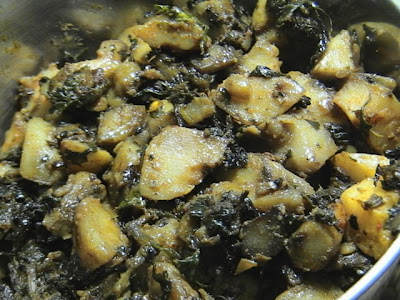
Aloo Methi


I was first introduced to Aloo Methi when I was about 10 or so. My eldest cousin married into a North Indian family and when we visited her, she served us this with hot phulkas. Fortunately, she warned me that it might be a little bitter. I guess I was prepared for the worst. As it turned out, I ended up loving this dish. I make it at least 1-2 times a month when fresh fenugreek leaves are in season.


3 Potatoes, boiled, peeled and diced

1 cup Fenugreek leaves, chopped

1 tsp Oil

1 tsp Cumin Seeds

1/4 tsp Asafoetida

1 tsp Chilli Powder
Salt to taste


Heat the oil in a kadhai. Add the cumin seeds and the asafetida. When the cumin crackles, add the fenugreek leaves and sauté for a minute or so. Add the salt and chilli powder and cook for another minute. Add the diced potatoes and mix well. Cover and cook for 5-7 minutes.


This is one of those “perfect sides” with rice and dal or rotis.

June 5, 2009

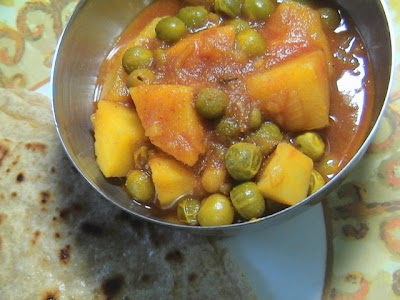
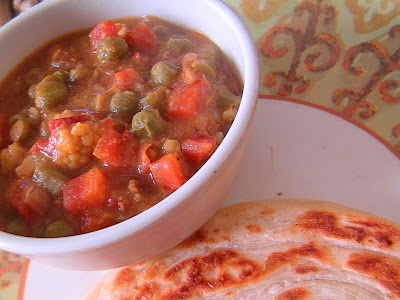
Aloo Matar


Whenever I think of aloo matar, I remember the Vanaspati advertisement which went like this:


आज मेरी बिटिया रानी क्या खायेगी? (What will my daughter eat today?)


आलू मटर और बहुत सारे मटर। (Potato-peas with loads of peas)


I can't remember if it was for Dalda or Rath, but I remember the rest of the advertisement very well. I don't make aloo matar that often. In fact this is the only time I made it. But it features very regularly on our lunch table as at least two of my lunchmates bring this at least once a week.


1/2 cup Potatoes, diced

1/2 cup Peas
1 Onion, chopped finely
1 Tomato, chopped finely
1 tsp Ginger Paste
1 tsp Chilli Powder
1/4 tsp Turmeric Powder
1/2 tsp Coriander Powder
1/4 tsp Garam Masala
1 tsp Oil
Salt to taste


Heat the oil in a pressure pan. Add the cumin seeds. When they crackle, add the onions and fry for a couple of minutes. Add the ginger paste along with the turmeric, coriander and chilli powders. Add the salt and the tomato and fry for 3-4 minutes. Add half a cup of water and bring the mixture to a boil. Add the potatoes and peas and cook for 3 whistles. Open the pressure pan when the pressure is released and add the garam masala. Mix well, cook for 1-2 minutes and serve immediately. You could, of course, garnish it with chopped coriander.


This is perfect with chapattis. If you're in the mood for some deep frying, make poories. This would have to be the ideal monsoon breakfast number.

May 25, 2009

Amritsari Aloo Wadi


The first time we went to Amritsar, I didn't know much about wadis. So I came back with a packet of papads and a whole lot of fake chicken legs. Later, I learnt about these little wadis that are very similar to the vathal made in the southern part of the country. I remembered reading in Asha's blog that the north indian cousins aren't meant to fried and eaten. Quite like the vathal that go into Vathal Kuzhambu.


One evening, on the long ride back home from work, I asked my colleague how to use the wadis I brought from Amritsar this time around. She gave me her recipe and I followed it mostly. It was quite easy to make and tasted very nice. I am sure to make this more often, especially when I am out of vegetables.


2 Potatoes, peeled and diced

1/2 cup Amritsari Urad Wadis, crushed

1 Onion, chopped finely
1 Tomato, chopped finely
1 tsp Ginger Paste
1 tsp Chilli Powder

1" stick Cinnamon
1/4 tsp Turmeric Powder
1/2 tsp Coriander Powder
1/4 tsp Garam Masala
1 tsp Oil
Salt to taste


Heat the oil in a pressure pan. Add the cumin seeds. When they crackle, add the cinnamon stick and onions and fry for a couple of minutes. Add the ginger paste along with the turmeric, coriander and chilli powders. Add the crushed wadis and fry for another 3-4 minutes. Add the salt and the tomato and fry for 3-4 minutes. Add a cup of water and bring the mixture to a boil. Add the potatoes. Cover and cook for 3 whistles. Open the pressure pan and add the garam masala. Cook for 2-3 minutes.


Serve hot with rotis. This protein packed dish had me licking my lips after lunch. Thanks Namrata for a keeper recipe.

May 1, 2009

Vada Pav


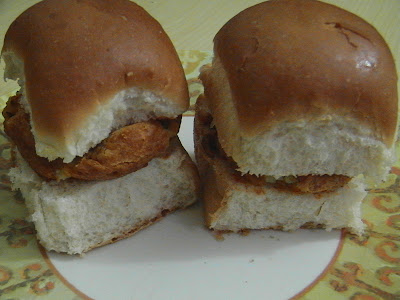
The Indian Burger! That would best describe the Vada Pav. I don't remember when I ate my first vada pav. My strongest memory of the batata vadas dates back to the late seventies. As the Dadar Express pulled into Karjat, Amma would start looking out of the window. Somewhere amidst the Kedbari, Feystar, Jings ( Cadbury's, Five Star, Gems) she'd find a Batata Vada vendor and call him. They'd talk in marathi (and we didn't understand a word) and at the end of the conversation we'd have a newspaper with 6 vadas, some garlic chutney and a few green chillies. Every year, we looked forward to this moment. Finger licking goodness!


I got hooked to the Vada Pav much later. I tried several different vendors until I figured this guy outside the LIC building on my way to the station from Nariman Point dished out the best vada pav. I wasn't that keen on making the stuff at home, so I didn't pay attention to his chutney. (When you got it for 2.75 a piece, why would you bother?) I tried it at home years later. It wasn't as good as his, but it was definitely good.


For the Batter:
1/2 cup Gram Flour (Besan)

1/4 cup Rice Flour

1 tsp Cumin Seeds

1 tsp Chilli Powder

1/2 tsp Turmeric Powder
½ tsp Garlic Paste

Salt to taste

1 tbsp Hot Oil


For the Filling:
3-4 Potatoes, boiled, peeled and cubed

1 tsp Green Chilli Paste

1 tsp Ginger-Garlic Paste

2 tbsp Coriander Leaves, chopped

Salt to taste

Oil for frying


For the Chutney:

6-8 Garlic Pods
4 Red Chillies
Salt to taste


6 Pavs


Mash the potatoes and add the salt, chilli and ginger-garlic pastes, and coriander leaves. Make small balls and keep aside.


Mix all the ingredients for the batter. Add enough water to make a thick batter.


Heat the oil in a kadhai. Dip the potato balls in the gram flour batter and drop carefully into the oil. Deep fry the batata vadas until they turn golden brown all around. Drain on absorbent paper.


Grind together all the ingredients for the chutney. Slit each pav horizontally (not all the way) and spread some chutney. Place a batata vada over the chutney and enjoy your snack.


P.S. S had a new version of vada pav at the Mumbai airport recently. He said the vada was baked int the bun. A little more time consuming I'm sure, but he says it is a very non messy way to enjoy the snack. With all this baking going on, can I say no?

April 30, 2009

Vegetable Kurma


About 12 years ago, I packed my bags and set out on this journey. I left the comfort and the protection that my parents' home offered and moved to a beach resort. Only, this beach resort had a slightly non-resort like name: Pondicherry University. Well, it was on the beach. You could see the Bay of Bengal from the hostel rooms and balconies. You could even see the beach from our classrooms. I think I hit the beach almost every evening for the two years that I was there. Maybe not the water everyday, but Puru's definitely.


Puru's is the name we gave this shack right opposite the University gate. The owner's name was Purushottam and hence we always called this place "Puru's". This place was famous for tea and parottas. At the time, you could get a cup of tea for Rs. 1.50 and a plate of parottas cost Rs. 6. That plate had not two, but four parottas. Quite a meal. And very easy on the pocket too. Puru's was a life saver. When the hostel seemed a little too far to trudge to for lunch (and one that wasn't exactly worth it) and the cafeteria was too crowded, we landed at Puru's for our meal.


This kurma isn't exactly how Puru made it. I wasn't into cooking all that much back then, even though we cooked big meals everyday for 2 weeks every semester until the mess opened. So, this is mostly from memory.


2 cups Mixed Vegetable
s, diced and cooked(I used potatoes, peas, carrots, beans and cauliflower)

2 Tomatoes, chopped

1 tsp Oil
1/2 tsp Fennel Seeds
Salt to taste


Grind to a paste:

1 Onion, chopped

2 Green Chillies

1" piece Ginger

3-4 pods Garlic

1 tsp Coriander Seeds

1 tsp Cumin Seeds

1/2 tsp Turmeric Powder

1/2 tsp Chilli Powder

2-3 tbsp Coconut, scraped


Heat the oil in a pressure pan. Add the fennel seeds and the paste. Fry the paste for 2-3 minutes. Add the chopped tomato along with the diced vegetables. Add the salt and about half a cup of water. Pressure cook for a whistle.


My favourite way to eat this vegetable kurma is with parottas. And before you ask, my parottas came from a bag of Sumeru's frozen Malabar Paratha. The other absolute favourite is kurma with idiyappam. I order this almost each time we go out for a meal when I visit Madras. It doesn't come close to food from a beloved shack called Puru's, but in a pinch, it will more than just do. I left the Pondicherry University exactly ten years ago and it has been a while since I last "chilled out" at Puru's. So when I want to take a trip down the memory lane, I make myself a plate of vegetable kurma and prepare to be magically transported to the sandy coconut groves of Pondicherry.

April 15, 2009

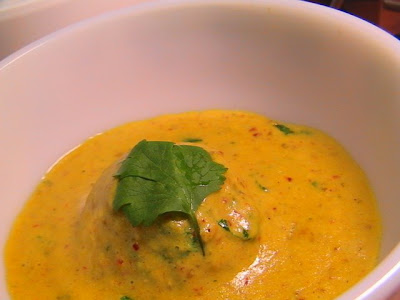
Aloo Kofta


Kofta! For the longest time, I hunted for a good malai kofta. In fact, for a while, I ordered it each time we went to an Indian restaurant. For some reason, most places here serve malai kofta in a sweetish white gravy. The koftas always seem to have raisins in them. Now, I firmly believe that north indian food served in some restaurants in south india are just the way I like them. For instance, I love the chhole bhature you get at Shiv Sagar in Bangalore much more than what they serve at a Bikanerwala in Gurgaon. In fact, sometimes I crave "south indian style" north indian food. And no, I don't mean curry leaves laden gravies. There's this place that I went to called Verdhan (a Bangalore based chain) in Gurgaon. As always, I ordered malai kofta. I quickly checked what colour the gravy was. The guy said, 'Brown'. I was so thrilled. I haven't ordered malai kofta since even when we've been to Indian restaurants. I'll savour that taste for some time to come.


I decided to make some aloo kofta to take for lunch. Somehow, my colleagues didn't seem to know that such a dish even exists. They've only heard of malai kofta and lauki kofta. I've had both these and have also also had potato kofta. Since I very rarely make anything with potatoes and even more rarely fry food, this had to be a treat.


For the Kofta:


1 cup Potato, cooked, peeled and mashed


1 tsp Green Chilli paste


1 tsp Ginger Paste


1 tsp Garlic Paste


1 tbsp Coriander Leaves, chopped


1/4 tsp Turmeric Powder


1/4 tsp Chilli Powder


1 tbsp Flour, mixed in 2 tbsp water


Salt to taste


For the gravy:


1 Onion, chopped


2 tbsp Cashews


1 tsp Poppy Seeds


2 Red chillies


1 tsp Ginger Paste


1 tsp Garlic Paste


1 tsp Cumin Seeds


1 tsp Coriander Seeds


1/4 tsp Turmeric Powder


2 tbsp Oil


1/2 cup Milk


Salt to taste


Coriander Leaves for garnish


Grind the ingredients for the gravy in a mixer using a little water if necessary.


Mix all the ingredients for the kofta (except the flour-water mixture) and shape into small balls. Heat the appey pan and put a few drops of oil in each mould. Dip each ball in the flour-water mixture and place it in the moulds. Cook until each ball is golden brown, turning every minute or so. Remove from the pan and drain on absorbent paper.


Heat a tablespoon of oil and add the ground paste. Fry this for a few minutes until the oil separates from the paste. Add the salt and fry for a minute. Add the milk and bring the mixture to a boil. Add the koftas and simmer for 4-5 minutes. Garnish with coriander leaves.


This recipe is a keeper. I remembered the recipe for the koftas from Amma's koftas. But I just went with whatever I could lay my hands on when it came to the gravy. It is a very rich and creamy dish that gives you the feeling of "rich food". Thank heavens it comes without that much guilt.


I'm sending this to Let's Go Nuts: Cashews, being hosted by Poornima of Tasty Treats.

March 28, 2009

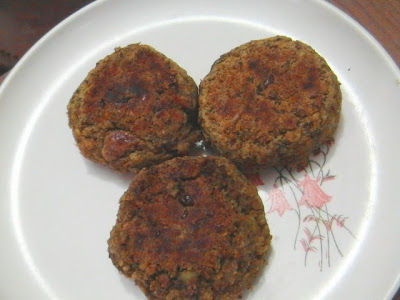
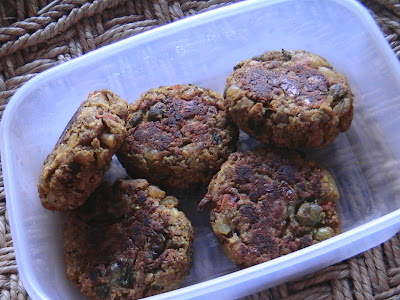
Kidney Bean Green Chickpea Patties


Snack time. If I'm not prepared for it, I dread it. I dread not having something substantial in my lunch bag. I dread having to reach out for "just about anything" to kill those hunger pangs. It's not fair that the cafeteria downstairs serves samosas, bread pakodas and bread pizza just when the last bit of lunch bids my stomach farewell.


This makes for a great snack. With a salad on the side, it would make a great lunch too. But for now, let me relish it at snack time.

1/2 cup Kidney Beans, soaked overnight and cooked

1/2 cup Green Chickpeas, cooked

1 Potato, cooked and mashed

2 slices Bread

1 tsp Chilli Powder

1/4 tsp Turmeric Powder

1 tsp Ginger Paste (optional)

1/2 tsp Garam Masala

1/2 tsp Paneer Tikka Masala (optional)

Salt to taste

Oil for frying


Place the kidney beans, chickpeas, potato and bread in a bowl and mash until you get a homogenous mixture. Add the ginger paste, turmeric powder, chilli powder, garam masala, paneer tikka masala and salt. Shape the mixture into patties. (I got about 6-8 patties from this mixture.)


Heat a skillet and smear a little oil over it. Place the patties on the skillet. Cook on both sides until golden brown. Your perfect snack for those post lunch pangs.

January 18, 2009

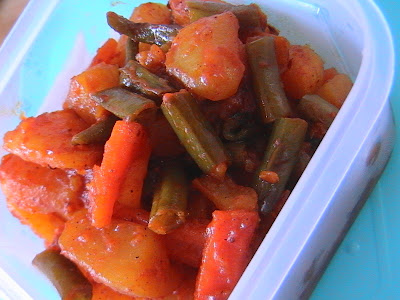
Mixed Vegetable Curry


There's a certain thrill in finding a new recipe and trying it out, however complicated it might be. But there are times when all you want is a simple something. Amma used to make this dish every once in a while. It went very well with chapatis. Or even with rice and dal. The rice and dal combination is my absolute favourite way to eat this vegetable.


2 Potatoes, peeled and cut into 1" long pieces

2 Carrots, peeled and cut into 1" long pieces

20 French Beans, strung and cut into 1" long pieces

1 tsp Oil

1/4 tsp Cumin Seeds

1/4 tsp Asafoetida

1 tsp Sambar Powder

Salt to taste


Cook the vegetables in a pressure cooker for 1-2 whistles.


In a pan, heat the oil. Add the cumin seeds and asafoetida. When the cumin seeds crackle, add the vegetables and saute them for a couple of minutes. Add the sambar powder and salt. Mix well, cover and cook for 4-5 minutes. Garnish with some coriander leaves if you wish.


Simplicity at its best. You can vary the vegetables in this dish to include whatever you like. This is just what I happened to have on hand.

January 7, 2009

Baked Soy-Vegetable Cutlets


Cutlets in some form make their way into our lunch boxes at least once a week. Sometimes they get inside a bun and take the form of burgers, sometimes they’re a snack and not the main meal. And while I pan fried them initially, I found that baking takes far less effort. And I can get other things done while the cutlets are baking away. Healthy, effortless and quick, these tasty cutlets are great at any time of the day.


1 cup Mixed Vegetables, cooked
1 cup Potatoes, cooked
1 Onion, chopped
2 tsp Ginger Chilli Garlic Paste
2/3 cup Soy Granules, prepared as per instructions on the pack
3 tbsp Bread crumbs
Salt to taste
1 tsp Oil + oil for greasing the baking tray


Heat the oil and fry the onions for 2-3 minutes. Add the ginger chilli garlic paste and fry for another minute. Add the potato and vegetables and mix well. Add the salt and mash the mixture.


Drain the soy granules and add to the vegetable mixture. Add the bread crumbs, mix well and shape into cutlets.


Grease a baking tray and place the cutlets on it. Bake at 200F for 15 minutes, turning once after 10 minutes.


Serve hot with sauce or chutney. I got around 12 cutlets from this recipe.

December 7, 2008

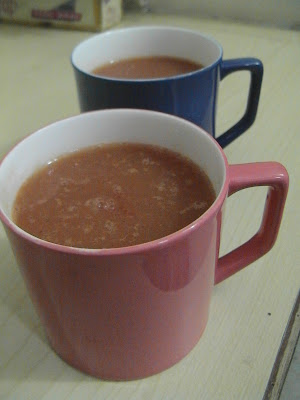
Tomato Soup


I've talked often about "memory food". When I start cooking, my thoughts drift to the place I called home for two decades. All of Amma's vessels were part of the RevereWare collection. On a wintry night (like the ones we have every day this time of the year), I cannot help but think of Amma's large copper bottomed RevereWare Dutch Oven filled with her signature tomato soup simmering away. We'd lay the table with cups for Appa and Amma. H and I got large opalware bowls. Amma would make croutons, the fried way of course. (And she would ration them out to us.) Then she'd bring the hot pot of soup to the table. During the rains, all we ever wanted was a bowl of soup with a small blob of home made butter and loads of croutons. And then the race to see who'd get to seconds fastest. Somehow, even today, it seems like the most comforting dish in the whole world.


My picture does the soup no justice whatsoever. I still think the fried croutons and the butter give the soup part of its character, I must admit that the soup does have its own stand out on its own. Is it the soup? Is it the memory? I haven't the faintest which it is. But it doesn't matter really, does it?


1/2 kg Tomatoes, diced

2 small Carrots, peeled and diced

1 Onion, diced

2 pods Garlic

1/4 Milk, optional

1 Potato, peeled and diced

Salt and Pepper to taste


Pressure cook the vegetables and the garlic with 4 cups of water. When cool, blend in a liquidizer and strain. Bring the liquid to a boil. Add the milk, if using. Season with salt and pepper. Serve hot with croutons.


To me, this is a complete meal. Others, S included, beg to differ. Maybe it is the memories that make this simple soup such a family legacy. And on this day, I am happy to have those memories. Memories of our dining table, of our home, of our family spending time with each other over dinner, of Amma dishing out one delicacy after another, before and after work, and making it seem like no work at all. To the lady who taught me so much of what I know today, about just about everything; the lady who is a phone call away when I am faced with a problem at work, an issue with my in-laws, or a major task in the kitchen; the one I have come to consider one of the best cooks there is or ever was; the one about whom Appa says, "There's some magic in her hands for sure"; to the one who is my friend first and then my mother: Happy Birthday Amma!