Google
 
Showing posts with label Tamil. Show all posts

May 2, 2015

Pal Poli to celebrate 8 years


8 years ago, today, I sat at the computer and toyed with the idea of starting another blog. I loved cooking and I enjoyed writing. I wasn't quite sure of my reasons. But I was addicted to reading food blogs at the time. And I felt that, given how varied my cooking was, and how much friends enjoyed my food, people would enjoy the blog too. And they did. 

Over the years, I've gotten busier with other things. And this blog, like the other, got neglected. I've been cooking a lot. And I've been cooking newer things too. And most of the time I do remember to take pictures. But I find that it is the sitting myself down in front of a computer and typing out these stories that I am unable to do.

Can I find a list of excuses? My laptop conked out. The computer is in my son's room and I can't go in there when I'm done for the day because he's sleeping there. My photographs aren't good enough. And I can find many more such. But I suppose where there's a will, there should be a way. Just that in my case, there seems to be a won't. This blog has seen fewer posts in the last two years than it did on that one day in July 2007. How is that for statistics?

In the last one year, I've cooked and baked with my son, who seems to enjoy cooking more than eating. I wanted to see if there was truth in the fact that when children help make something, they are more eager to try it. I think there is some truth to this. But the day I decide that it should probably work is most likely the day that it doesn't. 

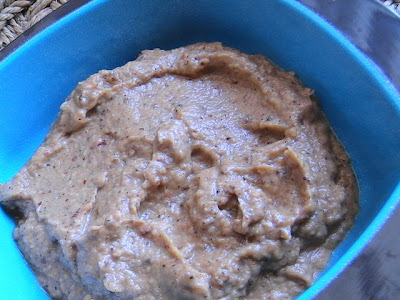
However, in all this time that I haven't blogged, I have actually used this blog for its original intended purpose: my personal recipe book. I've gone back countless number of times to check if I have the ingredients right, if I'm missing a step. And often, reading the recipes and the stories behind them makes me nostalgic. I was feeling especially nostalgic one day and thought about the Pal Poli that Amma used to make. For a week, I made it in my head, over and over. It was so simple. And I could almost taste it. Finally, about 3 weeks after I'd made it 12 times a day in my head and I was just dying to taste it, I actually made it.


For the Poli:

1 cup Maida
2 tbsp Semolina
1 tsp Ghee
A pinch of Salt
Oil for frying

Mix the ingredients except the oil into a hard dough using as little water as necessary. Divide the dough into 24 pieces. Roll them out using a little bit of oil into 4-6 inch discs. Keep these covered with a cloth until all the pieces have been rolled out.

Heat the oil and drop the rolled out polis into the oil. Deep fry them like pooris.

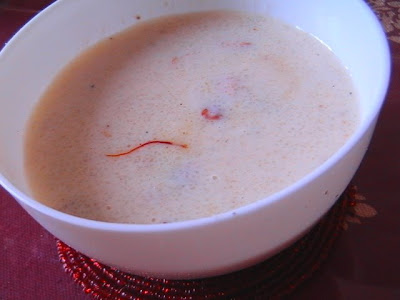
For the Masala Milk:

1 Litre (4 cups) Milk
1 400g tin Sweetened Condensed Milk (I used Milkmaid)
A pinch Saffron
1/4 tsp Cardamom, powdered
1 tbsp Milk Masala Powder (I used Everest)

Bring the milk to a slow boil and add the condensed milk, stirring all the while to make sure the condensed milk doesn't stick to the bottom of the vessel. Add the saffron, cardamom and the Milk Masala powder.

Arrange the polis in a dish and pour the masala milk over them. Let the polis soak in the milk.


Enjoy this dish warm or chilled. I was surprised at how easy this dish actually was and it got me thinking about the mental fatigue I seem to associate with so many of my childhood favourites.

I make no promises of what the 9th year holds for The Singing Chef. I shall endeavour to come here as often as I can and blog as much as I can. But for the time being, to those of you who have always been there for me, I want to share a little piece of sweetness, a little piece of my childhood, and say thank you for helping The Singing Chef become what it has. Thank you for being an integral part of my life. 


May 8, 2012

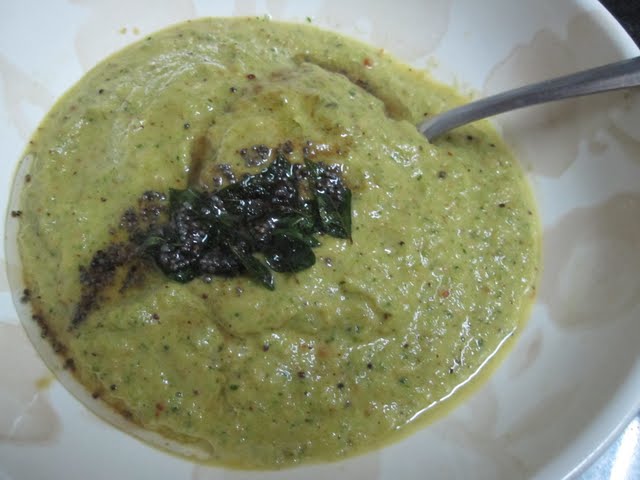
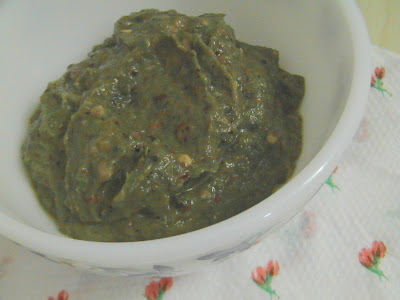
Pok Choy Thuvayal


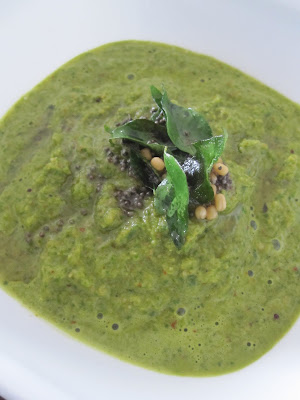
I have access to a wide variety of greens here. I use them in many ways: stir fries, salads, etc. Sometimes, I simply use a local green in my regular Indian cooking instead of an Indian green. We have had Kai-lan (Chinese Broccoli) Dal, Kangkong (Water Spinach) Sambar etc. I like the idea of throwing in a green leafy vegetable into just any dish. And all of you know about my obsession with Thuvayals. When I found a couple of bunches of Pok Choy that weren't fresh enough for a stir fry, I made a thuvayal with it. It was very tasty and I know we will have it again soon.

 
1 1/2 cups Pok Choy, washed and roughly chopped
2 tbsp Coconut, scraped
1 tbsp Oil
2 Green Chillies
1/2 tsp Chilli Flakes
1 tsp Mustard Seeds
1 tsp Sesame Seeds
1/4 tsp Fenugreek Seeds
1/4 tsp Asafoetida
2 tsp Black Gram Dal
1 tsp Tamarind Paste
Salt to Taste

For the tempering:
1 tsp Oil
1/2 tsp Mustard Seeds
1/2 tsp Black Gram Dal
a pinch Asafoetida
5-6 Curry Leaves
Heat the oil and fry the green chillies, red chilli flakes, mustard seeds, sesame seeds, fenugreek seeds, asafoetida and black gram dal for a couple of minutes. Add the pok choy along with the coconut and fry for 2 minutes. Grind the mixture along with the tamarind paste and salt.

Heat the teaspoon of oil for the tempering in a frying ladle. Add the mustard, black gram dal and the asafoetida. When the mustard splutters, add the curry leaves. Add this tempering to the pok choy mixture.
Mix some rice and ghee/ sesame oil. Add a couple of spoonfuls of the thuvayal. Mix well and get ready for a quick trip to heaven. That's how good this was.

November 30, 2010

Adai


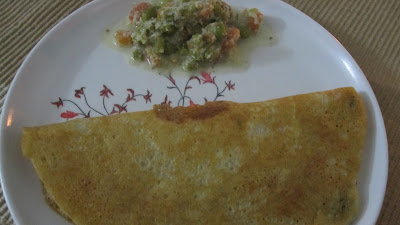
Adai. It has to be one more of those acquired tastes. I have childhood memories of eating Adai with jaggery. As I grew older, the combination didn't seem so attractive. Or maybe Amma didn't give me jaggery anymore with Adais. My "love" for the Dosa probably overshadowed my appetite for any of its many cousins.

One of my friends, P, told me to make sure that I always have dosa batter of some sort in the fridge. So I started varying the batters that I had on hand. One evening, I came home from work to find that I had a little bit of extra time on my hands. And I also had a bag of mixed chopped vegetables in the freezer. I decided to make some Avial and pair it with the Adais. (The combination is almost as nice as Adai with jaggery.)

1 cup Rice
1/3 cup Udad Dal
1/3 cup Chana Dal
1/3 cup Toor Dal
3-4 Red Chillies
1 Green Chilli
7-8 Curry Leaves
1 tsp Ginger Paste
1/4 tsp Asafoetida
Salt to taste
Soak the rice and the dals together overnight. Grind this to a batter along with the red and green chillies, curry leaves, ginger, and salt. Add the asafoetida to the prepared batter.

To make the adais, heat a tawa and smear a little oil on it. Simmer the flame and pour a ladleful of the batter in the centre of the tawa. Quickly spread the batter while forming concentric circles (spiral actually!). Add a few drops of oil and allow the adai to crispen. Turn the adai over and cook the other side for a minute or so.

Serve hot with some jaggery or some Avial.

This post has been in my drafts for ages. I had always heard of Adai Avial as a combination, but had never tasted it. This version that I made at home, I really enjoyed. I had this combination outside home for the first time here in Singapore at Ananda Bhavan and was thoroughly disappointed. I like my dosais/adais to be a little crisp (not paper thin). The version I got at the restaurant was very thick and had huge bits of coconut and whole pepper corns and multitude of things that were added to the batter. It was a task to tear a piece of the adai and dip it into the avial and eat it. That prompted me to finish this post and publish it. The next time I want to have this treat again, I'm making it at home!

November 10, 2010

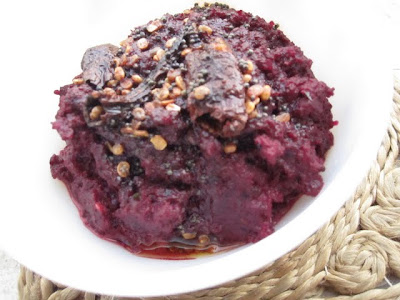
Beetroot Karumadhu


While growing up, how many times did you have to be told to eat something because it is good for you? I've lost count. Of course, I also didn't have to be told such things. I didn't quite know that  there was this option to say, "I don't want this." The only threats/coaxing I ever received had to do with the speed of my eating.

"XYZ's mother says that her hair grows long because she sits down for dinner at 8 and finishes by 8.15."

I still don't have long hair. I am still in touch with XYZ and I know she has long hair. And I know that finishing dinner in 15 minutes cannot be the only secret. And guess what? The world is talking about the benefits of eating slowly. I must admit that I do finish my meals faster than most people.

Beetroots in Indian cooking must have caused (still be causing)  a great deal of stress to children. I suppose that children are either put off by the colour or drawn to it. There cannot be a middle path. Actually, there is no middle path for adults either. What are my views on beets in Indian cooking? Beetroots are best used in salads and cakes, and of course in soups.

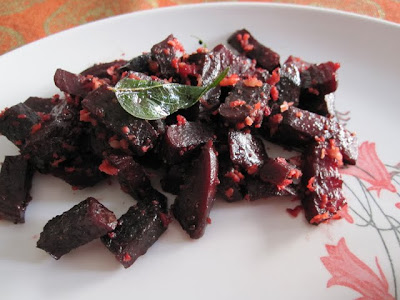
As far as Indian food goes, I like beets in things like chutneys. The occasional sambar or rasam with beets is a welcome change. The stir fries/sautes I deal with when I have to. That would explain why this recipe is not exactly a weekly feature in my home.


1/4 kg Beetroot, peeled and diced Steam the beetroot until tender.
1 tsp Oil
1/4 tsp Urad Dal
1/4 tsp Chana Dal
1/4 tsp Mustard Seeds
2 Red Chillies
1/4 tsp Asafoetida
1 tbsp Coconut, scraped
7-8 Curry Leaves
Salt to taste

 
Heat oil in a pan. Add the urad and chana dals, mustard seeds and asafoetida. When the mustard splutters, add the curry leaves and the red chillies. Fry for a minute. Add the chopped beets and the salt. Sprinkle a little water on top. Cover and cook for 2-3 minutes. Add the coconut and mix well.
 
This is a pretty side with the usual rice and sambar/rasam routine. Perfect when you really do need a splash of colour on your plate.


May 31, 2010

Lemon Rice


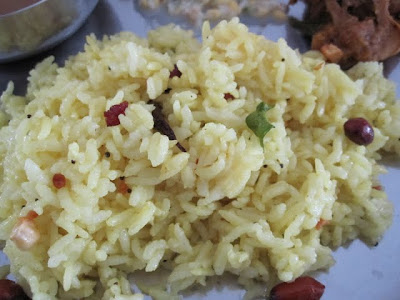
While I have made Lemon Sevai reasonably often, I haven't made Lemon Rice as much. I tend to stick to making it only on Pongal or during the "Aadi Maasam" (if I remember). Now, I make it when we have people over for a meal. In these parts, a South Indian meal is not complete if there is no lemon rice. I have seen lots of people eat lemon rice with sambar. I don't think of it as a great combination. Sambar goes with Pongal or plain rice very well, not with Lemon Rice.


1 cup cooked Rice


Juice of 1 Lime
1/4 tsp Turmeric Powder
Salt to taste


For the tempering:


1 tsp Oil
1/4 tsp Mustard seeds
1/4 tsp Asafoetida
7-8 Curry Leaves
1/4 tsp Urad Dal
1/4 tsp Chana Dal
1 Red Chilli
2 Green Chillies, slit
1 tbsp Cashews, roughly broken
2 tbsp Peanuts


Mix the lime juice with the salt and turmeric powder.


Heat the oil in a kadhai. Add the urad and chana dals. When the urad dal begins to change colour, add the mustard and asafoetida. When the mustard splutters, add the curry leaves, peanuts, cashews, green chillies and red chilli.Take it off the stove and allow to cool a bit. Add the lime-turmeric mixture to this.


Pour the lime juice -tempering mixture over the rice. Mix well and serve with some vadams.


The rice for this dish should not be soft. Sometimes, I cook the rice with a little turmeric and few drops of oil, and add less water than I would for a regular meal. So, a ratio of 1:2.25 for Sona Masoori rice would work very well. Spread the cooked rice on a plate and allow it to cool so that it doesn't get mushy. The dish tastes best when the grains of the rice are separate.

April 15, 2010

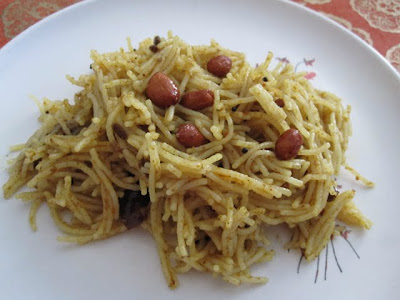
Tamarind Sevai


When we were growing up, there was no concept of "tiffin". Amma says that we were always too impatient to wait for her to make anything. We'd have a glass of milk after school and rush out to play, only to come back in time for dinner. Sometimes, the traditional "tiffin" items would be served at dinner time. Those were nights to look forward to.


Since I am still not in the habit of making an evening "tiffin", I try and make these at breakfast. They add variety to my mornings and are quite easy to prepare. Need I say more?


I tried making this rice sevai with the puliyodarai twist sometime ago. I really enjoyed the dish. It was as tasty as it was inviting.


1 cup Rice Sevai, prepared according to instructions on the pack
1 tbsp Gingelly (Til/Sesame) Oil

¼ tsp Mustard Seeds
¼ tsp Asafoetida
7-8 Curry Leaves
½ tsp Urad Dal
½ tsp Chana Dal
½ tsp Turmeric Powder
¼ cup Peanuts
2 tbsp Tamarind Paste
3-4 Red Chillies
Salt to taste


Heat the oil in a kadhai and add the urad dal, chana dal, mustard seeds and asafoetida. When the mustard splutters, add the red chillies, curry leaves and peanuts. Fry for a couple of minutes. Add the turmeric powder and the tamarind paste. Add about ½ a cup of water and bring the mixture to a boil. Add salt and when the mixture thickens to about half the original volume, stir in the rice sevai and take off the flame immediately.


Serve with some appalams or crisps. This recipe is good for two people as a breakfast dish or as a snack.

April 14, 2010

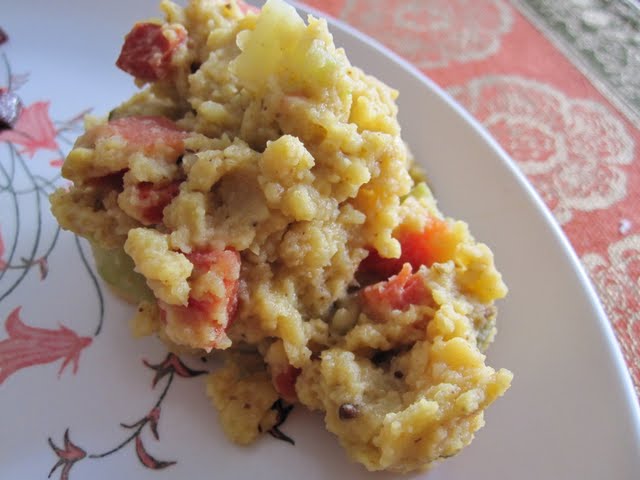
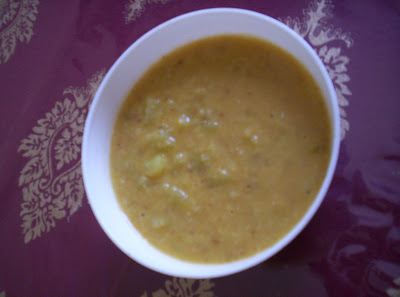
Carrot-Chayote Squash Kootu


As you've all noticed, I've gone traditional. I am enjoying picking Amma's brains of dishes that she used to make when we (my brother and I) were children. I'm enjoying recreating those dishes at home. I find that when I grind a masala for a dish that Amma's just finished telling me about on the phone, the aroma that hits my nose as soon as I open the mixer jar transports me right back to my childhood. When I get ready to eat, if my dish tastes just like what Amma used to make, then I'm all set for a trip down memory lane all through my meal.


This kootu featured rather regularly on Amma's weekly menu. While I didn't think much of it then, I'm sort of hooked now and I must say, this features quite regularly in my kitchen too.


1/2 cup Chayote Squash, peeled and diced
1/2 cup Carrot, peeled and diced


1/2 cup Moong Dal
2 tsp Sambar Powder
2 tbsp Coconut, scraped
1 tsp Cumin Seeds
1 tsp Urad Dal
1-2 Green chillies, slit
1 tsp Oil
1/4 tsp Asafoetida
Salt to taste


For the Tempering:


1/2 tsp Oil
1/2 tsp Urad Dal
7-8 Curry Leaves


Pressure cook the diced carrot and chayote squash along with the moong dal and the sambar powder.

Heat the oil in a frying ladle and add the urad dal. Fry till the dal turns golden brown. Add the slit green chillies. Grind this along with the cumin seeds and the coconut. Add this paste to the chowchow-carrot-moong dal mixture along with the salt. Add the asafoetida and mix well.


For the tempering, heat the oil in the frying ladle and add the urad dal and curry leaves. Add this to the dish and serve hot with steamed rice.


A very traditional dish to celebrate a festival. Wishing all of you a very happy new year. Iniya Puthandu Nalvazhthukkal.

March 29, 2010

Purple Carrot Thuvayal


There’s this woman we all know in the blogosphere. She’s more of a temptress, really. She’s made me crave so many things that I’ve sometimes wanted to dash across the city and insist that she feed me. She even obliged one time and brought me some home made Goda Masala so I could make her Spicy Nutty Cluster Beans. I remember looking at her Kadhi Pakoda and feeling hungry all over again. I think that was the dish that got me hooked to Anita’s blog. A year ago, on this very day, she posted Black/Purple Carrot Kanji. I wanted some because it looked pretty and I had heard so much about it. Fortunately, I didn’t have to make it myself. My colleague’s mother sent me enough, coincidentally the very next day!


This year, I bought the purple carrots with the sole intention of making Kanji. I did everything but that. I waited for the purple carrots to appear, I had bookmarked Anita’s recipe anyway, and was all set to make kanji. But fate intervened. I used one carrot in this dish and made a thuvayal with the others. I will be making this again and again, whenever these beauties are in season. Hopefully, I shall also make kanji!


4 Purple Carrots, peeled and diced


2 tsp Oil


1/s tsp Mustard Seeds


3-4 Red Chillies


2 tsp Urad Dal


1/2 tbsp Tamarind paste


Salt to taste


For the tempering:


1 tsp Oil


1/2 tsp Mustard Seeds


1/2 tsp Urad Dal


1/4 tsp Asafoetida


1 Red Chilli, broken


Heat one teaspoon of oil in a pan. Add the mustard seeds, red chillies and the urad dal. When the mustard splutters, add the diced vegetable. Saute for a couple of minutes and cover and cook for 5-7 minutes. Allow it to cool. Grind this along with the tamarind paste and salt.


In a frying ladle, heat the oil for the tempering. Add the urad dal and mustard. When the mustard splutters, add the asafoetida and red chilli. Add this to the ground paste.


Mix this thuvayal with some hot rice and add a little bit of ghee. Mix well and enjoy the purple sensation.

March 4, 2010

Zucchini Thuvayal


Winter. I have to talk about it in the past tense. As early as the first week of March. I’ve enjoyed using winter vegetables in just about every dish these past 3-4 months and I’m going to be sorry to see them disappear over the coming 2-3 weeks. Then it is back to the Tinda-Tori-Bhindi-Kundru-Lauki routine, all the way until November. Such is life.


I bought some zucchini to make a stir fry, but ended up using it in this thuvayal. I really wonder why I don’t make these thuvayals/thogayals often enough. They’re easy, tasty and are a great way to add another vegetable dish to your table.


2 Zucchinis, chopped

4 Red Chillies

1 tsp Mustard

3 tsp Urad Dal

1/4 tsp Asafoetida

3 tsp Oil

1 tbsp Tamarind Paste

Salt to taste


For the tempering:

1 tsp Oil

1/2 tsp Mustard Seeds

1/2 tsp Urad Dal

a pinch Asafoetida

5-6 Curry Leaves


Place the zucchini pieces in a microwave safe bowl. Add 2 tbsp of water and cook on high for 2 minutes. Squeeze out the water when cool.


Heat the oil and fry the red chillies, mustard, asafoetida and urad dal for a couple of minutes. Grind the chillies along with the tamarind paste and salt. Add the zucchini pieces and grind again. Finally, add the fried mustard and urad dal and grind lightly.


Heat the teaspoon of oil for the tempering in a frying ladle. Add the mustard, urad dal and the asafoetida. When the mustard splutters, add the curry leaves. Add this tempering to the zucchini mixture.


Serve this with rice and a little ghee and some papads or vadams on the side. We ate this with rice, rasam, and Kootu.

November 22, 2009

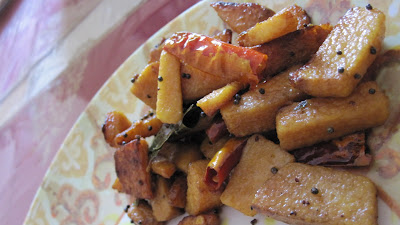
Senaikkizhangu Karumadhu (Yam Saute)


I've talked often about how I eat everything, all fruits and vegetables and all kinds of foods without exception. There are some things I know I like and there are some things I like simply because my dear brother, H, couldn't stand them. The opposite of this also held true for quite a while. I didn't "like" lady's finger simply because he loved it. Yam was (and still is) the one vegetable he absolutely hated. I liked it as a child, but I continue to relish it as an adult as well. I made this saute, a staple at my parents' home, recently. And then I made it again.


Here's the recipe, handed down from mother to daughter and then from daughter to the world!


2 cups Yam, peeled and diced

3-4 Red Chillies

1/4 tsp Turmeric (optional)

1 tbsp Tamarind Paste

1 tsp Oil

Salt to taste


For the tempering:

1 tbsp Oil

1/2 tsp Mustard Seeds

1/4 tsp Asafoetida

7-8 Curry Leaves


Pressure cook the yam with the tamarind paste, turmeric (if using), salt, chillies and a teaspoon of oil with 3 cups of water. Drain the water.


In a kadhai, heat the tablespoon of oil. Add the mustard seeds and asafoetida. When the mustard splutters, add the curry leaves and the drained yam.


Saute for a minute, cover and cook for 4-5 minutes. Remove the lid and allow the pieces to crispen. Serve hot with some rice and sambar, your meal is complete!


Please also remember that the Tried and Tasted (Sunshine Mom's Blog) is on at The Singing Chef. Do send in your entries.

August 13, 2009

Zucchini Kootu


Exotic vegetables needn't be only used for exotic dishes. They can be adapted to our day to day foods as well. Now, it is one thing to use local vegetables in our traditional dishes, but quite another to find special vegetables and then use them in "ordinary" dishes. I remember the first time Amma bought Brussels Sprouts in Madras. And she made upkari in the same manner as she'd make this. I thought she just wasn't creative then. But when I make mushrooms this way or zucchini in this manner, it does amount to the same thing.

Vaishali recently blogged about the Zucchini Kootu. The idea seemed wonderful and I wanted to try it out. I was feeling quite lazy and didn't want to do much work. I married her idea to Amma's recipe and landed with this. I really enjoyed the kootu and look forward to eating this more often!

1 cup Zucchini, peeled and diced
1/2 cup Moong Dal
2 tsp Sambar Powder
2 tbsp Coconut, scraped
1 tsp Cumin Seeds
1 tsp Urad Dal
1 tsp Oil
1/4 tsp Asafoetida
Salt to taste


For the Tempering:
1/2 tsp Oil
1/2 tsp Urad Dal


Pressure cook the diced zucchini along with the moong dal and the sambar powder.


Heat the oil in a frying ladle and add the urad dal. Fry till the dal turns golden brown. Grind this along with the cumin seeds and the coconut. Add this paste to the zucchini-moong dal mixture along with the salt. Add the asafoetida and mix well.


For the tempering, heat the oil in the frying ladle and add the urad dal. Add this to the dish and serve hot with steamed rice.

August 9, 2009

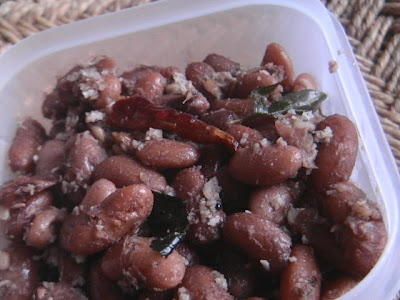
Rajma Sundal


There are snacks and there are snacks and then there is Sundal. To me sundal has always been a tasty and filling snack. But more than that, it is a guilt free snack. I mean, how many snacks do you know of that would fit the bill here? While I have used kidney beans in a variety of ways. I was surprised to note that I hadn't tasted it in its sundalavatar! I tried it and I was quite impressed.


1 cup Kidney Beans, soaked overnight
1 tsp Oil

7-8 Curry Leaves
1/4 tsp Mustard Seeds
1/4 tsp Urad Dal
1/4 tsp Chana Dal
1 tsp Green Chilli Paste
1/4 tsp Ginger Paste
1 Red Chilli
1/4 tsp Asafoetida
1 tsp Dry Mango Powder (Amchur)
1 tbsp Coconut, scraped
Salt to taste


Pressure cook the soaked kidney beans with salt for 4-5 whistles. Drain when done.


In a kadhai, heat oil. Add the urad and chana dals, mustard seeds and asafoetida. When the mustard splutters, add the curry leaves, ginger and chilli pastes, and the red chilli. Fry for a minute. Add the cooked kidney beans, dry mango powder, and a little salt. Cover and cook 4-5 minutes. Garnish with the scraped coconut and enjoy.


This is perfect for breakfast, as a snack or even as a side with your meal.

August 7, 2009

Turai Thuvayal


There are many vegetables I just never bought because I didn’t know how to cook them. For the longest time, I only cooked with the so-called English vegetables. Slowly, over the last couple of years, I have started getting better acquainted with many vegetables. While I have jumped with joy to find even those vegetables that I couldn’t have cared less for in a different avatar, I have started incorporating more local produce. In fact, when I made Tinda Koora, I couldn’t help but think of this post at Nupur's blog. At the same meal, we had this other very south Indian dish made with a very north Indian vegetable. Given my penchant for making thuvayals/thogayals out of every vegetable I can lay my hands on, this comes as no surprise.


4 medium SpongeGourds (Turai/Tori/Mantav Ghashale), scraped and chopped
4 Red Chillies
1 tsp Mustard
3 tsp Urad Dal
1/4 tsp Asafoetida
3 tsp Oil
1 tbsp Tamarind Paste
Salt to taste


Place the sponge gourd pieces in a microwave safe bowl. Add 2 tbsp of water and cook on high for 2 minutes. Squeeze out the water when cool.


Heat the oil and fry the red chillies, mustard, asafoetida and urad dal for a couple of minutes. Grind the chillies along with the tamarind paste and salt. Add the sponge gourd pieces and grind again. Finally, add the fried mustard and urad dal and grind lightly.


Serve this with rice and a little ghee and some papads or vadams on the side. We ate this with rice, sambar and Tinda Koora.

June 7, 2009

Katrikkai Thuvayal


Smoked brinjal. Something I really detested while growing up. Amma didn't make bharta back then, but she did make this thuvayal/thogayal every once in a while. Later, she learnt that one could steam the brinjal in the cooker and started making it that way. I could more than tolerate that as it didn't have the "smokey" flavour. I even remember her using the microwave to roast the brinjal, but she says she hasn't tried. I insist that she did. (I've lived away for so long now that at times I met my other relatives almost as often as I met my parents. So, maybe she is right after all.)


This thuvayal is a favourite of many and S tells me that this is made in Andhra Pradesh as well. So, it is one dish that is common to both households. I have, of late, started to enjoy the flavour. Maybe it is all the bharta that I get to eat at work (at home too!) or maybe my tastes have simply evolved over time.


1 Large Brinjal
4 Red Chillies
1 tsp Mustard
3 tsp Urad Dal
1/4 tsp Asafoetida
3 tsp Oil
1 tbsp Tamarind Paste
Salt to taste

Oil to brush the brinjal


Brush the brinjal with a little oil. Roast the entire brinjal on an open flame. Turn it around until the entire brinjal is roasted and the skin is evenly black and the brinjal is cooked. (You could use a skewer for this.)


Place the brinjal in a bowl of water. Cool and remove the skin.


Heat the oil in a kadhai and fry the red chillies, mustard, asafoetida and urad dal for a couple of minutes. Grind the chillies along with the tamarind paste and salt. Add the brinjal and grind again. Finally, add the fried mustard and urad dal and grind lightly.


As a variation to this, you could substitute the red chillies with an equal number of green chillies (more or less, depending on your taste). Back home, that's how Amma makes it.


While this is great with some rice and papads, it makes a great chutney to go with idlis and dosas. Especially, if you, like me, are trying to reduce your dependence on coconut for chutneys.

May 21, 2009

Rava Payasam


I'm not the biggest payasam fan to walk the face of the earth. I like some varieties, I avoid the rest like the plague. Well almost. I guess after two years of telling all of you what a good child I've always been, it is difficult to make you believe that I can avoid any kind of food.


After semia payasam and badam kheer, this is my favourite milk payasam. I do like a few of the coconut milk varieties.


1/4 cup Cream of Wheat (Rava/Sooji/Semolina)

1/2 can (200g) Sweetened Condensed Milk (Milkmaid/Mithai Mate)

1/2 litre Milk

½ tbsp Clarified Butter (Ghee)

½ tsp Cardamom Powder

a pinch Saffron, dissolved in some milk


For the garnish

1 tbsp Ghee

2 tsp Raisins

2 tsp Cashews


Heat the ghee in a vessel and roast the semolina for 4-5 minutes. Add enough water to cover the semolina and cover the vessel. Cook for about 5 minutes. Add the milk and the condensed milk to this. Keep stirring until the mixture is even (else you'll have burnt condensed milk) and bring to a boil. Add the cardamom powder and saffron mixture. Simmer the mixture for about 10-15 minutes.


For the garnish, heat the ghee in a frying ladle. Add the cashews. When the cashews turn golden, add the raisins. When the raisins become plump, pour the contents of the ladle into the simmering mixture.


This can be had hot or cold. When kept in the fridge, this payasam takes on a creamy, pudding like texture. This is really like best had when cold. If you're fond of puddings, that is.

April 9, 2009

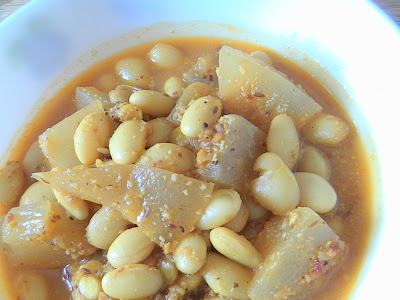
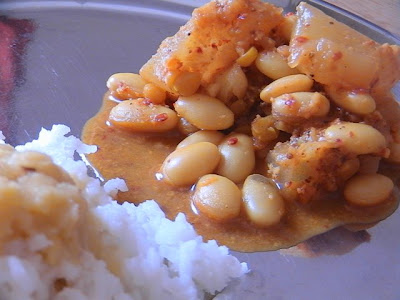
Pooshnikkai Mochai Kootu


This was really my very first attempt at making kootu. I had some chopped ash gourd in my freezer. I also had some soaked and cooked hyacinth beans (rangoon mochai/avro) in the freezer. Even though I try not to use up my frozen goods on a weekend, sometimes I am my laziest best on a weekend. A quick call to Amma and I had the recipe for this kootu. It turned out to be a slight disaster as the consistency wasn't really close to that of a kootu. A real kootu should look more like this. But we still enjoyed it with some rice and yelai paruppu.


1 cup Ash Gourd, cubed

1 cup Hyacinth Beans, soaked and cooked

2 tbsp Chana Dal + 1 tsp Chana Dal

1/2 tsp Asafoetida

1 tsp Udad Dal

1/2 tsp Coriander Seeds

1 tsp Cumin

1/2 tsp Pepper

2 tbsp Coconut, scraped

1 tsp Oil

Salt to taste


For the tempering:

1 tsp Oil

1/4 tsp Mustard Seeds

7-8 Curry Leaves


Pressure cook the ash gourd with 2 tablespoons of chana dal. Add the hyacinth beans. Add the asafoetida to this.


In a frying ladle, heat a teaspoon of oil. Add the coriander seeds, cumin seeds, pepper, along with the udad and chana dals. Fry for a minute. Grind this along with the coconut to a fine paste.


Add this paste to the ash gourd-bean mixture along with some salt and mix well.


In a frying ladle, heat another teaspoon of oil and add the mustard to it. When the mustard splutters, add the curry leaves. Add this tempering to the kootu.


You have great tasting comfort food on the table. Enjoy this with rice and paruppu and when you're done with lunch, settle down in front of the TV and doze maybe?

April 7, 2009

Yelai Paruppu


This dish isn't really a dish. I mean, it doesn't classify as a dish. But many meals would be incomplete if this little dish didn't make an appearance. Mixed with rice and ghee, this becomes the staple food of thousands of little children. In fact, at my parents' home, mor kuzhambu, menthi kuzhambu, avial and kootu are never made without this little sidekick. This is just plain old Yelai Paruppu.


Since I talk about this a lot, I decided to share the "recipe" with you.


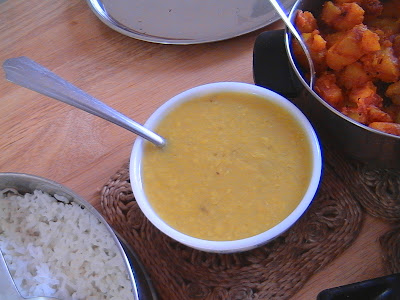
1 cup Red Gram Dal (Toor Dal)

Salt to Taste


Pressure cook the dal with 2-3 cups of water. Drain the water and keep aside. You could use it to make rasam.

Mash the dal and add some salt. The "dish" is ready.


We usually mix some of this yelai paruppu with some rice and then eat it with mor kuzhambu. You could enjoy this whichever way you like.

April 2, 2009

Panakam


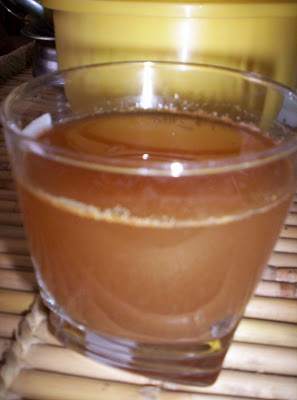
As a continuation to yesterday's post, I present another drink that is traditionally made on Rama Navami at my place. Panakam. During all my growing up years, I must say I preferred this drink over Neer Mor. Today, I think I've moved from sweet to savoury. I wonder if it is me or my waistline.


1/4 cup Jaggery

2 cups Water

1/4 tsp Cardamom Powder

1 tsp Dry Ginger Powder


Dissolve the jaggery in a little water. Strain this mixture. Add the remaining water, ginger powder and cardamom powder.
Serve chilled.


As a variation, you could add the freshly squeezed juice from 1 lime. A friend of mine brought me some panakam around 4-5 years ago. That was when I was introduced to the "lime juice in panakam" concept. Last year, I made two batches of panakam, one with lime juice and one without. I loved both.

April 1, 2009

Neer Mor


As you must have noticed, I am not the best when it comes to celebrating festivals or cooking festival related food. I shared with all of you my first Gowri-Ganesha celebration. And since then, I have tried to do what Amma did during festivals. I worry that my "celebrations" will soon be limited to cooking alone. Some part of me tells me that there's nothing wrong with that.


Last year, I was alone during Rama Navami. I didn't want to cook a feast for one person. I made two drinks that Amma makes every year on Rama Navami. This year, I hope to make those two along with some of the other things that are traditionally made.

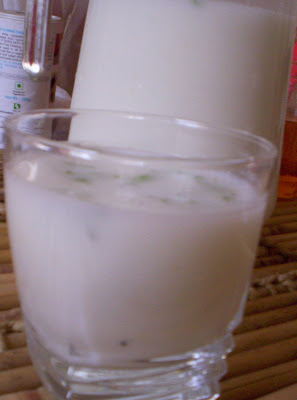
Sitting in my drafts for a year now, I bring to you this simple recipe. Customary on Sri Rama Navami but welcome at any time during the long summer months is this spiced buttermilk: Neer Mor.


1 cup Curd

4 cups Water

2-3 Green Chillies, chopped finely

1 tsp Ginger Paste

3-4 tbsp Coriander Leaves, chopped finely

Salt to taste


Beat the curd until smooth. Blend with the water. Add the salt, coriander leaves, ginger paste and green chillies. Mix well. Serve cold.


I don't wait for this festival to make this drink, but it seemed apt to share this with all of you when the festival is just round the corner.

March 11, 2009

Paruppu Thuvayal


Food combinations. I always wonder where they come from. Who decided that X shall go with Y or that A should be paired with B. Earlier, I didn't question this at all. Paruppu thuvayal or thogayal was always made with Menthi Kuzhambu or Milagu Kuzhambu. When I decided to make this one evening, S told me that his family makes "Kandi Pappu Pachadi" to go with idlis and dosas.


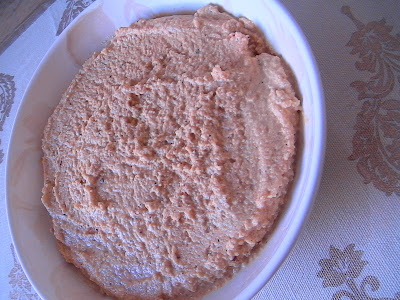
I made this again when my parents were here and I asked Appa if he wanted to eat this thuvayal with dosas and he was taken aback. I must admit, I was a little surprised when S suggested this, but with some extra red chillies, this thuvayal goes from being a mild accompaniment for rice to a flavourful side for idlis.


1/2 cup Toor Dal

1 tbsp Pepper Corns

1 Red Chilli

1 tbsp Oil

Salt to taste


Heat the oil in a kadhai. Add the pepper corns, red chilli and toor dal. Fry for 4-5 minutes. Add the salt and take it off the flame.

Add enough water to cover the dal and keep aside for 30 minutes. Grind to a fine paste.


Mix this with some hot rice. Enjoy it with some Milagu Kuzhambu. There couldn't be a better way to enjoy a lazy sunday lunch. Off this goes to Divya as she hosts this month's edition of Think Spice... Think Pepper.