Google
 
Showing posts with label Curd. Show all posts

August 15, 2012

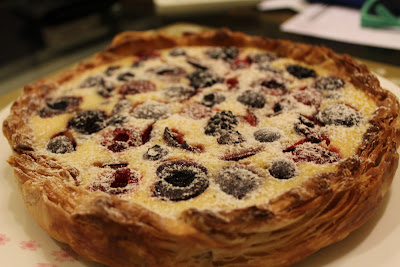
Cherry Berry Yogurt Tart


A few years ago, our blogs were our blogs. Fellow bloggers and other readers would come to our blogs, read our posts and comment on them. I remember very clearly the time when I lived for those comments. Because they were my only connection to my readers. (Julie & Julia, anyone?) I still wait eagerly for comments to posts that I put up. Today they are few and far between. But many lines are blurring and I now have multiple connections with my fellow bloggers and readers. Facebook is one of those connections.

Last year, a few random conversations led to the formation of a Baking Club and all of us made a Mango Cake. I got a little busy in the months that followed and couldn't keep up. Over the next few months, my blog suffered from lack of attention. In the last few months, it has picked up speed again.

 
A more recent chat on Facebook led to the revival of this club. The one I fondly called The Sisterhood of Travelling Cake Tins is now christened that. And since today is the 100th birthday of Julia Child, the theme for this episode is her Baked Yogurt Tart. Keep a lookout in the blogosphere today. You are bound to see multiple yogurt tarts from my dear friends and fellow bloggers. And given that Cook For Julia is being hosted by PBS, you will see many other Julia Child recipes too.

This recipe is adapted from a Julia Child recipe found here. I used readymade frozen puff pastry for the base. You can find my tried and trusted recipe for shortcrust pastry here. I omitted the nuts from the recipe.

1 recipe Shortcrust Pastry dough/Puff Pastry

For the filling:

2 cups Yogurt
3/4 cup Sugar
3 Eggs
3/4 cup Flour
2 tbsp pure Vanilla Extract

1/2 cup Cherries, pitted and halved
1 cup Mixed Berries (I used raspberries, blackberries and blueberries)

Icing sugar, for dusting

Heat the oven to 400F/200C.


Roll the pastry doughinto a 12 inch circle of 1/4 inch thickness and fit it into a 9" round springform pan. Cover the top with baking paper and blind bake for 20 minutes with pie weights, rice or beans.

Remove the weight and the baking paper and allow the tart shell to cool. Set the oven to 325F/160C.



 In the meanwhile, beat the eggs and the sugar together. Add the yogurt and the vanilla extract and mix well. Add the flour a little by little and fold it into the mixture. Pour the mixture into the cooled tart shell. Do not fill to the brim, only about 2/3. Add the fruit. (The tart will look like this at this stage.) Bake for 30 minutes. Allow to cool. Cut into wedges and serve.

Packed with fruit and the goodness of yogurt, this is one keeper recipe.

Happy 100th birthday Julia! Happy Independence Day! And a toast to dear S and I. We lost our independence this day six years ago when we got engaged formally.

Here are the links to the other posts from the sisterhood:

Aparna: Baked Yogurt Tart (Tarte Au Yaourt) With Fresh Orange & Pistachios, In An Oatmeal Crust
Nandita:Baked Yogurt Berry Tart
Arundathi:
Arundati:Baked Yogurt Tart with Blueberries, Almonds and Orange Zest in an Oatmeal Pie Crust</
Monika:Baked Yogurt Tart with Fresh Figs and Blueberries

August 28, 2009

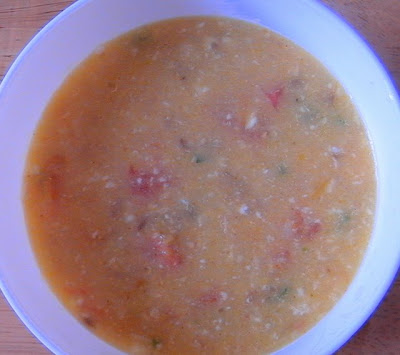
Panchratni Dal


For the longest time, I cooked with only Toor Dal. At best, I'd make this moong dal preparation. I have tried very often to cook with other dals and I find that mixing them up is the way that works well with me. The flavours are part known and part unknown. So, I know for a fact that I won't be completely repulsed by a new flavour.

This is one such mixed dal. I got the idea from one of Tarla Dalal's books (yet again!), but have modified it and made it many times. It is a great hit at office and at home. I felt the need to impress my parents with some "wow" food. I served this at lunch when they were visiting and they were impressed. The dal isn't too spicy nor too mild. It is one of those dishes that make you say, 'Just perfect!"


1/2 cup Mixed Dals (Moong, Masoor, Urad, Chana and Toor)
1 tsp C
umin
1 O
nion, chopped
1 tsp C
oriander powder
1 tsp C
hilli powder
1/4 tsp Turmeric powder
1 tbsp Coriander, chopped
1 tbsp Ghee
Salt to taste


For the tempering:

1 tbsp Butter
1 Tomato, chopped

1/2 cup Curd

1/4 tsp Garam Masala


Wash the dals and soak them for about 30 minutes.


In a pressure pan, heat the ghee and add the cumin. When the cumin starts to crackle, add the onion and fry for about 2-3 minutes. Drain the water from the dals and add this to the onion mixture. Fry together for about a minute and add about 2-3 cups of water. Cover and cook for 3 whistles. Open the lid after the pressure has been released and add the coriander powder, chilli powder, turmeric powder and salt. Cook this mixture until the dal thickens. Mash the dals.


In another pan, melt the butter and add the chopped tomato. When the tomato has cooked a bit, add the curd and the garam masala and cook for a minute or so. Add this to the dal. Garnish with chopped coriander and enjoy the dal with rotis or rice.


I'm sending this to Barbara's event A Taste of Yellow with a hope to help raise awareness for cancer on a global level.

April 1, 2009

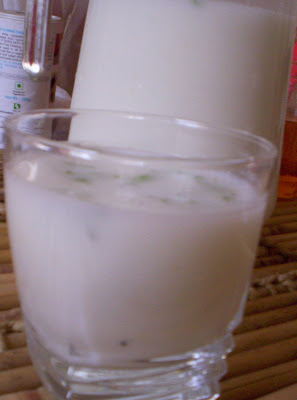
Neer Mor


As you must have noticed, I am not the best when it comes to celebrating festivals or cooking festival related food. I shared with all of you my first Gowri-Ganesha celebration. And since then, I have tried to do what Amma did during festivals. I worry that my "celebrations" will soon be limited to cooking alone. Some part of me tells me that there's nothing wrong with that.


Last year, I was alone during Rama Navami. I didn't want to cook a feast for one person. I made two drinks that Amma makes every year on Rama Navami. This year, I hope to make those two along with some of the other things that are traditionally made.

Sitting in my drafts for a year now, I bring to you this simple recipe. Customary on Sri Rama Navami but welcome at any time during the long summer months is this spiced buttermilk: Neer Mor.


1 cup Curd

4 cups Water

2-3 Green Chillies, chopped finely

1 tsp Ginger Paste

3-4 tbsp Coriander Leaves, chopped finely

Salt to taste


Beat the curd until smooth. Blend with the water. Add the salt, coriander leaves, ginger paste and green chillies. Mix well. Serve cold.


I don't wait for this festival to make this drink, but it seemed apt to share this with all of you when the festival is just round the corner.

November 23, 2008

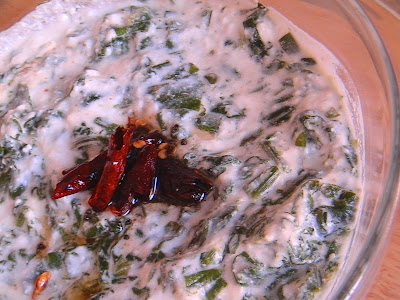
Palak Raita


I have no idea how I learnt this dish. Or where. Or who from. But I have been making this regularly ever since I figured that spinach could be used this way. I made this yesterday and S said I hadn't made this since we got married. I will be making this more often through this winter when spinach is available in plenty.


1 bunch Spinach, cleaned

1 cup Curd, beaten lightly

1/4 tsp Ginger paste (optional)

1/4 tsp Cumin Powder

Salt to taste


For the tempering:

1 tsp Oil

1/4 tsp Mustard Seeds

1/4 tsp Asafoetida

2 Red Chillies, broken


Place the cleaned spinach in a microwave safe bowl and cook for 4-5 minutes. Cool and chop roughly.


Add this to the beaten curd along with the salt, ginger (if using) and cumin powder.


In a frying ladle, heat the oil. Add the mustard seeds and asafoetida. When the mustard splutters, add the red chillies. After a minute turn off the flame and pour the tempering over the spinach-curd mixture.


With a little over a week of the marathon left, check out these blogs: Siri, Srivalli, Ranji, PJ, Curry Leaf, Medha, Priya, Bhawna, Raaji, Ruchii, Anu, Kamala, Roopa, Divya Kudua, Rekha, Divya M, Lakshmi, Lakshmi Venkatesh , Sripriya, Viji, Kamalika, Pavani, Karuna and Roochi.

November 17, 2008

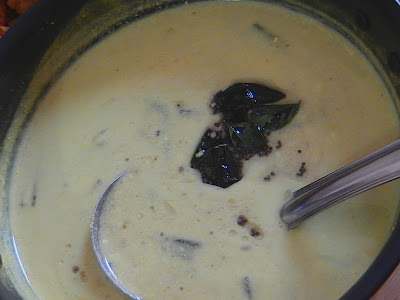
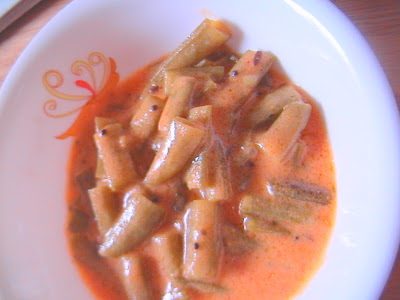
Vendakkai Mor Kuzhambu


A little over a year ago, I had no idea what to do with lady's finger except for pachadi and sambar. This summer, I added to my repertoire and can confidently say that I know at least 6-8 ways of cooking this vegetable. And by know, I really mean know.


A couple of weeks ago, we had a bagful of lady's finger in the fridge. A friend, who works with a fresh produce company, brought us another bagful. I'd never seen fresher lady's fingers than the ones she brought us. We enjoyed the vegetable in more ways than one.


Here's what I made on Deepavali. Pandigai saapadu complete with mor kuzhambu. The method of preparation varies a wee bit from normal mor kuzhambu as the lady's finger needs to be cooked in tamarind water.


200g Lady's Finger, chopped into 2" pieces

1 tbsp Tamarind Paste


1-2 tbsp Toor Dal, soaked
1/4 cup Coconut, shredded
1 cup Curds, beaten
1 tsp Urad Dal
1 tsp Fenugreek Seeds
2-3 Green Chillies
1 tsp Oil
1/4 tsp Turmeric
Salt to taste


For the Tempering:
1 tsp Cooking Oil
1 tsp Mustard Seeds
½ tsp Asafoetida (Hing)

7-8 Curry Leaves


Cook the lady's finger pieces with the tamarind water and a little salt. Drain the water when the vegetable is cooked.


Fry the urad dal, fenugreek seeds, and green chillies in the oil. Grind this with the coconut, turmeric and soaked toor dal. Add this paste to the curds and bring the mixture to a boil over a low flame after adding the lady's finger and salt. In a frying ladle, heat the oil and add the mustard and asafoetida. Add the curry leaves after the mustard has spluttered. Add this to the boiling mixture and serve.


We had this with some rice, yelai paruppu, rasam, and potato curry. Find out what my co-runners have been eating: Siri, Srivalli, Ranji, PJ, Curry Leaf, Medha, Priya, Bhawna, Raaji, Ruchii, Anu, Kamala, Roopa, Divya Kudua, Rekha, Divya M, Lakshmi, Lakshmi Venkatesh , Sripriya, Viji, Kamalika, DK, and Pavani.

November 12, 2008

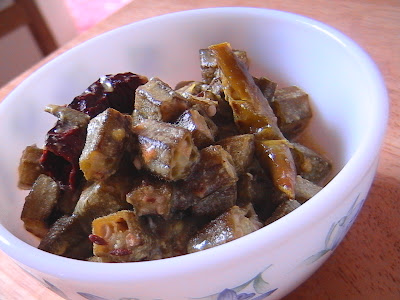
Dahi Bhindi


This is one more way that I learnt to cook lady's finger this summer. In addition to using up the lady's finger, it also helps use up any extra curd you might have. I'm fairly certain this would taste great with rice or rice and dal, but we had them for lunch with chapatis.


1/2 kg Lady's Finger, chopped into 2" pieces

2-3 Green Chillies, slit

1 tsp Ginger Paste

1/4 tsp Pepper

1 1/2 cups Curd, beaten

1 tbsp Gram Flour (Besan), dry roasted

2 tsp Oil

2 Red Chillies

1 tsp Cumin Seeds

2 tsp Coriander Powder

1/4 tsp Turmeric Powder

Salt to taste


Heat the oil in a kadhai. Add the cumin seeds, red chillies, green chillies, coriander powder, turmeric powder, gram flour and salt. Add the lady's finger and cook for 8-10 minutes. Add the ginger paste along with the pepper. Add the curd, cover and cook over a low flame until the lady's finger is cooke
d.


Do check out the blogs of my co-runners in the recipe marathon!
Siri, Srivalli, Ranji, PJ, Curry Leaf, Medha, Priya, Bhawna, Raaji, Ruchii, Anu, Kamala, Roopa, Divya Kudua, Rekha, Divya M, Lakshmi, Lakshmi Venkatesh , Sripriya, Viji, Kamalika, DK, and Pavani.

November 1, 2008

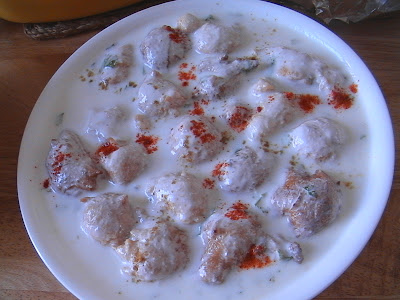
Instant Guilt Free Tayir Vadai


I've mentioned in several posts that a festival meal at my place was incomplete without the "vadai payasam" routine. Since I got married, plenty of festivals came and went. For the first two years, I hardly made any "festival food" for any festival. I did cook traditional meals for my first Gowri Tritiya and Ganesh Chaturthi, including my favourite Madgane. But that sort of summed it up. Vijayadashami this year marked the third year of festivals for us. I decided to make a very traditional meal as we had some guests for lunch. I made puliyodarai, avial, rice, paruppu usli, sundal and semia payasam. I also decided to make some tayir vadai.


I'd read enough and more about making vadais in the appey kayli. I had also seen a recipe for vadais made with urad flour. While I didn't follow the recipe entirely, I did like the idea very much. The "accident" that I talked about in an earlier post happened when I was trying to deep fry these. So, I resorted to making these instant vadais in the appey kayli. I'll admit they didn't come close to Amma's melt in your mouth tayir vadais, but in a pinch, they'll more than just do.


For the Vadais:


1 1/3 cup Urad Dal Powder

1 tsp Baking Powder

1/2 tsp Ginger Paste

1 1/4 cups Water

1/4 tsp Asafoetida

1 tsp Green Chilli Paste

Salt to taste

Oil for frying


For the Curd Mixture:

2 cups Curd, beaten

1 tsp Chilli Paste

1/2 tsp Ginger Paste

2 tbsp Coriander Leaves, chopped

Salt to taste


For the tempering:

1 tsp Oil

7-8 Curry Leaves
1/4 tsp Mustard Seeds

1/4 tsp Asafoetida


Mix the ingredients for the vadais. Add a little oil in each of the appey kayli moulds and heat the pan.


In a separate vessel, mix all the ingredients for the curd mixture. In a frying ladle, heat the oil, add the mustard seeds, and when they splutter, add the asafoetida and curry leaves
. Add this to the curd mixture.

Pour spoonfuls of the vadai batter into each appey mould and fry on both sides for a couple of minutes each. Add these vadais to the curd mixture. Garnish with a little Kashmiri Chilli Powder if you like.

Tasty, healthy and ready in just a jiffy. Miracles do happen. On streets other than just the 34th. And what better way to start running a marathon than with some healthy food? I'm happy to be a part of the Recipe Marathon #2. My fellow runners are:


1) DK

2) Siri

3)
Srivalli

4)
Ranji

5)
PJ

6)
Curry Leaf

7)
Medha

8)
Priya

9)
Bhawna

10)
Raaji

11)
Ruchii

12)
Anu

13)
Kamala

14)
Roopa

15)
Divya Kudua

16)
Rekha

17)
Divya M

18)
Lakshmi

October 19, 2008

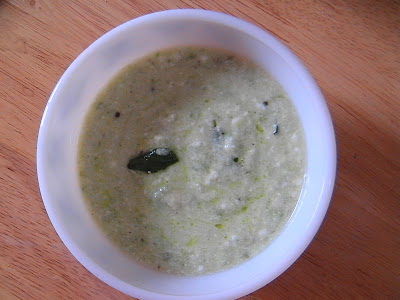
Mantav Ghashala Bajji


A complicated name for an oh-so-simple dish. Mantav Ghashale is the Konkani name for what is known as Tori in Hindi. The Spencer's super market here calls it Smooth Gourd. I think that's because it is a smooth version of the Ridge Gourd. While I have no love for either vegetable, I have cooked both very often. Summers in Delhi/NCR mean that you eat the same vegetables over and over again. During one vegetable buying trip, I'd gone through everything and picked up nothing. S came over and said, "Are the vegetables so bad?" And I said, "No, but I just made all of these last week." As I said it, I realized what was happening. I forced myself to pick up the same vegetables. I figured that if I needed a change, I simply had to cook the same vegetables differently.


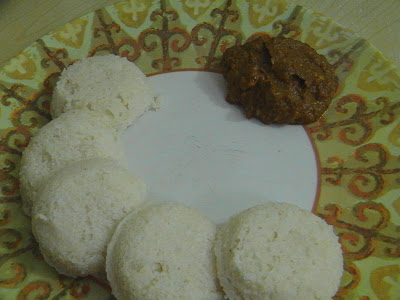
For instance, I made a thuvayal with Tori with go with idlis. I followed the recipe for Peerkangai Thuvayal. I decided that thuvayals are great sides with idlis and dosas as they have more than a decent helping of vegetables. (And don't ask for my recipe for idlis. I really don't have one and, much to Amma's disgust, continue to use MTR Rice Idli mixes.)


I remember that Amma made this "bajji" a few times. This bajji is not to be confused with the one that belongs in the bonda family. It is a simple side dish, quite like a tayir pachadi. So when you put Mantav Ghashale and Bajji together, you get this dish! The day I made it, it was a welcome change from the normal Tori sabji.


4 Smooth Gourds

2 Green Chillies

2-3 tbsp Coconut, scraped

1 cup Curd, beaten


For the tempering:
1 tsp Oil
1/4 tsp Mustard Seeds
7-8 Curry Leaves

1/4 tsp Asafoetida


Roughly scrape the skin of the gourds. Do not peel. Chop them into 1 inch cubes and place the in a microwave safe bowl. Cook on high for 3-4 minutes. Cool.


Grind together the cooked gourd pieces with the coconut and chillies. Mix together with the beaten curd.


In a frying ladle, heat the oil, add the mustard seeds, and when they splutter, add the asafoetida and curry leaves. Add this to the vegetable-curd mixture.


Your side dish is ready!

July 18, 2008

Gawarfali ki Sabzi


This summer I resolved to try out the summer vegetables that show up in every market I visit. While I always ate all vegetables and cleaned my plate without as much as a whimper, there are vegetables that I dislike. Tinda is one of them. But I bought it, made it, and guess what, ate it too. Likewise, I bought cluster beans and yard long beans, snake gourd and bottle gourd, and everything else that summer threw at me. What worried me was the fact that if I didn’t make certain vegetables, I could no longer retain my title of “not-at-all-picky eater”. Moreover, if and when I have children, I figured my likes and dislikes should not govern their meals. If I forget about a certain vegetable over time, by the time I have children, I might have erased memories of some vegetables from my brain completely. Now that I have a blog, I can cook these vegetables, enjoy them in different ways and save them here for eternity.


Cluster beans (known as Gawarfali in Hindi, Mitkesaang in Konkani, Kotthavarangai in Tamil, Mattikaya in Telugu) happen to be the variety of beans that takes the longest to cook. Appa’s grandmother used to call it, “Avasarathukku edhiri” (loosely translated as the enemy of emergency/urgency). I have learnt that the best way to cook these is in my pressure cooker. Amma cooks them in advance and freezes them so that she can use them at a moment’s notice.


I came across this recipe in Tarla Dalal’s Rajasthani Cookbook and modified it immediately and set to work. (My system is not ready yet for the heat of Rajasthani food and given some health problems I had recently, I am sure it never will be.) It helped that I’d cleaned, strung and chopped the beans earlier. This can be really time consuming otherwise.


2 cups Cluster Beans, chopped, pressure cooked and drained
1 cup Curds
1 tbsp Gram Flour (Besan)
1 tsp Chilli Powder
½ tsp Coriander Powder
1 tsp Oil
¼ tsp Mustard Seeds
¼ tsp Asafoetida
½ tsp Fennel Seeds
Salt to taste


Beat the curds with the gram flour, chilli powder, coriander powder and salt. (A friend recently told me to use the blender to get the perfect texture while beating curds rather than use a whisk.)


Heat the oil in a kadhai. Add the mustard and asafoetida. When the mustard splutters, add the fennel seeds. As soon as the fennel crackles, add the curd mixture and bring to a boil over low heat, while stirring continuously. Add the cooked cluster beans and cook for another 5 minutes.

We had this with rotis for lunch and I know I will make it again next summer. For this summer, I have several other recipes to try out with this vegetable.

July 16, 2008

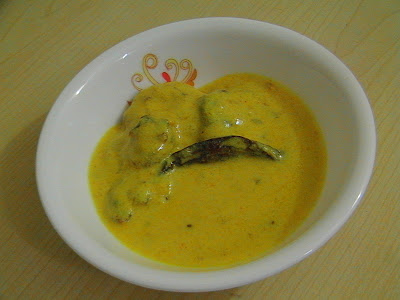
Kadhi and (No Fry) Pakoda for a Milestone


Remember my post on Palak Kadhi? This post is directly connected to that. Let me rephrase that. This post is a direct outcome of the comments that my namesakes, Arundathi and Arundati made on that post. One of them was happy that there was no deep frying and the other thought that fried koftas would have been nice. I couldn’t help remember this picture that was sent with some forward I received. But it got me thinking. For a week or so I thought about how I could have pakodas in my kadhi and yet avoid the pain of deep frying. Since S was traveling again, I had plenty of milk and curd in the house and decided to make kadhi yet again. I decided to make mixed vegetable pakodas to put in my kadhi.


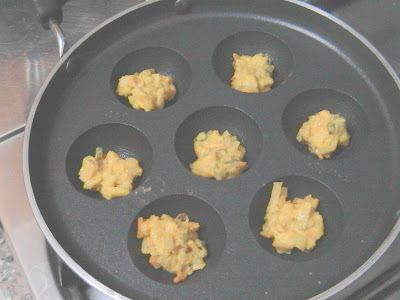
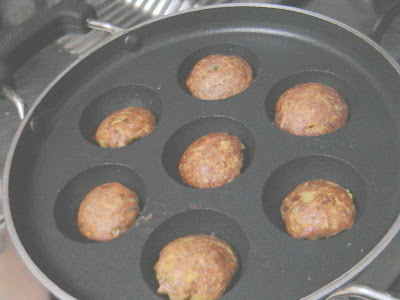
So far, so good. But I didn’t want to heat oil to fry the pakodas. I did the next best thing. I brought out my appey kayli and made my “pakodas” in that. It tasted really nice and once the pakodas soak up the kadhi, you can’t tell that they weren’t fried. It is amazing what blogging does to you. One post and its comments led to my experiment and this way I can have my cake (err pakoda) and eat it too.


Pakodas (Dumplings):
2/3 cup Gram Flour
1 tsp Chilli Powder
1/2 tsp Baking Soda
1 Onion, finely chopped
½ cup Mixed Vegetables, chopped and steamed
1 tsp Green Chilli Paste
2 tbsp Coriander Leaves, chopped
Salt to Taste
A few drops of oil


Kadhi:
1 1/4 cups Curd/Yogurt
3 tbsp Gram Flour
2/3 cup Water
1 tsp Ginger Paste
1 tsp Garlic Paste
1 1/2 tsp Chilli Powder
1/2 tsp Turmeric Powder
1 tsp Coriander Powder
1 tsp Cumin Powder

Tempering:
1 tbsp Oil
1 tsp Cumin Seeds
4 Red Chillies

To make the dumplings, mix the gram flour with the chilli powder, salt, baking soda, onions, mixed vegetables, green chilli paste, and coriander leaves. Add enough water to form a thick batter. Heat the appey patra and lightly oil the moulds. Drop a spoonful of the batter into each mould. Fry until golden brown, turning once and using a few drops of oil if necessary.


To make the kadhi, whisk the curds with the gram flour and water. Add all the spices and salt and mix well. Bring this mixture to a boil over low heat, stirring constantly.

For the tempering, heat the oil in a frying ladle and add the cumin seeds. When they crackle, add the red chillies and take off the flame.


To proceed:

Add the pakodas to the kadhi. Add the seasoning and serve hot with rice.


This experiment couldn’t have come at a better time. This is my 300th post and, in my opinion, it is extremely reflective of the essence of blogging and all its associated joys. Thank you all.

July 1, 2008

Palak Kadhi


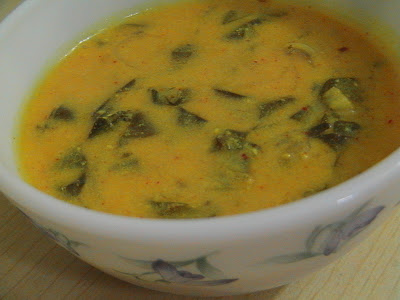
I always say that "Necessity is the mother of invention". I was going through some cookbooks to see what to make for dinner and came across a recipe for palak kofta kadhi. I didn't want to deep fry anything. I had a lot of curd and a lot of spinach, but was feeling terribly lazy. Instead of making koftas, I decided to add the spinach directly to the kadhi. I loved the end result.


1 cup Spinach, boiled and chopped


For the Kadhi:

1 1/4 cups Curd/Yogurt
3 tbsp Gram Flour
2/3 cup Water
1 tsp Ginger Paste
1 tsp Garlic Paste
1 1/2 tsp Chilli Powder
1/2 tsp Turmeric Powder
1 tsp Coriander Powder
1 tsp Cumin Powder


To make the kadhi, whisk the curds with the gram flour and water. Add all the spices and salt and mix well. Bring this mixture to a boil over low heat, stirring constantly. Add the cooked spinach to this and boil for another 5 minutes. Serve hot with rice.


This is a great way to use up any leftover curd and the entire dish comes together in just a few minutes. I cook the spinach in the microwave and it is cooked by the time the kadhi comes to a boil. This recipe is a lifesaver on busy weeknights and is off to Siri for her Frozen Yogurt event.

June 28, 2008

Tomato Pachadi

I eat a lot of curd. I desisted curd rice when I was a child. I’d always ask Amma why I had to eat curd rice when I’d already eaten rice with sambar and rasam. She tried to explain to me that is was good for me. I don’t think I ever bought her explanations. I do eat curd rice every once in a while, but I end any meal with curd. So, even if I have a box of pasta for lunch, I carry along a box of curd.


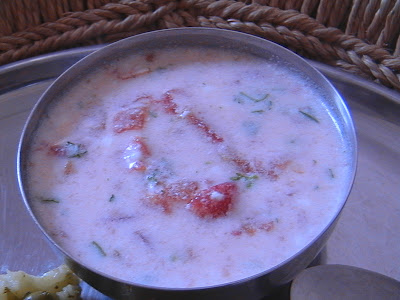
When I am full of enthusiasm or energy or both, I make raita or pachadi with the curd. This tomato pachadi is something that I make very often. I just never bothered to take a picture of it or blog about it. Until today, that is.


3 Tomatoes, blanched, peeled and chopped
1 cup Curd
1 tsp Chilli Paste
1 tsp Ginger Paste
2 tbsp Coriander, chopped
Salt to taste


For the Tempering:

1 tsp Cooking Oil

1 tsp Mustard Seeds

½ tsp Asafoetida (Hing)

7-8 Curry Leaves


Whip the curd and add a little water. Add the ginger and chilli pastes and salt and mix well. Add the tomato pieces and the coriander.


In a frying ladle, heat the oil. Add the mustard seeds and asafoetida. When the mustard splutters, add the curry leaves. Pour this over the tomato curd mixture.


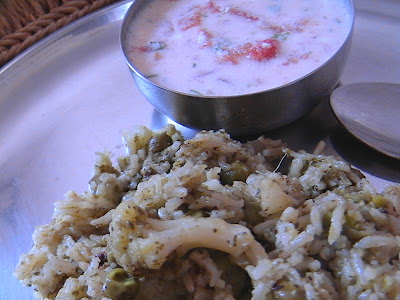
We had this with some cauliflower peas pulao on a very lazy Sunday afternoon.
This is off to Siri for her Frozen Yogurt event.

June 24, 2008

Mor Kuzhambu


There are festivals and then there are festivals, but one thing remains constant through it all. Festival food! At our place, a typical Tamil festival menu would comprise rice, yelai paruppu (thick toor dal), mor kuzhambu, yelimichai saathumadhu( a.k.a. Rasam), vadai, payasam, vazhaikkai karumadhu, koottu, appalam, and tayir vadai.

Mor kuzhambu featured once a week in Amma's lunch menu as well. Again, I can't say I always liked this dish, now it feels like I can't get enough of it. I don't know how I didn't get around to posting this earlier.


1-2 tbsp Toor Dal, soaked

1/4 cup Coconut, shredded
1 cup Curds, beaten
1 tsp Urad Dal
1 tsp Fenugreek Seeds
2-3 Green Chillies
1 tsp Oil
1/4 tsp Turmeric
Salt to taste
1/2 cup Ash Gourd, cooked


For the Tempering:

1 tsp Cooking Oil
1 tsp Mustard Seeds
½ tsp Asafoetida (Hing)
7-8 Curry Leaves


Fry the urad dal, fenugreek seeds, and green chillies in the oil. Grind this with the coconut, turmeric and soaked toor dal. Add this paste to the curds and bring the mixture to a boil after adding the ash gourd and salt.


In a frying ladle, heat the oil and add the mustard and asafoetida. Add the curry leaves after the mustard has spluttered. Add this to the boiling mixture and serve.

This is my grandmother's recipe handed down to me through Amma. Special days call for special food and today is my Paatti's 95th birthday. So the mor kuzhambu is only fitting! Happy birthday Paatti!


I am sending this to Siri for her
Frozen Yogurt event.
 

May 30, 2008

Raspberry Raisin Ring


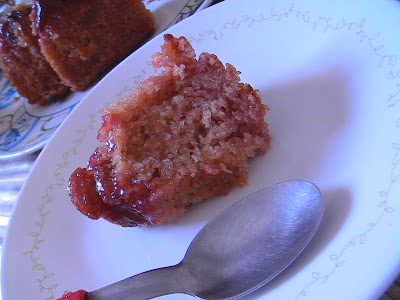
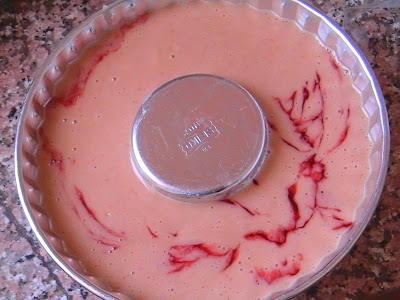
In my endeavour to participate in this month’s AFAM, I entertained many thoughts in my head. The simplest was to make a Raspberry trifle as the first time I’d ever tasted Raspberry was in the custard-jelly combination. I checked my pantry and I had all flavours of custard and jelly… except Raspberry. Then I thought of using raspberry jam, but then I’d have to go buy a bottle of jam for this (and these raspberry jams cost a bomb!! And we don’t even eat jam much.). All this while, I forgot that S had brought me a bag of 7-fruit blend which had dried raspberries. I realized only when I made this cake and put it in the oven. Anyway, I did find something raspberry in my pantry and I’m totally amazed at how well it blended with this cake. Nandita had sent me an assortment of flavoured teas and one of them was Raspberry, Cranberry and Elderflower. That’s the raspberry that went into this cake. This was an experiment from start to finish and while the cake didn’t turn out the way I thought it would (the batter was runnier than I expected). But on the whole, it was a yummy cake and we took some of it a dinner party that evening because I knew kids would be around (and most kids I know love jam!). The rest of the cake we took to our offices where it was gone in no time.


1/2 cup Yogurt
6 tbsp Oil
2 eggs, beaten
1 tbsp Jam
1 cup Flour
1/2 tsp Baking Soda
Pinch of salt
7 tbsp Sugar
1 Raspberry Tea Bag
2 tbsp Raisins


Whisk the yogurt with the eggs, sugar and oil. Sift together the flours, baking soda and salt.


Place the tea bag in 1/4 cup of hot water with the raisins and leave it for 2-3 minutes. Remove the tea bag and take out the raisins. Blend the tea decoction with the jam and heat it in the microwave for 1 minute.


Mix the wet and dry ingredients and the raisins and pour into a greased ring cake tin. Pour the jam into the batter and bake at 375F for 35-40 minutes.


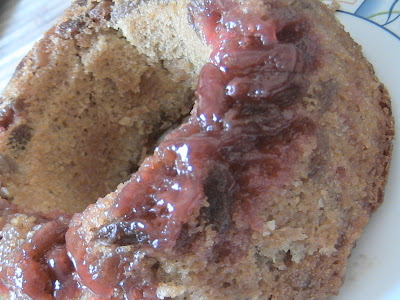
Given the runny batter that I had, the jam and the raisins reached the bottom of the cake tin and formed a “frosting” of sorts. This was a very moist, but dense, cake. I am sending this over to Dee on the last day of this month’s AFAM: Raspberry.

December 18, 2007

Avial


Here's one more of those dishes I've developed a taste for over the years. In other words, I hated this stuff initially. Now, I look forward to the rare occasions when I get to eat this stuff.


Part of many traditional feasts, I simply love eating this during the Padinettam Perukku and Pongal festivals when Kalanda Saadam (Mixed Rice - Puliyodarai, Coconut Rice, Lemon Rice etc) is part of the menu. My favourite way to eat avial is with Coconut Rice. (Yeah, I am a Mangalorean all right! I can manage overdoses of coconut.) Usually, however, we eat this with rice a yelai paruppu (plain dal).


I made this for the first time last week and was thrilled with the results.


2 cups Mixed Boiled Vegetables (I used Carrot, Beans, Ash Gourd, Raw Banana, Peas, Potatoes)
1/4 cup Coconut, scraped
1 cup Curd, beaten
1 tsp Cumin Seeds
3 Green Chillies, slit
1 tsp Oil
Salt to taste

For the seasoning:
1 tsp Coconut Oil
7-8 Curry Leaves


Heat the oil in a small frying pan and add the cumin seeds along with the green chillies. When the cumin seeds crackle, turn off the flame and add the coconut. Grind this mixture to a paste.

Take the beaten curd in a vessel and add the mixed vegetables along with the paste. Add the salt and bring to a boil while stirring constantly.

Heat the coconut oil in a frying ladle and add the curry leaves. Add this to the avial.

The way we relished it was with some rice and yelai paruppu (plain dal). I also made some rasam and some raw banana curry. With curd and papad, it was a complete meal.

August 25, 2007

Dahi Nadia


When Swapna announced the RCI: Oriya Cuisine event, I thought to myself, "Even though I've had Oriya friends and colleagues, I have never learnt much about the cuisine of the state. I read Bijoylaxmi Hota's interview in The Hindu when she released her book Healthy Oriya Cuisine along with her daughter, Kabita Pattanaik.


Soon after reading the article which talks about acidic and alkaline foods, I met a lady who had spent all her life in Orissa, though she was originally from Bengal. I asked her about Oriya cuisine and I was rather shocked when she said, "There's nothing great about Oriya Food." I left it at that. If I didn't like something I'd say that I didn't like it. I think each cuisine has its own flavours, tastes and hues.

Anyway, my research told me that the cuisine has so much in common with other state cuisines. I found recipes of things like were similar to the aloo bonda (batata vada) and one sweet dish that was the adirasam of Tamilnadu. I found this recipe on Oriya Kitchen which has an uncanny resemblance to the Tayir Pachadi of Tamilnadu.


Ingredients:

1/2 Fresh Coconut(grated)

2 green chillies

1 cup Curd

small piece of Ginger

4-5 Curry leaves

1tbsp Sugar

Salt to taste

Punch phutan

1tbsp oil

Process:


Beat the curd properly. Add the sugar, salt and coconut to the curdand keep aside in a bowl. Cut green chillies and ginger into small pieces.


Heat oil in a frying pan. Add punch phutan and allow it to splutter. Add curry leaves, ginger and green chillies and fry them little bit. Add the seasoning to the curd mixture.


This is being rushed to Swapna as today is the last date for the RCI: Orissa event. Happy hosting Swapna.

August 8, 2007

Taro-Rice Balls with yogurt dip


What do you do with leftovers? Left over curry, left over rotis, left over rice. I always try to do something. And I’m always looking for ideas. Some years ago, while I was at a Gujarati Restaurant in Hyderabad called Indian Harvest, my thali had a rather unusual fried snack. Small cutlets made with cooked rice and spices. I tried making the stuff at home and they turned out very nice.

Taro Root (Colocasia) is made in several ways in Tamil cuisine. I have talked about Seppankizhangu Karumadhu(Colocasia Curry) and the Seppankizhangu Mor Koottu earlier. The third way is to deep fry cooked taro root pieces smeared with spices. I had some left over curry and decided to convert it into the deep fried version on S’s birthday. But I also had leftover rice. And I didn’t know what to do with that. And what do I make to complete the meal?

It struck me just then. I thought, “Why not combine a Gujarati snack and a Tamil side dish into one?”

Ingredients:

1 cup Seppankizhangu Karumadhu
1 cup Cooked Rice
1 tsp Chilli Powder
½ tsp Turmeric Powder
¼ cup Flour
Salt to taste
Bread crumbs or Rava to coat
Oil for deep frying

If you don’t have the ready made curry, you can use cooked taro root and increase the salt, turmeric and chilli powder accordingly.

Mash the taro root curry along with the cooked rice. Add the salt, chilli powder and turmeric powder. Make small balls out of this mixture.

Mix the flour with a little water to make a thin paste.

Roll the balls in this paste and coat with breadcrumbs.

Heat the oil in a kadhai and deep fry these balls till they turn golden brown.

Drain on a slotted spoon over another small vessel so that this oil can be reused.

Yogurt dip:

1 cup Curd, beaten
½ Cucumber, grated
1 Onion, chopped finely
½ tsp Chilli Paste
½ tsp Ginger Paste
½ tsp Chilli Flakes
¼ tsp Oregano Flakes
Coriander leaves for garnishing
Salt to taste

Mix all the ingredients well. Garnish with coriander leaves. I got the idea of using oregano and chilli flakes from Nandita’s entry for WBB#12.

And since this becomes a complete meal in itself and is ready in way less than 30 minutes, this goes to Mallugirl’s Express Cooking challenge.


Rice being used here, I am also sending this entry to Jihva for ingredients started by Indira of Mahanandi and hosted by Sharmi of Neivedyam.

Kabuli Pulao and Raita


Chhole Chawal and Rajma Chawal are staples across Delhi. Some of the best places where I’ve eaten these would be Nehru Place and Connaught Place. I’ve probably made Rajma once in my life. And after an overnight soak and 15 whistles in the cooker, my rajma was hard as ever. Since I was only cooking for myself back then, I endured it. Chhole, however, is another saga altogether. I have made it many times and in several different ways. Amma even has a zero oil recipe which I shall post soon.

I soaked chick peas to make chhole but ended up making yet another rice dish. It is almost like chhole chawal, except that the masala is slightly different and the rice is cooked along with the chhole.

200g Chick peas, soaked overnight
2 Onions, sliced
2 tbsp Tomato Puree
1 tbsp Oil
½ tsp Cumin Seeds
½ tsp Asafoetida
1 tsp Chilli paste
½ tsp Ginger-Garlic paste
1 tsp Green Chilli paste
½ tsp Turmeric Powder
1 tsp Pav Bhaji Masala
Salt to taste
1 cup Basmati rice

Heat the oil in a pressure pan. Add the cumin seeds and asafoetida. When the cumin crackles, add the onions and fry for 2 minutes. Add the chilli paste and the ginger garlic paste and fry for another minute. Add the chilli and turmeric powders along with the pav bhaji masala and fry for a minute. Add the tomato puree and salt. When the mixture bubbles, add the chickpeas and rice. Stir well. Add 2 cups of hot water and cook for 2 whistles.

When done, garnish with coriander leaves and enjoy it with some raita.

This raita is ready within minutes.


Chop an onion and a tomato finely. Add a finely chopped green chilli to a bowl of curd. Add salt and beat well. Add the onion and tomato pieces. Garnish with coriander.

If you have soaked chick peas on hand, this meal is ready in 25 minutes flat. And it has a good mix of carbohydrates, proteins, fat and a share of vegetables too. So, this goes to Mallugirl’s Express Cooking challenge.


Rice being the main ingredient here, I am also sending this entry to Jihva for ingredients started by Indira of Mahanandi and hosted by Sharmi of Neivedyam.

July 21, 2007

Tayir Saadam (Curd Rice)


Tayir Saadam. Comfort food to many, health food for some. To me, it’s just an integral part of every meal at home.


I had a Parsi boss in Bombay who loved Curd Rice. One day, my stomach was badly upset and my aunt made curd rice and packed it in my box. My boss wanted to exchange dabbas with me. I was surprised that someone actually wanted to eat Curd Rice. She then told me that she asked her cook to make curd rice and he kept rice and curd in front of her and asked her to mix the two. I told her that’s the way we eat it at home. And she said, “Not with Basmati Rice and Sweet Curd, right?”

Right!


This version of curd rice is also called Bagala Bhaat and is served at weddings. The caterer at my wedding, Pattappa, dishes out the creamiest tayir saadam on the planet.


I, as always, picked this recipe up from Amma. In summers, this is the best thing to eat at lunch time. Very cooling, very easy on the system.


Ingredients:

1 cup Ponni/Sona Masoori Rice

1/2 tsp Green Chilli paste

1/2 tsp Ginger Paste

1 cup Curd

3/4 cup Milk

Salt to taste

For the tempering:
1 tsp Oil
1/4 tsp Mustard Seeds
1/4 tsp Asafoetida
7-8 Curry Leaves


Coriander leaves for garnish


Cook the rice with 4 cups of water and a little salt in a pressure cooker. (I usually cook this for 5-6 whistles). Mash it with a spoon or a masher. Add the ginger and chilli pastes and mix well. Add the curd and mix well. Fold in the milk and mix again.


In a small kadhai, heat the oil. Add the mustard seeds and asafoetida. When the mustard splutters, add the curry leaves. Pour this over the curd-rice mixture. Chill for an hour before serving. Garnish with coriander leaves.


July 14, 2007

Vellarikkai Pachadi (Cucumber in Curd)


All of us are always trying to make our meals more interesting. S thinks I am now doing all this because of my food blogging addiction. But by his own admission, I'd not repeated a dish in the first 3 months of our marriage. Not one repetition for any meal. And we didn't even have a gas connection in those days. I had a 45 year old electric stove with no heat regulator that has been passed down from Amma to me. I cooked on that for 3 months. We got our gas connection either in late December or in January of this year. (Yup! We've only been married 9 months.)


So, all I'm really doing differently now is cooking on a 4 burner stove and religiously taking pictures of whatever I make. Here's a dish that doesn't require much cooking. It serves as a great accompaniment to sambar rice, bisi bele huli anna, vangi bhat,etc.
1 Cucumber, peeled and cubed
1 cup Curd
1/2 tsp Chilli paste
1/2 tsp Ginger Paste
For the tempering:
1 tsp Oil
1/4 tsp Mustard Seeds
1/4 tsp Asafoetida
7-8 Curry Leaves
Salt to taste
Whip the curd and add a little water. Add the ginger and chilli pastes and salt and mix well. Add the cucumber pieces.
In a small kadhai, heat the oil. Add the mustard seeds and asafoetida. When the mustard splutters, add the curry leaves. Pour this over the cucumber curd mixture. Chill for an hour before serving. Garnish with coriander leaves if you wish.