Google
 

Thursday, July 16, 2009

Tinda Koora


Tinda is one summer vegetable that I absolutely detest. But I bought a packet of it last summer and tried this. This year, I am even stronger in my resolve to eat with the seasons and not try and find winter vegetables in summer, pay through my nose for them, and then feel that they weren’t really worth it.


My dear friend P now works for Field Fresh, a company that is into fresh produce. Every week I get my supply of fruits and vegetables from her. Some of them are even part processed. This is a picture I took in the winter. This feature repeats every week, you just have to replace the winter vegetables with summer vegetables. So now, P is not the type of person who will take no for an answer. When I told her I didn’t know how to make Tinda, she even started teaching me different ways to cook the vegetable. I figured it was simpler to just allow the vegetable to make its way into our basket.


I put Tinda in sambar once and we quite enjoyed it. (OK, I know that sambar can mask the taste of a vegetable if you make it in that manner.) A week later, I decided to make it in the south Indian way (like an Upkari/Karumadhu). Now, where I come from, turmeric and cumin are not part of such steamed vegetable dishes. S finds the absence of turmeric in these dishes quite conspicuous. So I ended up making this dish with cumin and turmeric to please S. Both of us “enjoyed” eating Tinda (probably a first for both of us).


Here’s a very north Indian vegetable cooked in a very south Indian way.


1/4 kg Tinda, peeled and diced
1 tsp Oil
1/4 tsp Urad Dal
1/4 tsp Chana Dal
1/4 tsp Mustard Seeds
2 Red Chillies
1/4 tsp Asafoetida
1 tbsp Coconut, scraped
7-8 Curry Leaves
Salt to taste

Heat oil in a pressure pan. Add the urad and chana dals, mustard seeds, cumin seeds and asafoetida. When the mustard splutters, add the curry leaves and the red chillies. Fry for a minute. Add the chopped tinda, turmeric and the salt along with a little water. Cover and cook for one whistle.

When done, open and cook without the lid to let the excess water evaporate. Add the coconut and mix well.

This is a perfect side to a meal with rice and sambar.

Tuesday, July 14, 2009

Peach and Ginger Cake


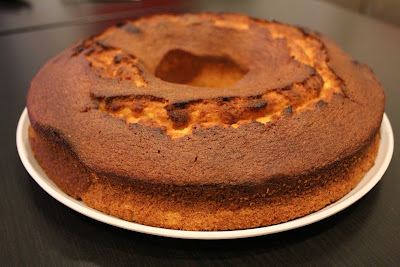
Our trip to the Piramal Haveli in Rajasthan coincided with not one, but two special events in our life. Of the two days that we were there, one day was the anniversary of the “dinner” that S and I had at Pebble Street in Delhi. That life altering dinner where sparks flew and we knew that we weren’t going to spend the rest of our lives being “just friends”, that we were going to be much more than that. The other day happened to be the day that we completed 1000 days of being married. Cheesy, you say! But what’s life without a little romance, eh? (And incidentally, this day(14 July), two years ago, I posted a record 17 posts. Everyone, Sig included, thought I'd gone off my rocker! So, after this brief hiatus, this cake and its timing seem perfect.)


I baked this cake to take along and hid it in my friend’s bag so S wouldn’t see it. We cut the cake at the Haveli to celebrate. This is a simple peach and ginger cake, moist from the peaches and with a zing that only ginger can bring.


1 cup Flour

1 cup Peaches, chopped
2 tbsp Candied Ginger, chopped

1/2 cup Sugar

2 tsp Baking Powder
1/4 tsp Baking Soda

a Pinch of Salt

1/2 cup Milk
1/4 cup Oil

1 tsp Vanilla Essence

1 Egg, beaten


Preheat the oven to 350F (180 C).


Grease and flour/line an 8-inch cake tin.


Sift the flour with the baking powder, baking soda and salt. Add the candied ginger and mix well.


In a mixing bowl, add the egg, milk, sugar, oil, and vanilla essence. Beat well together. Add the flour mixture to this and blend well. Add the chopped peaches and mix well.


Pour the batter into the prepared cake tin. Bake for 30 minutes or until a knife/skewer, inserted into the centre of the cake, comes out clean.

P.S. I used some slivered almonds to write the number 1000 on the cake as I didn't want to mess around with icing.

Monday, June 29, 2009

Makai Palak


Restaurant menus always give me plenty of ideas. Even if I never order many of those dishes listed, I have made a note of the combinations and give them a shot when I can. At the very least, these dishes help break the monotony. And it's only uphill from there on.


I tried this very pretty combination for dinner one night. The combination with rotis was nice. Not as nice as Palak Paneer, but nice nonetheless.


1 bunch Spinach, cooked and pureed

1 cup Corn, steamed

1 Onion, ground to a fine paste

2 tbsp Tomato Puree

1 tsp Green Chilli Paste

1 tsp Ginger Paste

1 tsp Garlic Paste

1/4 tsp Turmeric Powder

1/4 tsp Chilli Powder

1 tsp Oil

Salt to taste


Heat the oil and fry the onion paste for a few minutes. Add the ginger, chilli and garlic pastes and fry for a minute. Add the tomato puree, salt, chilli and turmeric powder and fry for a couple of minutes before adding the spinach puree. Add the steamed corn. Bring the mixture to a boil. Simmer for 4-5 minutes.


While this tastes great with rotis, the leftovers can also be mixed with rice to make Spinach and Corn Rice.

Sunday, June 28, 2009

Carrot Upkari


This is one dish I somehow didn't eat when I was growing up. Amma just didn't make it. So, I didn't develop a taste for this. We had carrots in just about every other form. Just never in the form of a traditional steamed side dish with rice.


I did taste something like this made by a friend. But she was just learning to cook at the time and I never was sure if the dish tasted that way because she was a novice or if carrots made this way would always taste that funny. I made it one Sunday as a side for rice and sambar. It isn't the best way to eat carrots, I have to admit. (And, OK, I wasn't comparing it to the Carrot Cake!) But this does make a nice simple side.


1/4 kg Carrot, peeled and diced
1 tsp Oil
1/4 tsp Urad Dal
1/4 tsp Chana Dal
1/4 tsp Mustard Seeds
2 Red Chillies
1/4 tsp Asafoetida
1 tbsp Coconut, scraped (optional)
7-8 Curry Leaves
Salt to taste


Heat oil in a pressure pan. Add the urad and chana dals, mustard seeds and asafoetida. When the mustard splutters, add the curry leaves and the red chillies. Fry for a minute. Add the chopped carrots and the salt along with a little water. Cover and cook for one whistle.


When done, open and cook without the lid to let the excess water evaporate. Add the coconut, if using, and mix well.

Wednesday, June 17, 2009

Khara Buns


This post here took me back in time. To about 11-12 years ago. I’d just enrolled in French classes and I had to figure out a way to eat breakfast before the hostel mess opened. So, every once in a while, I would get a loaf of Masala Bread from Nilgiris or Hot Breads. I had to eat Masala Bread because I couldn’t store butter in my hostel room. Eating masala bread by itself was better than eating plain bread without butter. Eventually, I started toasting the bread slices on a tava inside the room, using a little oil. That way, I could finish eating my breakfast by the time I completed my 15 minute walk to the bus stop at the University gate. (And not feel like I had a rock sitting at the base of my throat!)


I started to make bread, but S asked if I could make buns. So, I did. For about 2-3 days, this was our breakfast. Sheer bliss! Thanks Namesake, for reminding me of an era gone by.


3/4 cup Flour
3/4 cup Whole Wheat Flour
1 tbsp Vital Wheat Gluten
1 1/2 tbsp Oil
1 1/2 tbsp Fresh Yeast
1 1/2 tbsp Sugar
3/4 tsp Salt
1/4 cup Boiling water
1/4 cup Milk


For the Onion Mixture
1/4 tsp Turmeric Powder
1/2 tsp Chilli Powder
2-3 Green Chillies, finely chopped
2 Onions, finely chopped1 tbsp Oil
¼ tsp Garlic, chopped
1/4 cup Coriander Leaves, chopped
1 tsp Cumin Powder
Salt to taste


Heat the tablespoon of oil in a pan. Add the onions and green chillies and fry for 2-3 minutes. Add the garlic and fry for a minute. Add the turmeric powder, chilli powder and cumin powder along with the salt. Take off the flame and add the chopped coriander.


Take a huge mixing bowl and place the oil, salt and sugar in it. Add boiling water and mix until the sugar dissolves. Add the milk now to bring the mixture to room temperature. Add the yeast and mix well. Add the flours, gluten and the onion mixture and knead into a dough. Place the dough in a greased vessel and cover it with a damp muslin cloth. Allow to rise until double in size (roughly 45-50 minutes).
Knead the dough for a minute and then divide into 10 equal portions.


Preheat the oven to 400F.


Take a portion of the dough and shape it into a bun. Place the buns on a greased baking sheet or tray. Repeat with the other portions. Allow to rise for 50-60 minutes and then bake for 12-15 minutes.

These are great when eaten fresh from the oven. Even better with a little butter. And just fabulous when toasted. I know I will make variations of this very soon.

Tuesday, June 16, 2009

Tendli Bhat


Summer vegetables. Where I live, they’re usually Cucurbits. In every shape and size. From the large gourds and pumpkins to medium sized ridge gourds and smooth gourds to the tiny tindas and ivy gourds. Life can get very boring at times. We also get many varieties of beans. But you see, that’s what I like about winter – the colour. In summer, almost everything we’re able to cook is green. So, in order to make life a little interesting, I try different things with the same vegetables. This time I was mighty pleased with the result. Whipped up on a Saturday night when I really wasn’t in the mood for any heavy weight cooking. The bag of quartered ivy gourds in the fridge came in very handy.


¼ kilo Ivy Gourd, quartered lengthwise

1 cup Basmati Rice


Masala:

2 tbsp Coriander Seeds

¼ cup Coconut, scraped

2-3 Cloves

2-3” stick of Cinnamon

2-3 Red Chillies

2 tbsp Tamarind Paste

Salt to taste

1 tsp Oil


Tempering:

1 tbsp Oil

1 tsp Mustard Seeds

¼ tsp Asafoetida

8-10 Curry Leaves

Coriander Leaves for the garnish


Heat the oil and roast the coriander seeds for 2-3 minutes. Add the chillies, cloves, cinnamon and coconut and roast for a little longer. Grind this mixture to a paste adding the tamarind paste and salt.


In a pressure pan, heat the oil for the tempering, add the mustard seeds and the asafoetida. When the mustard seeds splutter, add the curry leaves and the ivy gourd pieces. Fry for a couple of minutes. Add the ground masala and fry for 2-3 minutes. Add the rice along with the salt and turmeric powder and mix thoroughly. Fry until the masala coates the rice grains and is a little dry. Add 1 3/4 cups of hot water. Cover and cook for 1-2 whistles.


When done, separate the rice grains with a fork. Serve hot with a raita/pachadi on the side.

Tuesday, June 9, 2009

Sheera


I have very few Indian sweets on this blog. There are a few payasams and a couple of kulfis, but that's about it. I guess it says a lot about my taste. I must admit, I am not the biggest mithai fan on this planet. When I do crave an Indian sweet, it is far simpler to get a small box from the mithai shop than to try making it at home. In fact, it is easier to go to the sweet shop and buy just one piece and eat it. (And I have done that. It satisfies the craving then and there. Plus you are not "forced" to give in to temptation later on.)


This is by far the simplest sweet dish to make. I made it one morning as it was my father-in-law's birthday. S was very surprised to see a sweet dish at the breakfast table, sitting pretty next to the upma. The quintessential Bangalore Darshini combination that makes Chow-chow Bhaat!


1 cup Cream of Wheat(Rava/Sooji/Semolina)

1 cup Sugar

1 cup Milk

1 Ripe Banana, chopped

1 cup Water

2-4 tbsp Ghee (Clarified Butter)

1 tbsp Cashews

1 tbsp Raisins

¼ tsp Cardamom Powder


Roast the semolina in 1 tbsp of ghee over a low flame till it lets out a lovely aroma and turns light brown.


In a separate vessel, heat the milk, banana, sugar and water. When the mixture comes to a boil, add the cardamom powder. Add the roasted semolina and cover and cook for 5-10 minutes.


In a frying ladle, heat 1 tbsp of ghee and fry the cashews until brown. Add the raisins and take the ladle of the heat. Add this to the cooked semolina mixture. Add the remaining ghee to the sheera and mix well. Enjoy this fresh. And if you're lucky to have leftovers, heat some in a kadhai the next day. Allow some parts to get crisp. Enjoy the same dish in a different avatar.