I'm a singer and cook trapped in the body of an HR professional. Experimenting is the name of my game. What you'll find here is a mixed bag: a treasure trove of traditional and fusion foods, all with two common ingredients, enthusiasm and love.
November 30, 2010
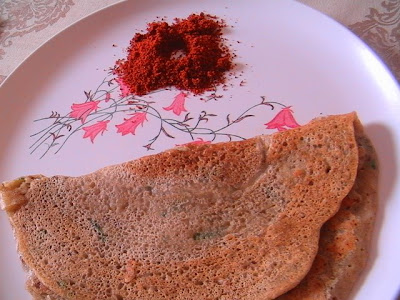
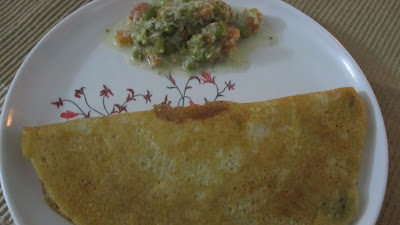
Adai
April 18, 2010
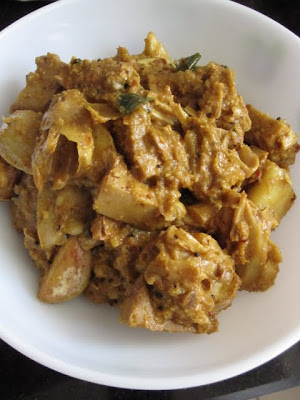
Kadgye Sukke
1/2 tsp Coriander Seeds
1 tsp Oil
1/4 cup Coconut
3-4 Red Chillies
1 tbsp Tamarind Paste
1/4 tsp Turmeric
Salt to taste
For the tempering:
1 tsp Oil
1/4 tsp Mustard Seeds
1/4 tsp Asafoetida
7-8 Curry Leaves
Cut the jackfruit into pieces slightly large pieces. Pressure cook with a little salt for 1-2 whistles.
March 29, 2010
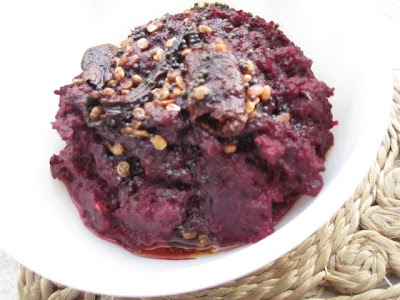
Purple Carrot Thuvayal
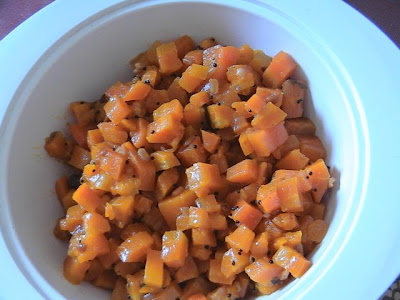
There’s this woman we all know in the blogosphere. She’s more of a temptress, really. She’s made me crave so many things that I’ve sometimes wanted to dash across the city and insist that she feed me. She even obliged one time and brought me some home made Goda Masala so I could make her Spicy Nutty Cluster Beans. I remember looking at her Kadhi Pakoda and feeling hungry all over again. I think that was the dish that got me hooked to Anita’s blog. A year ago, on this very day, she posted Black/Purple Carrot Kanji. I wanted some because it looked pretty and I had heard so much about it. Fortunately, I didn’t have to make it myself. My colleague’s mother sent me enough, coincidentally the very next day!
4 Purple Carrots, peeled and diced
2 tsp Oil
1/s tsp Mustard Seeds
3-4 Red Chillies
2 tsp Urad Dal
1/2 tbsp Tamarind paste
Salt to taste
For the tempering:
1 tsp Oil
1/2 tsp Mustard Seeds
1/2 tsp Urad Dal
1/4 tsp Asafoetida
1 Red Chilli, broken
Heat one teaspoon of oil in a pan. Add the mustard seeds, red chillies and the urad dal. When the mustard splutters, add the diced vegetable. Saute for a couple of minutes and cover and cook for 5-7 minutes. Allow it to cool. Grind this along with the tamarind paste and salt.
In a frying ladle, heat the oil for the tempering. Add the urad dal and mustard. When the mustard splutters, add the asafoetida and red chilli. Add this to the ground paste.
Mix this thuvayal with some hot rice and add a little bit of ghee. Mix well and enjoy the purple sensation.
March 24, 2010
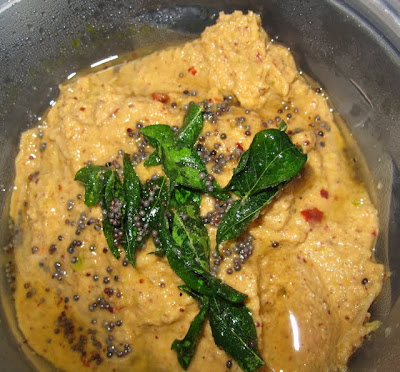
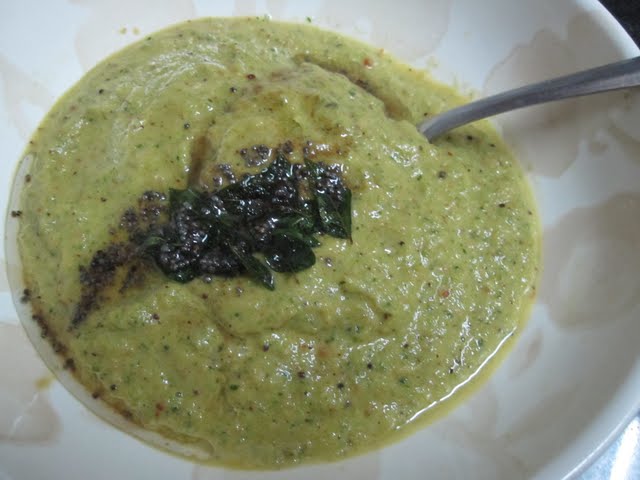
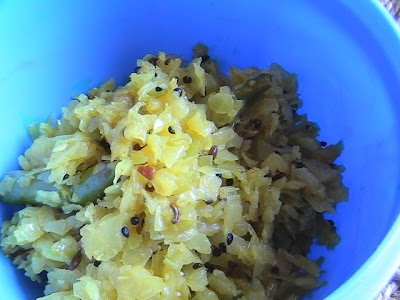
Cabbage Thuvayal
Amma calls me the "Thogayal queen". Whenever I cook a south Indian meal (Konkani, Tamil or Telugu) I try and make it a point to make a thuvayal. It serves many purposes:
There's one more vegetable dish
Mix it with rice and you've got one entire course
It removes the need for a pickle with curd rice
It makes for a good bread spread/side for idli and dosa, so the next morning's breakfast issue is solved
It gives S the feeling of a somewhat "complete" meal
I get another dish to blog about
I have a lot of processed vegetables in the fridge and freezer and these come in very handy when I'm putting meals together on weeknights. And I have been known to make thuvayal/thogayal with just about any. I am putting this up thanks to a lot of pressure from folks at work who can't seem to get enough of this. (K, this post is especially for you. I do hope you find it useful.)
There's another version of this at Talimpu and Nandita blogged about her adaptation of that recently. Mine is slightly different. In fact, all my thuvayal recipes are very very similar. Replace the vegetable in any recipe and it yields a completely new dish. Someday, I shall blog about my family favourite "Thengai Thogayal". Until then, we shall focus on 5-a-day!
March 21, 2010
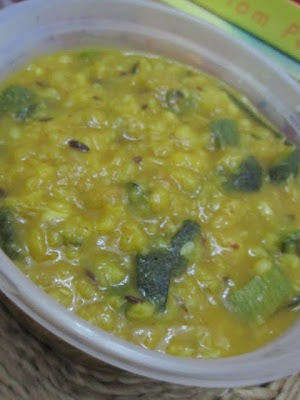
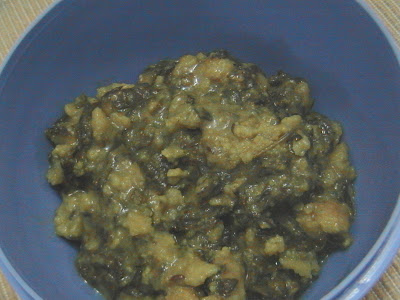
Zucchini Moong Dal
Since I had to cook fairly traditional meals over the last three weeks, I did a lot of “food-processing” over the weekends. I peeled kilo after kilo of sambar onions that I brought back from Bangalore, diced carrots, beetroots and zucchini and chayote squash, chopped beans and cabbage and filled my freezer with different “vegetable mixes” – for sambar, avial, kootu and pulao, in addition to everything else. I used to do this sort of thing earlier (in my somewhat more organized avatar) and I stopped when I started paying my maid to chop vegetables for us. Now, I find it easier to do things myself than explain to my perennially appearing harassed maid how I want something done. One side of me begs me to not “waste” my weekends, but the more practical side of me tells me I should know better than to have vegetable related stress on a weekday.
March 4, 2010
Zucchini Thuvayal
Winter. I have to talk about it in the past tense. As early as the first week of March. I’ve enjoyed using winter vegetables in just about every dish these past 3-4 months and I’m going to be sorry to see them disappear over the coming 2-3 weeks. Then it is back to the Tinda-Tori-Bhindi-Kundru-Lauki routine, all the way until November. Such is life.
I bought some zucchini to make a stir fry, but ended up using it in this thuvayal. I really wonder why I don’t make these thuvayals/thogayals often enough. They’re easy, tasty and are a great way to add another vegetable dish to your table.
2 Zucchinis, chopped
4 Red Chillies
1 tsp Mustard
3 tsp Urad Dal
1/4 tsp Asafoetida
3 tsp Oil
1 tbsp Tamarind Paste
Salt to taste
For the tempering:
1 tsp Oil
1/2 tsp Mustard Seeds
1/2 tsp Urad Dal
a pinch Asafoetida
5-6 Curry Leaves
Place the zucchini pieces in a microwave safe bowl. Add 2 tbsp of water and cook on high for 2 minutes. Squeeze out the water when cool.
Heat the oil and fry the red chillies, mustard, asafoetida and urad dal for a couple of minutes. Grind the chillies along with the tamarind paste and salt. Add the zucchini pieces and grind again. Finally, add the fried mustard and urad dal and grind lightly.
Heat the teaspoon of oil for the tempering in a frying ladle. Add the mustard, urad dal and the asafoetida. When the mustard splutters, add the curry leaves. Add this tempering to the zucchini mixture.
Serve this with rice and a little ghee and some papads or vadams on the side. We ate this with rice, rasam, and
November 22, 2009
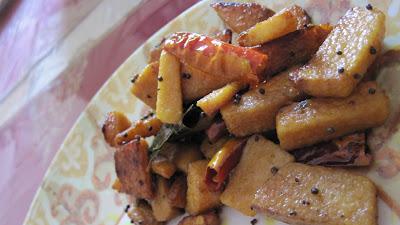
Senaikkizhangu Karumadhu (Yam Saute)
I've talked often about how I eat everything, all fruits and vegetables and all kinds of foods without exception. There are some things I know I like and there are some things I like simply because my dear brother, H, couldn't stand them. The opposite of this also held true for quite a while. I didn't "like" lady's finger simply because he loved it. Yam was (and still is) the one vegetable he absolutely hated. I liked it as a child, but I continue to relish it as an adult as well. I made this saute, a staple at my parents' home, recently. And then I made it again.
Here's the recipe, handed down from mother to daughter and then from daughter to the world!
2 cups Yam, peeled and diced
3-4 Red Chillies
1/4 tsp Turmeric (optional)
1 tbsp Tamarind Paste
1 tsp Oil
Salt to taste
For the tempering:
1 tbsp Oil
1/2 tsp Mustard Seeds
1/4 tsp Asafoetida
7-8 Curry Leaves
Pressure cook the yam with the tamarind paste, turmeric (if using), salt, chillies and a teaspoon of oil with 3 cups of water. Drain the water.
In a kadhai, heat the tablespoon of oil. Add the mustard seeds and asafoetida. When the mustard splutters, add the curry leaves and the drained yam.
Saute for a minute, cover and cook for 4-5 minutes. Remove the lid and allow the pieces to crispen. Serve hot with some rice and sambar, your meal is complete!
Please also remember that the Tried and Tasted (Sunshine Mom's Blog) is on at The Singing Chef. Do send in your entries.
September 13, 2009
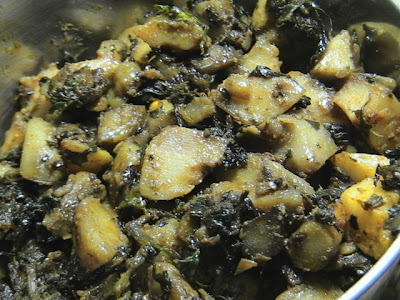
Aloo Methi
I was first introduced to Aloo Methi when I was about 10 or so. My eldest cousin married into a North Indian family and when we visited her, she served us this with hot phulkas. Fortunately, she warned me that it might be a little bitter. I guess I was prepared for the worst. As it turned out, I ended up loving this dish. I make it at least 1-2 times a month when fresh fenugreek leaves are in season.
3 Potatoes, boiled, peeled and diced
1 cup Fenugreek leaves, chopped
1 tsp Oil
1 tsp Cumin Seeds
1/4 tsp Asafoetida
1 tsp Chilli Powder
Salt to taste
Heat the oil in a kadhai. Add the cumin seeds and the asafetida. When the cumin crackles, add the fenugreek leaves and sauté for a minute or so. Add the salt and chilli powder and cook for another minute. Add the diced potatoes and mix well. Cover and cook for 5-7 minutes.
This is one of those “perfect sides” with rice and dal or rotis.
August 18, 2009
Methi Mangodi
I bought some mangodis for the first time two years ago. The store manager of the supermarket where I picked it up was really nice and he even told me how to cook the stuff. I have not really made the dish he told me about, but I liked the fact that he took the trouble to explain stuff to me. One day, I shall blog about his recipe.
When it comes to trying out new Gujarati or Rajasthani food, I always stick to my favourite. I picked this recipe from Tarla Dalal's Rajasthani Cookbook. I modified it to suit my taste and we had it for lunch with chapatis. Here I am, sharing this wonderful recipe with all of you.
According to Tarla Dalal (www.tarladalal.com): Mangodis are sun-dried grape sized dumplings made from soaked and ground moong dal or sometimes from urad dal. Due to scarcity of vegetables, the ingenious Rajasthanis use different forms of pulses to whip up healthy and tasty meals. Mangodis or moong dal badis are often used to rustle up several tasty and mouth-watering recipes.
1 bunch Fenugreek Leaves, chopped
1/2 cup Mangodi, crushed
1/2 tsp Turmeric Powder
1/2 tsp Cumin Seeds
1/2 tsp Ginger Paste
1 tsp Chilli Paste
1 tsp Coriander Powder
1/4 cup Milk
1/2 cup Curd, beaten
1 tsp Sugar
4 tbsp Oil
Salt to taste
Heat the oil in a pressure cooker and add the cumin seeds. When the seeds crackle, add the ginger-green chilli paste and stir for a minute. Add the mangodi and fry for 2 to 3 minutes. Add the fenugreek leaves and fry for 5 - 7 minutes. Add the coriander powder, milk, curds, sugar, turmeric powder, salt and ½ cup of water and bring to a boil while stirring continuously.
Pressure cook for 1 to 2 whistles or until the mangodis are soft and cooked. Serve immediately with rotis.
August 13, 2009
Zucchini Kootu
Exotic vegetables needn't be only used for exotic dishes. They can be adapted to our day to day foods as well. Now, it is one thing to use local vegetables in our traditional dishes, but quite another to find special vegetables and then use them in "ordinary" dishes. I remember the first time Amma bought Brussels Sprouts in Madras. And she made upkari in the same manner as she'd make this. I thought she just wasn't creative then. But when I make mushrooms this way or zucchini in this manner, it does amount to the same thing.
Vaishali recently blogged about the Zucchini Kootu. The idea seemed wonderful and I wanted to try it out. I was feeling quite lazy and didn't want to do much work. I married her idea to Amma's recipe and landed with this. I really enjoyed the kootu and look forward to eating this more often!
1 cup Zucchini, peeled and diced
1/2 cup Moong Dal
2 tsp Sambar Powder
2 tbsp Coconut, scraped
1 tsp Cumin Seeds
1 tsp Urad Dal
1 tsp Oil
1/4 tsp Asafoetida
Salt to taste
For the Tempering:
1/2 tsp Oil
1/2 tsp Urad Dal
Pressure cook the diced zucchini along with the moong dal and the sambar powder.
Heat the oil in a frying ladle and add the urad dal. Fry till the dal turns golden brown. Grind this along with the cumin seeds and the coconut. Add this paste to the zucchini-moong dal mixture along with the salt. Add the asafoetida and mix well.
For the tempering, heat the oil in the frying ladle and add the urad dal. Add this to the dish and serve hot with steamed rice.
August 7, 2009
Turai Thuvayal
There are many vegetables I just never bought because I didn’t know how to cook them. For the longest time, I only cooked with the so-called English vegetables. Slowly, over the last couple of years, I have started getting better acquainted with many vegetables. While I have jumped with joy to find even those vegetables that I couldn’t have cared less for in a different avatar, I have started incorporating more local produce. In fact, when I made Tinda Koora, I couldn’t help but think of this post at Nupur's blog. At the same meal, we had this other very south Indian dish made with a very north Indian vegetable. Given my penchant for making thuvayals/thogayals out of every vegetable I can lay my hands on, this comes as no surprise.
4 medium SpongeGourds (Turai/Tori/Mantav Ghashale), scraped and chopped
4 Red Chillies
1 tsp Mustard
3 tsp Urad Dal
1/4 tsp Asafoetida
3 tsp Oil
1 tbsp Tamarind Paste
Salt to taste
Place the sponge gourd pieces in a microwave safe bowl. Add 2 tbsp of water and cook on high for 2 minutes. Squeeze out the water when cool.
Heat the oil and fry the red chillies, mustard, asafoetida and urad dal for a couple of minutes. Grind the chillies along with the tamarind paste and salt. Add the sponge gourd pieces and grind again. Finally, add the fried mustard and urad dal and grind lightly.
Serve this with rice and a little ghee and some papads or vadams on the side. We ate this with rice, sambar and Tinda Koora.
July 20, 2009
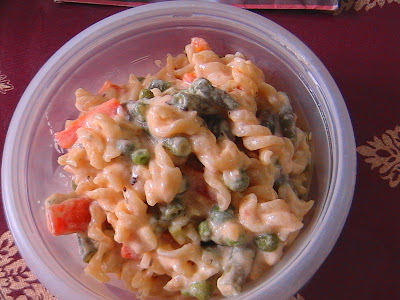
Masala Vegetable Pasta
Macaroni with vegetables in white sauce is an absolute favourite of mine. When S and I met a friend in Hyderabad, he told S that I was a good cook. And that I tried very hard to match my mother's cooking standards. He went on to say that there were many dishes that I made really well, but that there was this one dish I just couldn't make the way she did. I can only keep trying!
1 cup Macaroni (Or any pasta of your choice)
1 cup Mixed Boiled Vegetables (Carrot, Beans, Peas, Cauliflower, Potato), diced
1/4 cup, Mixed Capsicum, chopped
1 tbsp Butter/Olive Oil
1 tbsp Flour
1 cup Milk
1 tsp Sambar Powder
1 tsp Oil
Salt and Pepper to Taste
1 slice Low Fat Cheese (optional)
Cook the macaroni in a cooker with a little salt, a teaspoon of oil, sambar powder and sufficient water. Drain.
Heat the butter in a saucepan. Add the capsicum and fry for a minute. Add the flour and fry without browning the flour. Add the milk and bring the mixture to a boil while stirring continuously. If adding cheese, add it at this point and stir the sauce well. As the sauce thickens, add the salt and pepper. Add the boiled vegetables and the macaroni to the sauce.
Dig in!
July 16, 2009
Tinda Koora
Tinda is one summer vegetable that I absolutely detest. But I bought a packet of it last summer and tried this. This year, I am even stronger in my resolve to eat with the seasons and not try and find winter vegetables in summer, pay through my nose for them, and then feel that they weren’t really worth it.
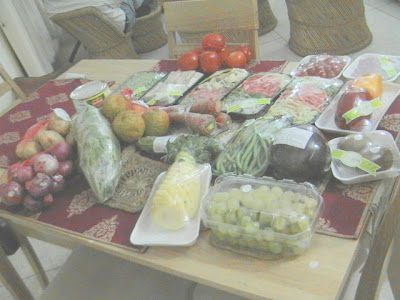
My dear friend P now works for Field Fresh, a company that is into fresh produce. Every week I get my supply of fruits and vegetables from her. Some of them are even part processed. This is a picture I took in the winter. This feature repeats every week, you just have to replace the winter vegetables with summer vegetables. So now, P is not the type of person who will take no for an answer. When I told her I didn’t know how to make Tinda, she even started teaching me different ways to cook the vegetable. I figured it was simpler to just allow the vegetable to make its way into our basket.
I put Tinda in sambar once and we quite enjoyed it. (OK, I know that sambar can mask the taste of a vegetable if you make it in that manner.) A week later, I decided to make it in the south Indian way (like an Upkari/Karumadhu). Now, where I come from, turmeric and cumin are not part of such steamed vegetable dishes. S finds the absence of turmeric in these dishes quite conspicuous. So I ended up making this dish with cumin and turmeric to please S. Both of us “enjoyed” eating Tinda (probably a first for both of us).
Here’s a very north Indian vegetable cooked in a very south Indian way.
1/4 kg Tinda, peeled and diced
Heat oil in a pressure pan. Add the urad and chana dals, mustard seeds, cumin seeds and asafoetida. When the mustard splutters, add the curry leaves and the red chillies. Fry for a minute. Add the chopped tinda, turmeric and the salt along with a little water. Cover and cook for one whistle.
When done, open and cook without the lid to let the excess water evaporate. Add the coconut and mix well.
This is a perfect side to a meal with rice and sambar.
June 28, 2009
Carrot Upkari
This is one dish I somehow didn't eat when I was growing up. Amma just didn't make it. So, I didn't develop a taste for this. We had carrots in just about every other form. Just never in the form of a traditional steamed side dish with rice.
I did taste something like this made by a friend. But she was just learning to cook at the time and I never was sure if the dish tasted that way because she was a novice or if carrots made this way would always taste that funny. I made it one Sunday as a side for rice and sambar. It isn't the best way to eat carrots, I have to admit. (And, OK, I wasn't comparing it to the Carrot Cake!) But this does make a nice simple side.
1/4 kg Carrot, peeled and diced
1 tsp Oil
1/4 tsp Urad Dal
1/4 tsp Chana Dal
1/4 tsp Mustard Seeds
2 Red Chillies
1/4 tsp Asafoetida
1 tbsp Coconut, scraped (optional)
7-8 Curry Leaves
Salt to taste
Heat oil in a pressure pan. Add the urad and chana dals, mustard seeds and asafoetida. When the mustard splutters, add the curry leaves and the red chillies. Fry for a minute. Add the chopped carrots and the salt along with a little water. Cover and cook for one whistle.
When done, open and cook without the lid to let the excess water evaporate. Add the coconut, if using, and mix well.
June 16, 2009
Tendli Bhat
Summer vegetables. Where I live, they’re usually Cucurbits. In every shape and size. From the large gourds and pumpkins to medium sized ridge gourds and smooth gourds to the tiny tindas and ivy gourds. Life can get very boring at times. We also get many varieties of beans. But you see, that’s what I like about winter – the colour. In summer, almost everything we’re able to cook is green. So, in order to make life a little interesting, I try different things with the same vegetables. This time I was mighty pleased with the result. Whipped up on a Saturday night when I really wasn’t in the mood for any heavy weight cooking. The bag of quartered ivy gourds in the fridge came in very handy.
¼ kilo Ivy Gourd, quartered lengthwise
1 cup Basmati Rice
Masala:
2 tbsp Coriander Seeds
¼ cup Coconut, scraped
2-3 Cloves
2-3” stick of Cinnamon
2-3 Red Chillies
2 tbsp Tamarind Paste
Salt to taste
1 tsp Oil
Tempering:
1 tbsp Oil
1 tsp Mustard Seeds
¼ tsp Asafoetida
8-10 Curry Leaves
Coriander Leaves for the garnish
Heat the oil and roast the coriander seeds for 2-3 minutes. Add the chillies, cloves, cinnamon and coconut and roast for a little longer. Grind this mixture to a paste adding the tamarind paste and salt.
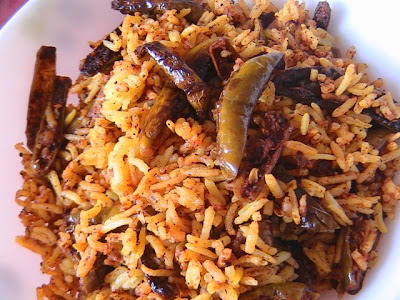
In a pressure pan, heat the oil for the tempering, add the mustard seeds and the asafoetida. When the mustard seeds splutter, add the curry leaves and the ivy gourd pieces. Fry for a couple of minutes. Add the ground masala and fry for 2-3 minutes. Add the rice along with the salt and turmeric powder and mix thoroughly. Fry until the masala coates the rice grains and is a little dry. Add 1 3/4 cups of hot water. Cover and cook for 1-2 whistles.
When done, separate the rice grains with a fork. Serve hot with a raita/pachadi on the side.
June 7, 2009
Katrikkai Thuvayal
Smoked brinjal. Something I really detested while growing up. Amma didn't make bharta back then, but she did make this thuvayal/thogayal every once in a while. Later, she learnt that one could steam the brinjal in the cooker and started making it that way. I could more than tolerate that as it didn't have the "smokey" flavour. I even remember her using the microwave to roast the brinjal, but she says she hasn't tried. I insist that she did. (I've lived away for so long now that at times I met my other relatives almost as often as I met my parents. So, maybe she is right after all.)
This thuvayal is a favourite of many and S tells me that this is made in Andhra Pradesh as well. So, it is one dish that is common to both households. I have, of late, started to enjoy the flavour. Maybe it is all the bharta that I get to eat at work (at home too!) or maybe my tastes have simply evolved over time.
1 Large Brinjal
4 Red Chillies
1 tsp Mustard
3 tsp Urad Dal
1/4 tsp Asafoetida
3 tsp Oil
1 tbsp Tamarind Paste
Salt to taste
Oil to brush the brinjal
Brush the brinjal with a little oil. Roast the entire brinjal on an open flame. Turn it around until the entire brinjal is roasted and the skin is evenly black and the brinjal is cooked. (You could use a skewer for this.)
Place the brinjal in a bowl of water. Cool and remove the skin.
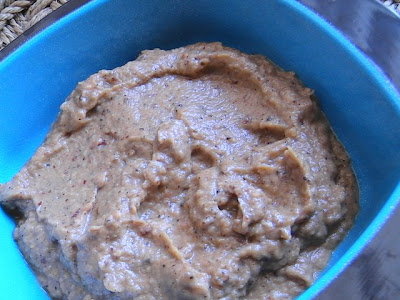
Heat the oil in a kadhai and fry the red chillies, mustard, asafoetida and urad dal for a couple of minutes. Grind the chillies along with the tamarind paste and salt. Add the brinjal and grind again. Finally, add the fried mustard and urad dal and grind lightly.
As a variation to this, you could substitute the red chillies with an equal number of green chillies (more or less, depending on your taste). Back home, that's how Amma makes it.
While this is great with some rice and papads, it makes a great chutney to go with idlis and dosas. Especially, if you, like me, are trying to reduce your dependence on coconut for chutneys.
June 3, 2009
Wheat and Green Gram Doddak
Fusion foods. I somehow always thought of them as very exotic. Like Malabar Parathas with Thai Green Curry that I once had at Cosmo Village in Bangalore. I didn't think of a fusion of two or more Indian cuisines. I made this doddak some time ago. It is only now, when I sat down to blog about it, that I figured out the fusion element in my recipe. The cross between the Andhra Pesarattu and the Konkani Gava Pittye Doddak is what became our tasty breakfast dish.
1/2 cup Wheat Flour
2 tbsp Coconut, scraped
1/4 cup Coriander, chopped
Salt to taste
Oil for frying
For the tempering:
1 tsp Oil
1/4 tsp Mustard Seeds
1/4 tsp Asafoetida
7-8 Curry Leaves
Prepare the tempering in a small kadhai and transfer the contents to a mixing bowl. Add the remaining ingredients except the oil and mix well using a little water. (The batter should not be too watery, just a little thicker than dosa batter.)
Spread the dough onto a hot griddle and pour a few drops of oil on all sides. Make a slit in the centre using the spatula and pour a few drops into this slit. (This helps the oil reach the centre and aids in crispening that portion.)Turn over and allow the other side to crispen as well.)
Serve hot with a chutney, podi or sambar on the side. The moong powder makes this a meal by itself. So it is perfect for those weeknight dinners as well.
June 1, 2009
Andurli
I'm back with an authentic konkani recipe after ages. It is the mango season here. I must admit that I haven't had my fill yet. I can't help it if peaches, apricots, cherries and litchis made their way into the market almost a month before their time. We did buy and eat some Banganpalli mangoes in April and May. I found these smaller mangoes called Gola. They instantly reminded me of the small mangoes called Gontambe which are used in the famous amchi dish called Andurli. Although the Gola mangoes are much bigger, I made the dish last week and found that this variety of mangoes is very tasty.
6 small Ripe Mangoes
1/4 cup Jaggery
1/2 tsp Pepper Powder
1 tsp Rice Flour
Salt to taste
For the tempering:
1 tsp Oil
1/4 tsp Mustard Seeds
1/4 tsp Asafoetida
7-8 Curry Leaves
3-4 Red Chillies
Peel the mangoes and keep the peel in a bowl with about 1 cup of water. Squeeze the juice from the peels and discard the peels.
Place the mangoes and the water in a pan. Add the jaggery, salt and pepper and bring the mixture to a boil. Mix the rice flour in a little water and add it to the mixture. Simmer for 10-12 minutes until the mangoes are cooked.
In a frying ladle, heat the oil and add the mustard seeds and the asafoetida. When the mustard splutters, add the curry leaves and the red chillies. Add this to the mangoes.
Serve as a side dish with rice, dali-saar, and some upkari. This particular combination of spicy and sweet is an acquired taste. Most konkani folks are initiated into this spicy-sour-sweet combination early on in life. If you don't particularly fancy a side dish with mixed tastes, have it on its own.
May 7, 2009
Cabbage with Panch Phoron
This is a very simple dish that my cousin’s wife used to make (and probably still does). I am not a big fan of cabbage. I am rather neutral to this vegetable. I usually prefer to make it the steamed way as a side with rice and sambar. For rotis, I end up making Cabbage Jhunka this way, substituting cabbage for the spring onions. But my cousin’s wife made this dish fairly often (I visited them almost every weekend for 12 months, so I guess I have to mention this to be fair to her). And I found I liked to eat it with rotis. Years later, I asked her how she made it and she told me. I couldn’t believe how simple it was. The panch phoron makes this dish come alive.
1 cup Cabbage, chopped
2 tsp Oil
2 tsp Panch Phoron (a mixture of mustard, cumin, fenugreek, fennel and nigella seeds)
2 Green Chillies, slit
Salt to taste
Heat the oil in a pan. Add the slit chillies and the panch phoron and fry for a minute. Add the chopped cabbage and salt. Cover and cook for 5-7 minutes.
That is it. It is as simple as that. Since I almost always have chopped veggies in my freezer, this dish is a life saver when time is of essence.