Google
 
Showing posts with label Telugu. Show all posts

July 16, 2009

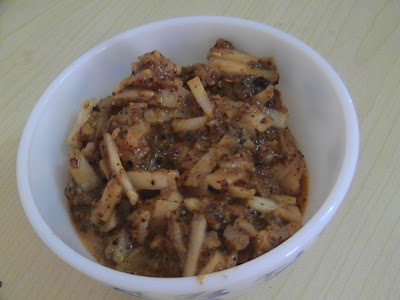
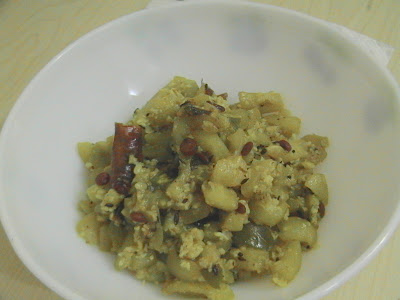
Tinda Koora


Tinda is one summer vegetable that I absolutely detest. But I bought a packet of it last summer and tried this. This year, I am even stronger in my resolve to eat with the seasons and not try and find winter vegetables in summer, pay through my nose for them, and then feel that they weren’t really worth it.
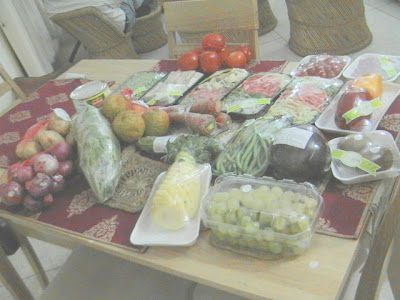


My dear friend P now works for Field Fresh, a company that is into fresh produce. Every week I get my supply of fruits and vegetables from her. Some of them are even part processed. This is a picture I took in the winter. This feature repeats every week, you just have to replace the winter vegetables with summer vegetables. So now, P is not the type of person who will take no for an answer. When I told her I didn’t know how to make Tinda, she even started teaching me different ways to cook the vegetable. I figured it was simpler to just allow the vegetable to make its way into our basket.


I put Tinda in sambar once and we quite enjoyed it. (OK, I know that sambar can mask the taste of a vegetable if you make it in that manner.) A week later, I decided to make it in the south Indian way (like an Upkari/Karumadhu). Now, where I come from, turmeric and cumin are not part of such steamed vegetable dishes. S finds the absence of turmeric in these dishes quite conspicuous. So I ended up making this dish with cumin and turmeric to please S. Both of us “enjoyed” eating Tinda (probably a first for both of us).


Here’s a very north Indian vegetable cooked in a very south Indian way.


1/4 kg Tinda, peeled and diced
1 tsp Oil
1/4 tsp Urad Dal
1/4 tsp Chana Dal
1/4 tsp Mustard Seeds
2 Red Chillies
1/4 tsp Asafoetida
1 tbsp Coconut, scraped
7-8 Curry Leaves
Salt to taste

Heat oil in a pressure pan. Add the urad and chana dals, mustard seeds, cumin seeds and asafoetida. When the mustard splutters, add the curry leaves and the red chillies. Fry for a minute. Add the chopped tinda, turmeric and the salt along with a little water. Cover and cook for one whistle.

When done, open and cook without the lid to let the excess water evaporate. Add the coconut and mix well.

This is a perfect side to a meal with rice and sambar.

June 7, 2009

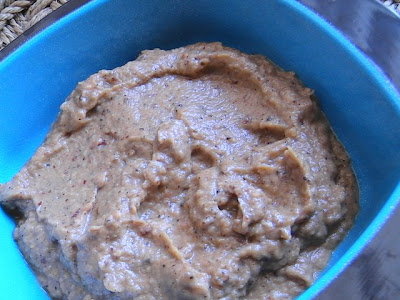
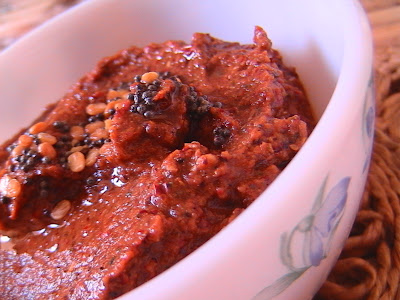
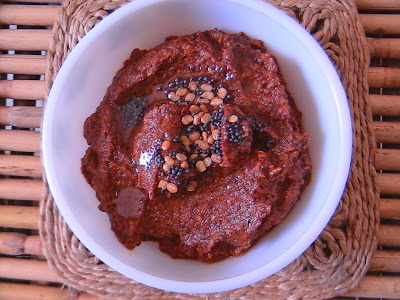
Katrikkai Thuvayal


Smoked brinjal. Something I really detested while growing up. Amma didn't make bharta back then, but she did make this thuvayal/thogayal every once in a while. Later, she learnt that one could steam the brinjal in the cooker and started making it that way. I could more than tolerate that as it didn't have the "smokey" flavour. I even remember her using the microwave to roast the brinjal, but she says she hasn't tried. I insist that she did. (I've lived away for so long now that at times I met my other relatives almost as often as I met my parents. So, maybe she is right after all.)


This thuvayal is a favourite of many and S tells me that this is made in Andhra Pradesh as well. So, it is one dish that is common to both households. I have, of late, started to enjoy the flavour. Maybe it is all the bharta that I get to eat at work (at home too!) or maybe my tastes have simply evolved over time.


1 Large Brinjal
4 Red Chillies
1 tsp Mustard
3 tsp Urad Dal
1/4 tsp Asafoetida
3 tsp Oil
1 tbsp Tamarind Paste
Salt to taste

Oil to brush the brinjal


Brush the brinjal with a little oil. Roast the entire brinjal on an open flame. Turn it around until the entire brinjal is roasted and the skin is evenly black and the brinjal is cooked. (You could use a skewer for this.)


Place the brinjal in a bowl of water. Cool and remove the skin.


Heat the oil in a kadhai and fry the red chillies, mustard, asafoetida and urad dal for a couple of minutes. Grind the chillies along with the tamarind paste and salt. Add the brinjal and grind again. Finally, add the fried mustard and urad dal and grind lightly.


As a variation to this, you could substitute the red chillies with an equal number of green chillies (more or less, depending on your taste). Back home, that's how Amma makes it.


While this is great with some rice and papads, it makes a great chutney to go with idlis and dosas. Especially, if you, like me, are trying to reduce your dependence on coconut for chutneys.

March 15, 2009

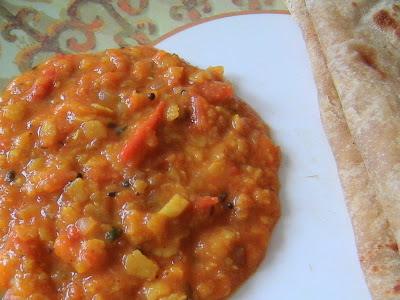
Tamata Pappu


This is one of the two "dals" S talks about. I've blogged about Palakkoora Pappu earlier. The "other" dal is Tamata Pappu. In fact, my friend says that her husband only wants these two dals all the time. I had not eaten this dal anywhere, but now we eat it every once in a while.

1 cup Red Gram Dal (Toor Dal)
2-3 Tomatoes, chopped
1 Onion, chopped
1 tsp Roasted Fenugreek Powder
1/4 tsp Turmeric Powder
1 tsp Chilli Powder
2 Garlic Pods, chopped
1/2 tsp Coriander-Cumin Powder
1 tsp Green Chilli Paste
1 tsp Oil
1/4 tsp Mustard Seeds
1/4 tsp Fenugreek Seeds
7-8 Curry leaves
1/4 tsp Asafoetida
Salt to taste
Chopped Coriander Leaves for garnish

Pressure cook the dal with 2-3 cups of water. Mash well and keep aside.

In a pan, heat the oil. Add the mustard seeds, fenugreek seeds and asafoetida. When the mustard splutters, add the curry leaves and the roasted fenugreek powder. Add the onions, green chilli paste and garlic along with the tomatoes. Fry for a minute. Add the cumin-coriander powder, chilli powder, turmeric powder and salt. Add the mashed dal and bring to a boil. Garnish with coriander leaves and enjoy this hot with chapattis. Needless to say, this tastes great with rice.

March 3, 2009

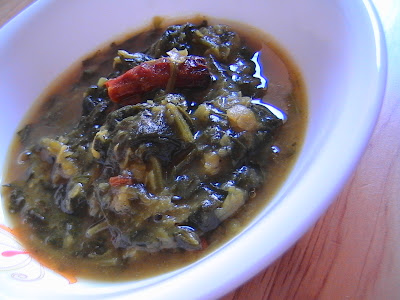
Palakkoora Pappu


My cooking is very generic. We eat Konkani food one day, Tamil the next, Italian for lunch, Chinese for dinner. There is really no pattern. This is how it was at our place while I was growing up and this is the "tradition" that I seem to follow. I haven't cooked too many Telugu dishes, primarily because I have very few "family" recipes. This is one dish that I keep hearing about from many people. Each time I buy a bunch of spinach, Sachin would like me to make this dal. A lot of trial and error resulted in this dish which is somewhere between a Keerai Kuzhambu and Dal Palak. No one has complained so far, so I guess I got it right.


1 Bunch Spinach, cleaned and chopped

1 cup Red Gram Dal (Toor Dal)

1/4 tsp Turmeric Powder

2 tbsp Tamarind Paste

1 tsp Green Chilli Paste

7-8 Curry Leaves

1 tsp Oil

1/4 tsp Mustard Seeds

1/4 tsp Fenugreek Seeds

1/4 tsp Asafoetida

1 Red Chilli


Pressure cook the dal with 2-3 cups of water. Mash well and keep aside.


Heat the oil in a pan and add the mustard and fenugreek seeds. When the mustard splutters, add the asafoetida, red chilli, chilli paste and the curry leaves. Add the spinach and cook for 5-6 minutes, covered. Add the tamarind paste and the salt along with the cooked dal.


Bring to a boil and then simmer for 5 minutes. Serve hot with rice and some potato fry.

November 14, 2008

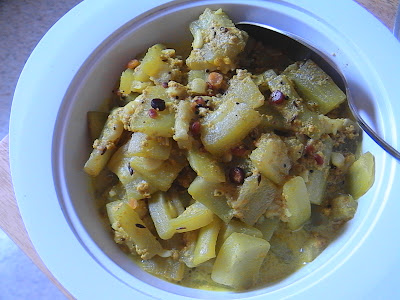
Bottle Gourd Curry in Milk


It takes all sorts to make the world, doesn't it? The Botany graduate that I am, hidden inside the HR professional, I know that the rule applies as easily to vegetables as it does to humans. I meet many people everyday. Some of them are extremely docile, some are loud, some bubbly, some shy. Then there are those who quietly go about their day, finishing their tasks with no noise, no hullaballoo. They blend easily in any evironment, don't stand out at all, and can even be quite invisible. Quite like the bottle gourd.

Everyone, well almost everyone, I know hates this vegetable. According to me, hate is a very strong word and people use it without really knowing what it means. So, I think they really dislike this vegetable while thinking that they hate it. S and I are rather indifferent to this vegetable. What that means is that when it is in season, we buy it every week. We just don't miss it in the months that it is not available.

This is a side dish that is made at S's place and I made it with the recipe from S's sister.

1 1/2 cups Bottle Gourd, peeled and diced
1 tbsp Oil
1/4 tsp Urad Dal
1/4 tsp Chana Dal
1/4 tsp Mustard Seeds
1/4 tsp Cumin Seeds
1/4 tsp Asafoetida
2 Green Chillies, slit
1/4 tsp Turmeric Powder
2 tsp Roasted Sesame Seed Powder
7-8 Curry Leaves
1/3 cup Milk
Salt to taste

Heat the oil in a vessel. Add the urad dal and chana dal. When the urad dal turns golden, add the mutard seeds, cumin seeds and asafoetida. When the mustard splutters, add the curry leaves and green chillies. Add the bottle gourd pieces and salt and cook for a few minutes. Add the milk and cover and cook over a low flame until the bottle gourd pieces are cooked. Add the sesame seed powder and mix well. Cook for a couple of minutes and take it off the flame

I had never eaten this before, nor had I eaten any dish made this way. I quite enjoyed the flavours of this unusual dish. Day to day food for so many people, completely unique to me. I wonder what my fellow marathoners, Siri, Srivalli, Ranji, PJ, Curry Leaf, Medha, Priya, Bhawna, Raaji, Ruchii, Anu, Kamala, Roopa, Divya Kudua, Rekha, Divya M, Lakshmi, Lakshmi Venkatesh , Sripriya, Viji, Kamalika, DK, and Pavani think!

November 13, 2008

Dosakaya Pachadi


I am on a spree. There's a lot of Indian cooking happening in my kitchen these days. There's also a lot of new vegetables landing on our plates. Gurgaon has changed more in the last 2 years than it had in the 5 years I had been away. It is probably the ever changing population that's driving this change. When I first moved here, there was one main South Stores and one really small Balaji Stores. That's where you went to get your supply of Sona Masuri rice or Til Oil or sambar onions. I didn't find vegetables like drumsticks or raw bananas until or unless I visited INA or the market in the Bengali part of Delhi, Chittaranjan Park. Now, I seem to be able to find things like Pasalai Keerai, Snake Gourd, Drumsticks and Broad Beans in my local market. And they sit right next to the mushroom, broccoli and coloured capsicum. Welcome to my glocality!


During one of my visits, I found Dosakaya or the Yellow Cucumber. I have no idea what this is called in any other language as such. I think it is Magge in konkani and the first dish that comes to mind is the famous Ambat. I made a Telugu pachadi instead. As with all thuvayals/pachadis, we enjoyed this with some steaming hot rice.


1 medium Yellow Cucumber, peeled and diced

1 tbsp Tamarind Paste

2-3 tsp Oil

Salt to taste

1 1/2 tsp Urad Dal

1 tsp Mustard Seeds

2-3 Red Chillies

1-2 Green Chillies

7-8 Curry Leaves

3-4 tbsp Coriander Leaves

1/4 tsp Asafoetida

For the tempering:

1 tsp Oil

1/4 tsp Mustard Seeds

1/4 tsp Asafoetida


Heat the oil in a kadhai and add the urad dal. When it turns golden, add the mustard and turn off the flame. Add the asafoetida, red chillies, green chillies, curry leaves, and coriander leaves. Grind this with the tamarind paste, salt and a handful of the yelow cucumber.


In a vessel, take the remaining chopped vegetable and add the ground paste. In a frying ladle, heat the oil for the tempering. Add the mustard and asafoetida. When the mustard splutters, pour this over the vegetable-paste mixture. Your pachadi is ready.


I'm sending this to dear Sug for the second edition of Vegan Ventures.

I'm trying out vegetables for the first time. What are you all up to?
Siri, Srivalli, Ranji, PJ, Curry Leaf, Medha, Priya, Bhawna, Raaji, Ruchii, Anu, Kamala, Roopa, Divya Kudua, Rekha, Divya M, Lakshmi, Lakshmi Venkatesh , Sripriya, Viji, Kamalika, DK, and Pavani.

May 25, 2008

Ullipaya Pachadi (Onion Chutney)


I have never been a “meals” person. S is an out and out meals person. Usually when we go out, he ends up ordering a “Thali” and I order a la carte. Some south Indian restaurants here serve a “South Indian” thali, but the rice they use in Basmati. I have never been able to come to terms with that. Somehow, I cannot associate my sambar saadam and tayir saadam with basmati rice. So, of late, I have started making full meals on weekends. Every Saturday or Sunday, I cook up a storm. (I know this meal is normal everyday food for most of you, but I am Ms. Lazy!) There’s rice, sambar, rasam, a vegetable, a salad, and curds. Pickles and papads are almost always there at home. But, you see, this is my perception of a meal. Coming from Andhra Pradesh, a meal for S always includes a podi or a chutney.


In order to try and incorporate more Telugu food in my everyday cooking, I ordered “Cooking at Home with Pedatha” a few months ago. I wanted a good English book with simple everyday Andhra recipes and found this. I have made a few things from this book and am quite happy. S is happier than I. That matters more than anything else.


I made this Onion Chutney from the book, but adapted it to suit my taste. (Being married to a Telugu does nothing to my tongue or system!) I also made a few additions.


3 Onions, chopped
1 tsp Ginger Paste
2 tbsp Tamarind Paste
1 tbsp Urad Dal
2 tsp Mustard Seeds
¼ tsp Fenugreek Seeds
3-4 Red Chillies
2 Green Chillies, slit
½ cup Coriander Leaves
7-8 Curry Leaves
1 tsp Asafoetida
1 tsp Oil
Salt to Taste


For the tempering:
1 tsp Oil
¼ tsp Urad Dal
¼ tsp Mustard Seeds


Heat the oil in a pan. Add the urad dal. When it starts to brown, add the mustard and the fenugreek seeds. When the mustard splutters, add the red chillies and fry for a minute. Stir in the green chillies, coriander leaves, and asafoetida. Add the onions and ginger paste and fry for a few minutes. Grind to a coarse paste along with the tamarind paste and salt.

For the tempering, heat the oil in a frying ladle. Add the urad dal and mustard seeds. When the mustard splutters, pour the mixture on to the pachadi.

We had this as a first course in our “saapadu” by mixing this with rice and some ghee. Perfect food for licking your fingers!

December 21, 2007

M.L.A. Pesarattu


Elaborate breakfasts are only on weekends. But then again, at times we miss breakfast completely on weekends and go straight to lunch. But then there are Saturdays. Then there those 'odd' Saturdays when I get to stay home and S gets to go to work. (That will change in 2008, thankfully!)


When I remember during the week, I prepare dosa or pesarattu batter so that I don't have to think too much about what to make for breakfast. I don't ferment my dosa batter at all (much to the shock and disgust of many Tamil food connoisseurs) and my favourite dosas are the ones I make for myself just as soon as I've ground the batter. They're like my little treat for all the effort I've just put in.


When I was newly married, I called my MIL to ask for the recipe for Pesarattu, a type of dosa made with green moong beans. She gave me a recipe that was so complicated that I decided this was not for me. I like Pesarattu, but it didn't seem worth all that effort. And she told me that I should make upma along with it and serve the two together. I told her that I could, at best, make any one item for breakfast. But one Friday, I'd made Pesarattu, and had left over batter. So, on Saturday, I made upma and together whipped up a proper Andhra style breakfast: M.L.A. Pesarattu.


I devised my own sweet way of making Pesarattu. When it is my way, it has to be the simple way. Here goes:


1 cup Whole Green Gram, soaked overnight

3 Green Chillies

2" piece Ginger

Salt to taste


Wash the green gram and grind to a paste along with the chillies and ginger. Use enough water to get a dosa batter consistency. Add the salt.


For the Upma:

1 cup Rava (Sooji/Cream of Wheat)

2 Onions, sliced
1 tbsp Oil
1/4 tsp Mustard Seeds

1 tsp Cumin Seeds
1/4 tsp Asafoetida
1/2 tsp Urad Dal
1/2 tsp Chana Dal
1 Red Chilli
1 Green Chilli
1/2 tsp Ginger Paste
7-8 Curry Leaves
1 tbsp Ghee (Clarified Butter)
Coriander leaves for garnish
1/2 tsp Sugar
Salt to taste

Heat the oil in a kadhai and add the urad and chana dals. When the urad dal starts to brown, add the mustard, cumin and asafoetida. When the mustard splutters, add the onions, red and green chillies, curry leaves and ginger paste. Add the rava and fry for 2-3 minutes. Add 2 cups of boiling water to this. Add the salt and sugar and mix well. Cover and cook for 5 minutes. The upma is done when the rava sets and is not sticky.


To proceed:


Heat a tawa and smear a little oil on it. Simmer the flame and pour a ladleful of the batter in the centre of the tawa. Quickly spread the batter while forming concentric circles (spiral actually!).


Add a little oil on the sides and centre. Usually not more than 1 small spoonful per dosa. When crisp, carefully turn the dosa over and allow the other side to cook a little. Place some upma along the diameter of the dosa and fold the sides over.


Serve this with some chutney or pickle. It is quite filling and you can go on for a few hours without a complaint from your tummy.


Wishing all of you a very happy holiday season.

August 30, 2007

Avakaya Rice


There are ways and ways to use up leftover rice. I recently tried the Fried Rice from Jugalbandi and I am glad I have one more way to use up rice.


S made this with leftover rice one day when I was out for lunch and I would love to have it again.


2 cups cooked Rice


3 tbsp Avakaya Pickle gravy


1 Onion, sliced


1 tsp Oil


1/4 tsp Mustard Seeds


1/4 tsp Asafoetida


4-5 Curry Leaves


Salt to taste


Mix the rice and the avakaya pickle. Add some salt if necessary.


In a kadhai, heat the oil. Add the mustard seeds and asafoetida. When the mustard splutters, add the onions and fry for 2 minutes. Add the rice mixture and fry for a few minutes.


Enjoy this with some curd on the side.


Off this goes to the Jihva for ingredients event started by Indira of Mahanandi and hosted by Sharmi of Neivedyam.


Avakaya or Aavakaaya is a traditional pickle from Andhra Pradesh, S's home state. You can read more about it here. The main ingredient in the pickle is aava or mustard which gives the pickle its famous pungent kick. So, this also goes to Sunita for her monthly event Think Spice... Think Mustard.

June 8, 2007

Mammidikaya Pulihaara (Raw Mango Rice)


Puliyodarai at my place is made just one way. Amma makes puli kachal and a podi to sprinkle over the rice. Whenever we are in the mood for yummy puliyodarai, Amma dishes it out. I love eating it with avial. That's one of my favourite combinations of "festival food". I've eaten Puliyogare in Bangalore that is semi sweet and has khopra (dried coconut) as part of it. I've eaten Puli saadam (Tiger Rice) at hostel.


When I moved to Hyderabad 4 years ago, I heard about nimmakaya pulihaara. I thought it was some fancy dish until I realized it was the telugu name for our very own lemon rice. Then someone at office said, "I've brought puliyodarai for you today. Only I made it with mangoes." I was super shocked. I had never eaten rice and raw mangoes before. The maximum extent that I had gone to was to eat Manga Thokku with rice and Avakaya with rice. But hey, I was never averse to trying something new. And I did. It was quite nice.


A couple of weeks ago, we'd invited some friends over and I decided to make this instead of Sambar Rice as that is easily available in any south indian restaurant in Delhi. I try to serve food that is not so easily available, especially when my guests are not south indians. Actually, even if they are, I do the same.


I started to make this and then somewhere in between, S took over. And then he forgot he was cooking and the tadka got burnt a little. But then, so what? It came out quite nice and we all ate it with relish.


Ingredients:


2 medium raw mangoes, grated.


1 cup Rice, cooked


2 tbsp Oil


1 tsp Mustard Seeds


1/2 tsp Fenugreek Seeds


1/4 tsp Asafoetida


2-3 Red Chillies


1/4 cup Peanuts


1 tsp Black Gram Dal


1 tsp Chana Dal


1/2 tsp Turmeric Powder


7-8 Curry Leaves


Coriander Leaves for Garnish


Salt to taste


In a kadhai, heat the oil. Add all the ingredients from mustard through Chana Dal. When the mustard splutters and the dals have browned, add the curry leaves, grated raw mango, salt and turmeric powder. Cook this for a while and then mix the cooked rice in this mixture. Garnish with coriander leaves and eat with vadams or appalams.


I'm finally on Food Blog Desam. Thanks Mathy and Indira. I have not forgotten my plan to get into DH.


I'm also on Jenn's Foodie Blog Roll. Those of you who are interested in joining either of these should go right ahead.