Google
 
Showing posts with label JFI. Show all posts

November 29, 2008

Crumb Tossed Vegetables


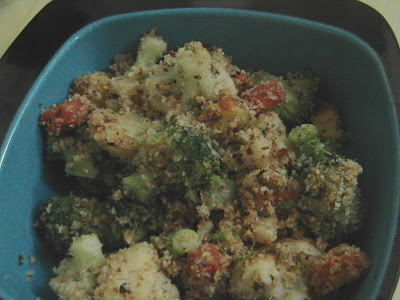
We've switched to having soups for dinner. Since we have dinner quite late (given our very hectic evening schedule tha includes the gym), this is an attempt to cut down the amount of carbohydrates that we eat at night. Actually, it is an attempt to cut down on rice. Since I have about 15-30 minutes on any day to make dinner before we rush to the gym, I end up making rice. I don't have the patience to come back from the gym and start rolling chapatis. (I don't have the patience to roll chapatis even if I've rested all day and have the entire evening to just make chapatis.) I decided to make some soup and a side dish. I made Amma's famous tomato soup, some chilli soya, and this. The meal was more than just filling.


1/2 cup Broccoli florets

1/2 cup Cauliflower florets

1/2 cup Carrots, diced

2-3 tbsp Bread Crumbs

1 tbsp Olive Oil

1 tsp Chilli Flakes

1/2 tsp Parsley

1/2 tsp Basil

1/2 tsp Roasted Garlic

Salt to Taste


Place the carrots, broccoli and cauliflower in a microwave safe bowl. Sprinkle a little water over the vegetables and microwave on high for 3-4 minutes.

Preheat the oven to 400F.


In a frying pan, heat the olive oil and add the chili flakes, parsley, garlic and basil. Add the cooked vegetables and the salt. Toss well and cook for a minute or two. Add the bread crumbs and toss again. Transfer this to a lightly greased baking dish and bake for 10 minutes.


I'm sending this over to TC as she hosts this month's edition of JFI. Check out :
Siri, Srivalli, Ranji, PJ, Curry Leaf, Medha, Priya, Bhawana, Raaji, Ruchii, Anu, Kamala, Roopa, Divya Kudua, Rekha, Divya M, Lakshmi, Lakshmi Venkatesh , Sripriya, Viji, Kamalika, Pavani, Karuna and Roochi.

October 8, 2008

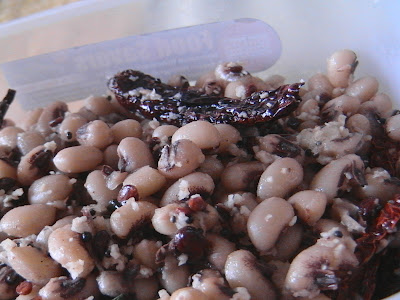
Instant Karamani Sundal


Navaratri and Sundal are sort of synonymous. For me at least. One of my colleagues, D, loves sundal of any kind as she says it reminds her of her childhood in neighbouring Faridabad where a Tamilian neighbour invited her over every year for Golu. What are the chances that a very Punjabi young lady from Faridabad has memories of a dish that is so very Tamilian? It is something that I took for granted all my life. But when I see folks around me and think back about my childhood, I know that what I had was special. I can't believe that at one point, I thought everybody had parents who spoke different languages and that a different language is spoken in each house.


I come from a multicultural family. My extended family has representatives from almost all over India and some parts of the world as well. I understand many traditions. I may not know why someone follows a particular tradition, but I am aware that they do. For years, the grandmother of a Punjabi friend invited me during the Navaratri Ashtami for the Kanchak Pooja. I loved the poori-halwa-chana I got, not to mention the thrill of getting a red chunni and some money. Year after year, we got sandesh from our Bengali neighbours around Durga Pooja. And at Ganesh Chaturthi, our Kashmiri neighbours would send us Roth and some walnuts soaked in water. And I remember decorating Easter eggs with a German neighbour. One street with 18 houses had people from different states (not to forget some foreigners) and our entire campus must have had every state represented. Yet, people tell me I grew up in narrow minded, conservative, orthodox Madras.


Most people I meet these days grow up in what I would consider uni-cultural environments. And I find I have limited tolerance for people who know absolutely nothing about other cultures and talk like experts. How would you deal with this situation?


M: What did you eat for breakfast?
Raaga: I had Dosas.
M: For breakfast??? Come on yaar, dosa is a dinner item.


I told her that it was quite the same way that Aloo Parathas are eaten for breakfast in her house. Coming back to Navaratri and sundal, the only reason I can think of to postpone making sundal would be that one does not have presoaked beans. Black eyed beans, a.k.a. karamani/chawli/lobia, helps you work around this reason as well. As I discovered last year, these beans need no soaking. I pressure cook them directly and that gives them just the right amount of softness. I woke up on the first day of Navaratri this year and wanted to make sundal. I had not soaked any beans the previous night. I had some soaked and cooked legumes in the freezer. I didn’t feel like using them as I feared they had become too mushy for sundal. So I decided to make it with Karamani. On the first day of Navaratri, I made this and we ate it in the car on the way to a college for campus recruitment.

1/2 cup Black Eyed Beans
1 tsp Oil7-8 Curry Leaves
1/4 tsp Mustard Seeds
1/4 tsp Urad Dal
1/4 tsp Chana Dal
1 tsp Ginger Paste
½ tsp Chilli Paste
1 Red Chilli
1/4 tsp Asafoetida
1 tbsp Coconut, scraped
Salt to taste

Pressure cook the beans with salt for 4-5 whistles. Drain when done. In a kadhai, heat oil. Add the urad and chana dals, mustard seeds and asafoetida. When the mustard splutters, add the curry leaves, ginger and chilli pastes, and the red chilli. Fry for a minute. Add the cooked beans, and a little salt. Cover and cook 4-5 minutes. Garnish with the scraped coconut and enjoy.

I hope all of you had a nice Navaratri. Wishing everyone here a very Happy Vijayadashami.

October 6, 2008

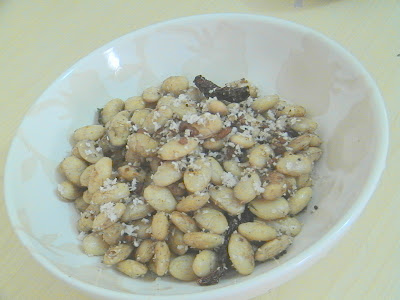
Rangoon Mochai Sundal


The festival season is on us now and I am trying to make sundal almost everyday. Not that I am particularly religious (in fact I am quite the opposite), but eating sundal during Navaratri is one more of those feelings of absolute “comfort”. The “all must be well with the world” feeling that I so seem to need these days. I don’t dress up and go visiting people. Not that anyone has invited me to their house. Of the few people we do know in and around Delhi, almost no one is TamBram. And I think we do many things when there are children in the house. Ive noticed that Diwali is a lot quieter in households where the children are all grown up. I think Golu is usually set up in homes where children are enthusiastic about the entire 9-day festival. And then you have people like me. When someone asks me the significance of a certain festival, I start reeling off the names of the different dishes that are made. I am a foodie afterall I suppose. And with this post, which I will send to Valli for her JFI, I hope to resume food blogging in full swing.


Rangoon Mochai has to be my favourite bean. Considering my love for Avrya Bendi, it is but natural. I love the melt-in-the-mouth texture that these hyacinth beans get as soon as they are cooked. I don’t get these beans here and so I tend to use them very sparingly.


1/2 cup Hyacinth Beans, soaked overnight

1 tsp Oil
7-8 Curry Leaves

1/4 tsp Mustard Seeds

1/4 tsp Urad Dal

1/4 tsp Chana Dal

¼ tsp Amchur (Dry Mango Powder)

1 Red Chilli

1/4 tsp Asafoetida

1 tbsp Coconut, scraped

Salt to taste


Pressure cook the soaked beans with salt for 4-5 whistles. Drain when done.

In a kadhai, heat oil. Add the urad and chana dals, mustard seeds and asafoetida. When the mustard splutters, add the curry leaves, and the red chilli. Fry for a minute. Add the cooked beans, amchur and a little salt. Cover and cook 4-5 minutes. Garnish with the scraped coconut and enjoy.


If you like, you can also invite some friends over; put all your dolls on display, serve them some sundal. Then find the most naïve of them and say, “Oru Paattu Paadu Ma” (Please sing a song!).

June 15, 2008

Tori Bendi


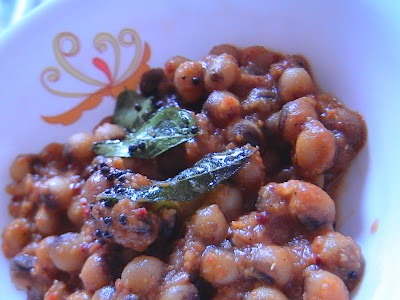
I had these dried beans/peas in my pantry for a very long time and I didn't know what they were. It was almost as though I had bought myself a surprise ingredient. When I examined the bottle carefully, I realized what it contained. I also realized I didn't actually buy it. I brought it when I moved from Bangalore and my mother had given it to me. Pigeon Peas. I'd soaked these one night and the plan was to make sundal that we could eat before heading to the gym. I ended up making this much loved amchi dish instead.


To me, bendi always meant only Avrya Bendi, but I am glad I tried it with something else. And although this is traditionally served along with Dali Saar, I didn't want an overdose of Tuvar, so we had this with rotis.


1 cup Pigeon Peas, soaked overnight and cooked

2 tbsp Coconut, scraped

1 tbsp Tamarind Paste

2-3 Red Chillies

1 tsp Teppal (Triphala)

Salt to taste

For the Tempering:
1 tsp Cooking Oil
1 tsp Mustard Seeds
½ tsp Asafoetida (Hing)
7-8 Curry Leaves


Grind the coconut, tamarind, red chillies and a tablespoonful of the cooked beans to a fine paste.


Mix this paste with the cooked beans and add salt and a little water. Bring this to a boil.


In a frying ladle, heat the oil and add the mustard and asafoetida. Add the curry leaves after the mustard has spluttered. Add this to the boiling mixture and serve.


As expected, this is off to Sig and Sug as entries to the JFI and AFAM events respectively. I don't think they had any idea what they were in for when they chose these ingredients.

June 11, 2008

Kadgi-Chana Ghasshi


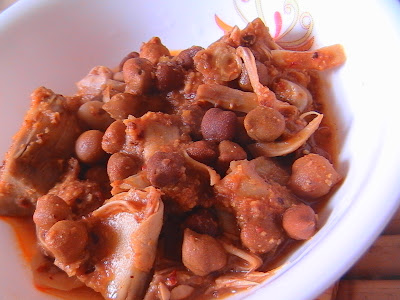
Chana Ghasshi is a very popular konkani dish. (I'd like to think so!!) The dish uses the small black chickpeas which are soaked overnight and cooked. I have eaten this version made at home countless times. I have also eaten Kadgye Ghasshi made from raw jackfruit somewhere. I decided to combine the two and make this. It was finger-licking good. I made it a little dry and thick to go with rotis and then diluted it a little at night to have it my favourite way. With rice, dali saar and batata talasani (potato matchsticks curry!)


Ingredients:


250g Raw Jackfruit, cut and cooked
1/2 cup Black Chickpeas (Kala Chana/ Konda Kadalai), soaked overnight and cooked
2 tbsp Scraped Coconut
3-4 Red Chillies
1 tsp Black Gram Dal (Urad Dal)
1 1/2 tsp Coriander Seeds
1/4 tsp Fenugreek Seeds
1 tbsp Tamarind Paste (Add more or less to taste)
Salt to taste
1 tsp Oil


For the tempering:

1 tsp Oil
1/4 tsp Mustard Seeds
1/4 tsp Asafoetida
7-8 Curry Leaves


Heat the oil in a small kadhai and fry the chillies, black gram dal, coriander seeds and fenugreek seeds. Grind this together with the tamarind paste and coconut. Add a handful of cooked chickpeas to this and grind to a paste.

In a vessel, combine the cooked chickpeas, jackfruit, the paste and salt. Add some water to this and bring to a boil.


In a frying ladle, heat the oil, add the mustard seeds and asafoetida, and when the mustard splutters, add the curry leaves. Add this to the ghasshi and serve hot with rice and dali saar.


Since the JFI this month is about Tamarind and the AFAM this month is about Coconut. I think I'll have a rerun of the RCI Karnataka on my blog this month. All my konkani food recipes shall be out again this June. Off this goes to the two ladies for the "must participate" events.

May 5, 2008

Potato Capsicum Curry

This is a very simple side dish that pairs equally well with rice – dal and rotis. It is one of those “curry in a hurry” type of dishes. The addition of capsicum to this plain jane potato dish takes it to a whole new level. It is a different matter that I love my plain jane potato dish just as much.


2 large potatoes, washed and scrubbed
2 large Capsicum, roughly chopped
1 tbsp Oil
1 tsp Cumin Seeds
1/4 tsp Mustard Seeds
1/4 tsp Asafoetida
1 tsp Chilli Powder
1/2 tsp Turmeric Powder
1 tsp Cumin-Coriander Powder
Salt to taste

Cut each potato (with the skin on) in two. Cut each half lengthwise in 2 and then cut finely width wise. You will have quarter circles (kind of triangular) pieces.


Heat the oil, add the mustard, asafoetida and cumin seeds. When the mustard splutters, add the chopped capsicum and fry for a minute or two. Add the potatoes, salt, chilli, turmeric and cumin-coriander powders. Cover and cook for 4-5 minutes. When the potatoes are cooked, remove the lid and allow the potato pieces to crispen to a nice brown.


Sometimes, I mix this with hot rice and eat it as it is. At times, it goes in our lunch box with rotis. At others, it is a side dish with dali saar and rice or sambar and rice. I'd been meaning to post this during the Potato festivals, but it looks like it will now make its way to this month's JFI.

April 19, 2008

Nankhatai


You know how it is when you have nothing to do and thoughts fly all around inside your head. Some make you think about the future, some remind you of the past. You begin missing someone and then one thing leads to another. This is exactly what happened to me yesterday. I got the day off as it was Mahavir Jayanti. I had absolutely nothing to do all day. I started my day with the mushroom pancake and then sat down to blog about it. I’d made it specifically for the event. So I figured I should blog about it when I have the time and not put it off to when I don’t.

Having done that, I got on the phone and chatted with two women I’ve never met, but would consider myself pretty close to. The first phone call was prompted by something I saw on this girl’s blog. We’ve been chatting online for about 2 months now and apart from the fact that we share the same name, we’ve found that we have so much in common. Since I found one more thing in common (something that you don’t usually notice online), I felt I had to call her. Then I called the next. Both these women have tried to reach out to me when I was extremely busy just to make sure I was OK. I had a really long weekend and I decide to call them both and tell them that I was fine. But I still felt I had to surprise my namesake by showing her what we have in common.


Then Amma called and we chatted for an hour. During that hour, I was transported back to my childhood. We talked about food, my father, my brother, some friends from IIT. That did it. Any talk of IIT Madras gets me extremely nostalgic. I wanted to do something that would make me feel good. Something that would help me get my arms around that imaginary pillow for a feel good hug.


I decided to make nankhatais. My mother makes the best nankhatais that I’ve eaten. She used to make these by the dozen and stack them up at home. I’d never tried to make them. My classmate went to the US a few years ago and then sent me an email asking for the recipe. She said, “Perellam teriyaadu ya, unnnoda Amma dabba dabba va roppi vechiruppa… andha biscuit (I don’t know the name, your mom used to have containers filled with these biscuits.) Amma was shocked when I forwarded that email to her. She said, “I didn’t know that she’d ever eaten them, let alone get nostalgic about them.”


These biscuits call for ghee(clarified butter), something that is always in short supply in our house as I almost never use it. The last time I bought some brand of ghee, it was horrible. That lasted us a year. I bought a much smaller bottle of Britannia ghee. This is really good. Looks, tastes and feels just like home made ghee. I grew up on cow’s milk. So to me, my butter and ghee must be yellow. White just doesn’t make the cut. Since I bought the ghee as recently as three months ago, I had plenty of it.


The recipe also needed powdered sugar. I have bura sugar at home which I always thought was powdered sugar until I tried to bake a cake with it. That cake would probably go down in my “Hall of Shame”. Picture perfect, but horrible tasting. So I decided to powder a little sugar just for this. When I was done powdering the sugar, I couldn’t resist tasting it. That opened the next floodgate of memories. My brother had a classmate whose mother was very close to mine. Their house was on the way back from school for me and so, at times, Amma and I would visit, or I’d even drop in on my own. She would always indulge me. She’d give me freshly made idli or dosa with powdered sugar and for some reason it would taste divine. The same thing at my own place never did taste the same. We lost her a few years ago to cancer. I remember how it took her away, and how she fought it. She was always cheerful. My strongest memory of V Aunty is when she was in remission. I didn’t know then that it was remission. I thought she’d fought cancer and survived. Then she succumbed. She was at the Apollo Cancer hospital right across the street from my office. I’d take lunch for her and for uncle everyday, never knowing, even on the last day, that it would be the last.


It’s funny how all of this is connected and how sometimes everything comes together. I remember when V Aunty and Amma would make batches of nankhatais and V Aunty also suggested making them spicy with chillies and cumin. All these memories came to me yesterday. And I am glad they did. Because, to me, memories are what make life worthwhile.


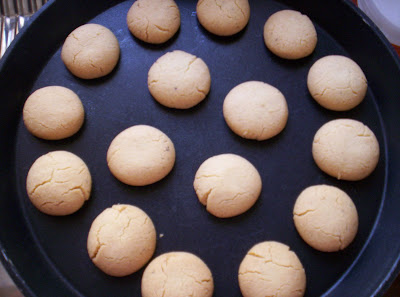
I made half the original recipe as it was the first time I was making them and they turned out delicious.


¾ cup(generous) Flour
1/8 tsp Cooking Soda
¼ cup Powdered Sugar
1/3 cup (generous) Ghee (Clarified Butter)
¼ tsp Cardamom and Nutmeg (Powdered)


Cream the sugar and the ghee until well blended.
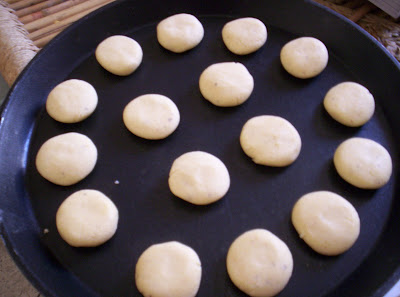
Sift the flour with the soda. Add this to the sugar-ghee mixture. Add the cardamom and nutmeg powders. Make a dough and divide into small balls. Flatten each ball onto a cookie sheet and bake for 20 minutes at 180 C.

Allow to cool and dig in.


These cookies are off to Barbara, who is hosting Livestrong with a taste of yellow, for two reasons. They contain yellow ghee and the memories of a dear friend lost to cancer.


This is also one of those recipes that is distinctly Amma – so representative of her love for food, her love for us and of course, of her showing her love through her food. This is off to this month’s JFI, the theme of which is love. In real time, I also shared these cookies with friends. What good is good food if you can't share it with people who've touched your life?

March 28, 2008

Spirali in Basil Pesto


Pesto is one of those things that I love today but didn't quite know about while growing up. The very first time I heard about it was about 5 years ago. A colleague, who had grown up in the US, told me about it one day while recounting her first cooking experience. So, after trying it out at several restaurants, I decided to make it at home. I made a coriander pesto sometime last year. And whenever I could lay my hands on basil, I made basil pesto. I asked a friend to bring me pine nuts from the U.S. And she did. For the very first time I made basil pesto with pine nuts. I didn't pound the nuts in a mortar, but used my food processor instead.


1 cup Spirali Pasta, Cooked/Boiled with a little oil and salt
1 tbsp Olive Oil
1 tbsp Milk

For the Basil Pesto:

1/2 cup Basil Leaves
1 cube Low Fat Cheese
2 tbsp Pine Nuts
2 pods Garlic
3 tbsp Olive Oil
Salt and Pepper to taste

Grind together all the ingredients for the
pesto.

Drain the pasta and keep aside.

Heat the olive oil in a saucepan. Fry the pesto sauce in it for a few minutes. Add the milk to get a sauce like consistency. Add the pasta and mix well.

This is one of the simplest dishes I have come across and I make it as often as I can. I'm sending this super simple dish to Mathy who is hosting this month's JFI. The ingredient is one of my favourites: garlic.

February 22, 2008

Cornmeal Vegetable Salad

Photobucket


I moved to a hostel about 11 years ago. For someone who ate vegetables everyday until that point even if it was bitter gourd, hostel food was an eye opener. The food that was cooked seemed specific to no region. At least no region I know would claim that they cook beetroots until they turn green. Horrible would be the best word to describe the “vegetable” served at lunch time. No, wait. That might be an understatement. Also, every vegetable dish had loads of coconut, onions, fennel seeds and chana dal. Finding the actual vegetable of the day was like a treasure hunt. I went off vegetables during that period and ate rasam rice and papads for lunch. But I was not used to not eating my dear vegetables. On my way back from French class, I would stop by at the market to buy some salad vegetables. That was difficult too as I couldn’t buy just one of each and I didn’t have a fridge where I could store any thing I didn’t consume the same day. Finally, I found one vendor in the Muthialpet market who’d give an assortment of vegetables for a fixed price everyday. A salad to me somehow always meant chopped cucumber and tomatoes seasoned with salt, sugar and pepper, garnished with some coriander leaves. It was almost as if there could be no deviation from this. But I got tired of that pretty soon and started adding radish, cabbage, carrots, onions and whatever else I could to increase my fibre intake. I would recommend a stay at the Pondicherry Central University girls’ hostel to any of you who want to lose weight. Thanks to my focus on academics, the breaking up of an 8 year old relationship, and the wonderful food, I lost 10 kilos in 6 months flat. I still like to think of it as the food. I doubt acads and relationships had anything to do with it.


Thankfully, my awareness about salads has increased over the years, especially so in the 9 months that I have been blogging. I have found recipes for a variety of salads. I look at ingredients and then work out substitutes if I have to. At times, the end result is lip smacking and at others, the less said the better. Here’s one lovely recipe that I cooked up. It was very tasty and filling. But what I loved about it was the fact that it was perfect eye candy!


½ cup Cornmeal
½ cup Green Chana (Green Garbanzo Beans)
½ cup Chickpeas, soaked and cooked
1 Cucumber, cut into strips
1 Carrot, cut into strips
½ each Red, Yellow and Green Capsicum, cut into strips
1 Tomato, cut into strips
1 tsp Mixed Herbs
1 tsp Chilli Flakes
1 tsp Roasted Garlic flakes
1 tsp Olive Oil
1 tbsp Lime Juice
Salt and Pepper to taste


Place the cornmeal in a microwave safe bowl. Add 1 cup of hot water and cook for 3 minutes on high.


In another bowl, place the salad vegetables along with the green chana and the chickpeas. Mix the olive oil and lime juice together and add the herbs, chilli flakes, garlic flakes. Add the cornmeal to the vegetables and pour the lime juice mixture over the vegetables. Season with salt and pepper and toss well.

This salad is so simple to put together that I am fairly certain I’ll make this more often. I’m sending this to
Coffee who is hosting this month’s Jihva for Ingredients.

January 21, 2008

Piyava Baje (Onion Fritters)


Every once in a while, I make something that is deep fried. As an afternoon snack on a weekend. As an accompaniment to a meal when I don't feel like making a vegetable. But the times are few and far between. So, when we do have something like this, it is truly a treat.


This is something I grew up with. The occasional Sunday lunch was accompanied by stuff like this
. I made this many months ago as part of lunch as I was too lazy to make a side dish. I have been meaning to post it since and I discovered it in my drafts just today. In time for the Jihva For Ingredients: Onion being hosted by Radhika of Radhi's kitchen.


1 cup Onions, sliced
1 tsp Green Chilli paste
1 tsp Ginger paste
1/2 cup Gram flour (Besan)
1 tsp Chilli Powder
1/4 tsp Asafoetida
1/4 tsp Turmeric Powder
Salt to taste
Oil for frying


Heat the oil in a kadhai.

In a vessel, mix all the other ingredients together without adding any water. Drop spoonfuls of this mixture into the hot oil and fry till reddish brown.

Drain on absorbent paper and serve with tomato ketchup or with some rice and dal.

In addition to sending this to the JFI event, I am also sending this to Mansi for her game night party event.

December 17, 2007

Chocolate Orange Marble Cake


It was a busy Sunday. I hadn't baked a cake in ages and although I have a box of raisins and figs soaking up some rum, I haven't gotten around to baking my fruit cake. But it was the birthday of my dear friend, P, and I couldn't think of anything better than a home made cake. I found the idea for this lovely cake in a cook called "Everyday Chocolate" by Parragon Publishing. I modified my existing cake recipe to suit this cake. I haven't become very comfortable with the grams and ounces measurements yet and prefer using the standard cup measure.


For the Orange Portion:

1 cup Flour
2 1/4 tsp Baking Powder
1/2 cup Sugar
1/2 tsp Salt
1/4cup Oil
1egg
1/4 cup Milk

1/4 cup Orange Juice
1/2 tsp Orange Essence
1 tsp Grated Orange Rind


For the Chocolate Portion:

3/4 cup Flour
1/6 cup Cocoa

2 1/4 tsp Baking Powder
1/2 cup Sugar
1/2 tsp Salt
1/4 cup Oil
1 egg
1/2 cup Milk
1/2 tsp Vanilla


Butter and flour for dusting


For the decoration:


300g Icing Sugar
12 tsp Orange Juice, filtered
2 drops Orange Food Colouring
Chocolate Sprinkles

Sift all the dry ingredients for the each cake separately into a food processor jar with the dough blade. Pour in all the liquid ingredients and run the processor for 2 minutes. Prepare two 8 inch round cake tins by first smearing a little
butter all over the tin and then dusting it with flour.

Place spoonfuls of each batter alternately in the pans. Swirl the batter using a knife or skewer to create a marble effect.

Bake for 30 minutes at 350 F. The cakes are done when a knife or skewer inserted into them comes out clean. Remove the cakes to a cake rack and cool completely.


Prepare the icing by whisking the icing sugar along with the orange juice and the food colouring to a running consistency. Pour over the cooled cakes and sprinkle with chocolate sprinkles.

I am not a big fan of orange flavoured chocolates, but these two flavours gelled pretty well in this cake and I was rather surprised. We enjoyed small pieces of the cake and P took the rest of it to a family get together where, according to her, it was relished and gone in no time. My cousin P and her husband S completed 6 years of married life yesterday as well. This is a small cake for them too.

I am sending this to the JFI - Chocolate hosted by Deepz.

I hope that during this time of the year when it is not at all bad to spend time in the kitchen (the temperature being 4 degrees C and our houses having no central heating), I will be baking more and trying out newer stuff. I need your continued support.

I am still unable to view many blogs on blogger. I have two blogs. I am able to view one but not this one. I am able to read several blogs through Google Reader, but am unable to comment. So, do bear with me.

November 25, 2007

Adraki Dal


We eat more dal than we do sambar or rasam. This is for several reasons. The most important aspect being the ease with which it can be made and the fact that both of us love dal very much. And while we try to consume different varieties of lentils, red gram dal or toor dal is the one we relish the most. My much loved version way of eating this dal has to be Dali Saar. But I keep trying new stuff.


We had Aloo Chokha for dinner a couple of nights ago and I made this dal to go with the rice. When I make Dali Saar, I cook the ginger with the dal. This time I tried something a little different and it turned out lovely. S walked into the kitchen and said, "You've never made anything that smelled so lovely. Is this a different dal?" I was so thrilled. My food may be tasty, but it almost never gives out the kinds of aromas that I've noticed in others' cooking. Yes, there are times when I have the fragrance spread throughout the apartment, but those are few and far between.


I wanted to bake ginger snaps for Sunita's Think Spice... Think Ginger event, but I've been hardpressed for time. I spent a day in Chennai buying all sorts of things to enhance my baking skills, but I've gotten around to doing nothing at all. And this week has me busier than ever. Three weddings over a weekend is no joke, really. Given the delicate system I've been blessed with, I am scared to even think of the condition of my tummy about 48 hours from now. So, I try to make my meals outside of these weddings as simple as possible. So, baking anything exotic (or even simple) is too much to think about right now.


This dal fits very well into the menu given my craving for utterly simple food.


1 cup Toor Dal
2 Onions, finely chopped
1 tbsp Ginger, ground
1 tsp Green Chilli paste
1 tsp Kashmiri Chilli Powder
1/2 tsp Turmeric Powder
1 tsp Cumin Seeds
1/4 tsp Mustard Seeds
1/4 tsp Asafoetida
Salt to taste
Coriander Leaves for garnish


Heat the oil in a pressure pan. Add the mustard seeds. When the mustard splutters, add the asafoetida and the cumin seeds. When the cumin crackles, add the onions and fry for a few minutes. Add the ginger and chilli pastes and fry for a few minutes. Add the turmeric powder and chilli powder. Add the dal and the salt and fry for a minute. Add about 3 cups of water and cover and cook for 3-4 whistles. When done, beat the dal well and garnish with coriander leaves.
Serve hot with rice.


As I send this to Sunita, I will also send it to Linda for this month's JFI: Toor Dal. And no Bee, I won't be able to sneak in dates or corn flakes into this. I tried very hard, but I couldn't. Do you have any ideas?

Dali Ambat


One of the side benefits of having relatives come over and spend time with you is the food. We had some very yummy amchi food. Simple, yet tasty. Dali Ambat is one of those dishes that is not widely talked about, but made quite frequently in most amchi homes. I forgot to take a picture of this dish when it was made and remembered when it was almost over. So I quickly took a picture of my plate halfway through dinner. Please forgive the near lousy picture and believe me when I say this picture doesn't do the dish much justice.


1/2 cup Toor Dal, pressure cooked in 3 cups water
1/4 cup Coconut, scraped
4 Red Chillies
1/2 tsp Turmeric Powder
1/4 tsp Fenugreek seeds, fried in oil
1 tbsp Tamarind paste
Salt to taste
1 Onion, finely chopped
1 tbsp Oil


Grind the coconut, red chillies, turmeric powder, tamarind paste and the fenugreek seeds to a fine paste. Add this paste to the dal. Add salt and bring the mixture to a boil.


In a small kadhai, heat the oil. Add the chopped onions and fry till the onions turn brown. Add this to the boiling mixture. Serve hot with rice.
If you're looking for a no onion/garlic version, you could use this tempering:

1 tsp Cooking Oil
1 tsp Mustard Seeds
½ tsp Asafoetida (Hing)
7-8 Curry Leaves

In a frying ladle, heat the oil and add the mustard. When the mustard splutters, add the asafoetida and turn off the flame. Add the curry leaves. Fry for a minute and add this to the boiling mixture.


I am sending this to Linda for this month's JFI: Toor Dal.

October 15, 2007

Kadalai Paruppu Sundal


Navaratri. The 9-night long festival that brings back a flood of memories. We had a nice golu in our house for as long as I can remember. Every year, we'd try to add to the golu on the two sides. A park one time, a village scene another time. Attention to detail was essential. All schools would close immediately after the Mahalaya Amavasya except for my own. We'd have school till the 5th or 6th day of Navaratri and then remain closed for some 7 days after Dussera. I find it funny to this day that just because it was a central government school, we had to follow the north blindly in terms of holidays.


Fortunately, my school didn't have a quarterly exam system, so we were spared excessive studying during festival time. We'd accompany Amma to Parry's Corner to buy bags, coconuts, sweet lime, betel leaves, turmeric, supari, and some steel items to give away. Then we'd sit late into the night making vettalai paakku bags for all guests.


We had cute invitation cards printed. Amma would draw up a list of people from the IIT Madras directory. Then there was this list of Appa's relatives that we'd send invitations to. Amma's colleagues, our school teachers... so many people. Then H and I would drop these invitations around campus. We'd also get invited to people's houses and everyone used to have the standard, "Oru Paattu Paadu Maa" (Please sing a song!). I was a moody child just as I am a moody adult. And I never did like singing at other people's golus. Forgive me all of you die hard Cartnatic music fans (I am one myself, but even then) for saying this. Maamis would ask me to sing and then give me "expert advice" on technique, gammukkam, taalam (like I went to music class with some other intention!) and succeeded in killing any residual interest I may have had in classical music. Today I regret giving up learning, but try and see the world through the eyes of a 14 year old who has been learning music from the age of 4, who is interested in good music and not necessarily in raagas and azhuttam and all the associated stuff and you'll know what I mean. For those of you who asked about which genre of music I sing: bhajans, semi classical music, hindi film music and retro English numbers.


While Navaratri is almost synonymous with loads of classical music, it is also synonymous with sundal. Nine varieties of sundal on 9 nights. What fun! Much as the family I grew up in is not a believer in "kitchen religion", I indulge every once in a while. While I am not making a sundal every evening this Navaratri, I will be making it on as many days as I can.


We had invited some guests over for dinner on Saturday and made this kadalai paruppu sundal. I was the only one in the group for whom sundal was a tradition. The other three, my hubby included, were from A.P. and had no clue about the navadhanyam for navaratri concept and had never eaten or heard of sundal.
But they loved it and that's all that matters!


1/2 cup Gram Dal (Chana Dal), soaked for 1 hour

1 tsp Oil
1/4 tsp Mustard Seeds
1/4 tsp Urad Dal
1/4 tsp Chana Dal
1 tsp Green Chilli Paste
1/4 tsp Ginger Paste
1 Red Chilli
1/4 tsp Asafoetida
1/4 tsp Dry Mango Powder (Amchur)
1 tbsp Coconut, scraped
Salt to taste


Pressure cook the chana dal with salt for 2-3 whistles. Drain when done.


In a kadhai, heat oil. Add the urad and chana dals, mustard seeds and asafoetida. When the mustard splutters, add the curry leaves, ginger and chilli pastes, and the red chilli. Fry for a minute. Add the cooked dal and a little salt. Cover and cook a couple of minutes with a little water if necessary. Garnish with the scraped coconut and enjoy.


I am sending these to
Viji as my second entry for the RCI - Tamil Festival event. I am also sending this to Vee for her Dassera event.

September 28, 2007

Vazhaikkai Podimas


Bananas. One of those fruits people love or hate, but can't ignore. I have a funny relationship with the banana. And I haven't given it a name yet. I am not fond of the small yellow bananas and love the green ones. But the green ones give me acidity, so I don;'t know what to do. The yelakki variety that I got in Bangalore I absolutely love. And can eat those without thinking twice.


As a raw vegetable, the possibilities are endless. Raw banana fritters made this way, vazhakkai karumadhu and chips of course. But all these are oil intensive and there are times when I want my fill of banana without the fat. And it is at such times that I crave podimas.


This recipe is adapted from Samaithu Paar.

2 Raw Bananas, steamed and peeled

2 Red Chillies

2 tbsp Urad Dal

2 tbsp Chana Dal

1/4 tsp Asafoetida

Salt to Taste

a few drops Oil


Heat the oil and roast the urad and chana dals. Add the red chillies and the asafoetida. Cool completely and grind to a powder.


Place the powder on a large plate and mash the bananas onto the powder. Add salt and mix thoroughly. Enjoy this with hot rice or as a side dish with rice and
sambar.


Off this goes to Mandira of Ahaar for her JFI - Banana Event.


Nags
had asked all of us to show her our cookbooks. I have so many cookbooks now that it is difficult to pick one and showcase that as a favourite. There are cookbooks that I'd consider favourites which I've left behind when I was moving here. They wait patiently for my return. But since the entire month of September was dedicated to amchi cuisine, I am showcasing the book that I referred to the most in this month.


Written by Ambabai Samshi, this book would classify as the Bhagvad Gita for anyone who is looking to learn Chitrapur Saraswat cooking. I have to reduce the spices a great deal, but when I follow a recipe, I can be certain that it will taste just like the food Amma or my aunts prepare.

August 31, 2007

Patrodo

There are dishes that give me mental fatigue. That is only to say that just thinking about making the dish makes me tired, because in my mind the process is a lengthy one. Patrodo is a perfect example.


We had the colocasia leaves growing in our garden when I was a child. Every once in a while, we'd go through the routine of cutting the leaves, making the masala or massol as it is called in Konkani. H and I would always be assigned the job of destemming the leaves. What fun! More fun because we could play the blame game whenever a leaf was cut or got beaten beyond repair. We would cut the stem by marking a V at the base of the leaf and then string the leaves. After this we would lightly beat the veins using a rounded smooth stone.


I made this when I found colocasia (taro) leaves at the INA market. It is much simpler than I imagined. The result is superb and so the work that goes into it feels like nothing at all.


Ingredients:


7-8 Colocasia (Arbi) Leaves
1/2 cup Rice
1/2 cup Dal
7-8 Red Chillies
1/3 cup Coconut, scraped
1/4 cup Tamarind Paste
1 tsp Turmeric Powder
1 tsp Asafoetida
2 tbsp Jaggery
Salt to taste


For the tempering:

1 tbsp Oil
1/4 tsp Mustard Seeds
1/4 tsp Asafoetida
7-8 Curry Leaves

Soak the rice and dal together for at least 4 hours.


Destem the leaves and flatten the veins using a rounded stone.


Grind the rice and dal together along with all the other ingredients except the leaves.


Place the largest leaf on a clean surface, smooth side down and smear the paste over the leaf.


Place the next leaf over this in such a way that the tip of the leaf is near the base of the one below.


Smear the paste over the leaf and place another pointing in the opposite direction and proceed in the same manner until you have used the smallest leaf.


Fold the sides of the leaves inwards and smear more paste. Roll the leaves in a swiss roll like manner and tie with a string.


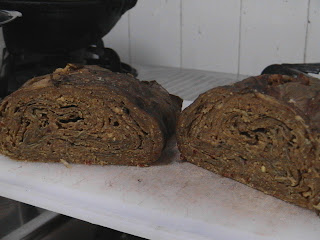
Steam cook this bundle in a cooker without using the pressure for about 30 minutes. When done, it should look like this.


Cool completely and cut into slices after removing the string.


To proceed, heat the oil in a kadhai. Add the mustard seeds and asafoetida. When the mustard splutters, add the curry leaves. Add the slices of patrodo and fry for a few minutes allowing the slices to crispen.

Amma says that there are variations here. The slices may be deepfried or toasted on a tawa. I like my patrodo with tadka and I love it with rice and dali saar.

You could adjust the tamarind paste int he recipe to suit your taste. The tamarind helps remove the itchiness that these leaves cause. Also, the leaves with purple stems cause less itching than the ones with green stems.


The partodo rolls may be made in advance and frozen. When you are ready to eat them, bring them out from the freezer, thaw them and then proceed. I have yet to make the final dish. Am saving the rolls in my freezer for an evening when I return from NOIDA so tired that all I want to do is eat dali saar and fry patrodo. And believe that all is well with the world.


Rice being the one of the ingredients here, I am also sending this entry to Jihva for ingredients started by Indira of Mahanandi and hosted by Sharmi of Neivedyam.


As this is a Konkani dish, I am sending it to Asha for the RCI Karnataka, an event started by Laksmi that celebrates the regional cuisine of India.

August 30, 2007

Avakaya Rice


There are ways and ways to use up leftover rice. I recently tried the Fried Rice from Jugalbandi and I am glad I have one more way to use up rice.


S made this with leftover rice one day when I was out for lunch and I would love to have it again.


2 cups cooked Rice


3 tbsp Avakaya Pickle gravy


1 Onion, sliced


1 tsp Oil


1/4 tsp Mustard Seeds


1/4 tsp Asafoetida


4-5 Curry Leaves


Salt to taste


Mix the rice and the avakaya pickle. Add some salt if necessary.


In a kadhai, heat the oil. Add the mustard seeds and asafoetida. When the mustard splutters, add the onions and fry for 2 minutes. Add the rice mixture and fry for a few minutes.


Enjoy this with some curd on the side.


Off this goes to the Jihva for ingredients event started by Indira of Mahanandi and hosted by Sharmi of Neivedyam.


Avakaya or Aavakaaya is a traditional pickle from Andhra Pradesh, S's home state. You can read more about it here. The main ingredient in the pickle is aava or mustard which gives the pickle its famous pungent kick. So, this also goes to Sunita for her monthly event Think Spice... Think Mustard.